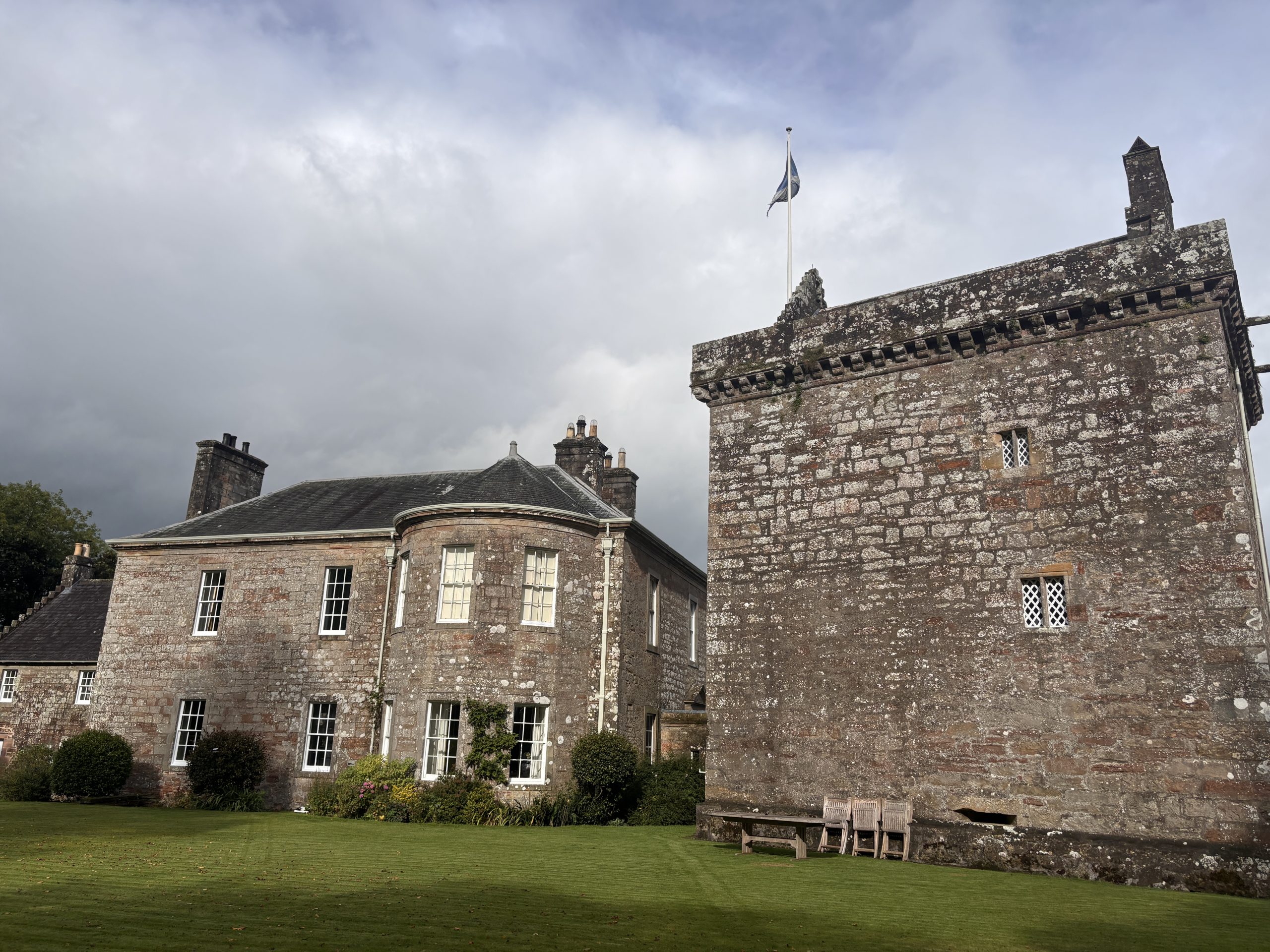
A visit to Bonshaw Tower – the seat of the Irving Clan for over 900 years.
Photos by Caroline Oswald (née Irving)
A Fearsome Folk
Are you a descendant of the Border Reivers? If you have one of the surnames listed below, your ancestors were fearsome, fighting folk, who had to steal, pillage, kidnap and kill to survive in the harsh conditions of the ‘Debatable Lands’ between England and Scotland. They took advantage of the ongoing wars between the two nations by doing deals with both Scottish and English monarchs, offering to defend the land on both sides in exchange for money and resources. The Reivers’ loyalty lay primarily not to their King but to their kin. Even when England and Scotland were not at war, the Border families constantly fought amongst themselves, forming alliances and holding great battles between the different clans.
Anderson * Archibold * Armstrong * Aynsley * Beattie/Bettisoun * Bell* Blackadder * Brewis * Bromfield * Burns * Carlisle * Carlton/Charlton * Carnaby * Carr/Kerr * Carruthers * Cessford * Chrichton * Clennell * Cockburn* Collingwood * Corbett * Coxson * Cranston * Craw/Crawford * Crisp * Crozier * Curwen * Cuthbert * Dacre * Dalgliesh * Davison/Davidson * Delaval * Dickson/Dixon * Dodd * Douglas * Dunne * Edgar * Ellerker * Elliot * Errington * Fenwick * Fluke * Forster/Foster * Fraser/Frissell * Gilchrist * Glendenning * Gordon * Graham * Gray * Hall * Halliday * Harden * Hedley * Henderson * Heron * Hetherington * Hodgson * Horsley * Hume/Home * Hunter/Huntley * Irvine/Irving * Jamieson * Jardine * Johnstone * Kirkpatrick/Kilpatrick * Laidlaw * Latimer * Little * Lowther * Maxwell * Medford * Milburn * Mitford * Moffat * Mow * Musgrave * Nicholson * Nickson/Nixon * Noble * Ogle * Oliver * Ord * Percy * Pile * Potts * Pringle * Radcliffe * Redhead * Redpath * Reed/ Reid * Richardson * Ridley * Robson * Rome * Routledge * Rowell * Rutherford * Salkeld * Sawfeld * Scott * Selby * Shaftoe * Simpson * Snowden * Stamper * Stapleton * Stokoe * Storey * Strowther * Swinhoe * Swinton * Tailor/Taylor * Tait/ Tate * Telfer * Thompson/ Thomson * Trotter * Turnbull * Turner * Vardy * Wake * Wallace * Wanless * Watson * Widdrington * Wigham * Wilkinson * Wilson * Witherington * Yarrow * Young *
The Irving Clan
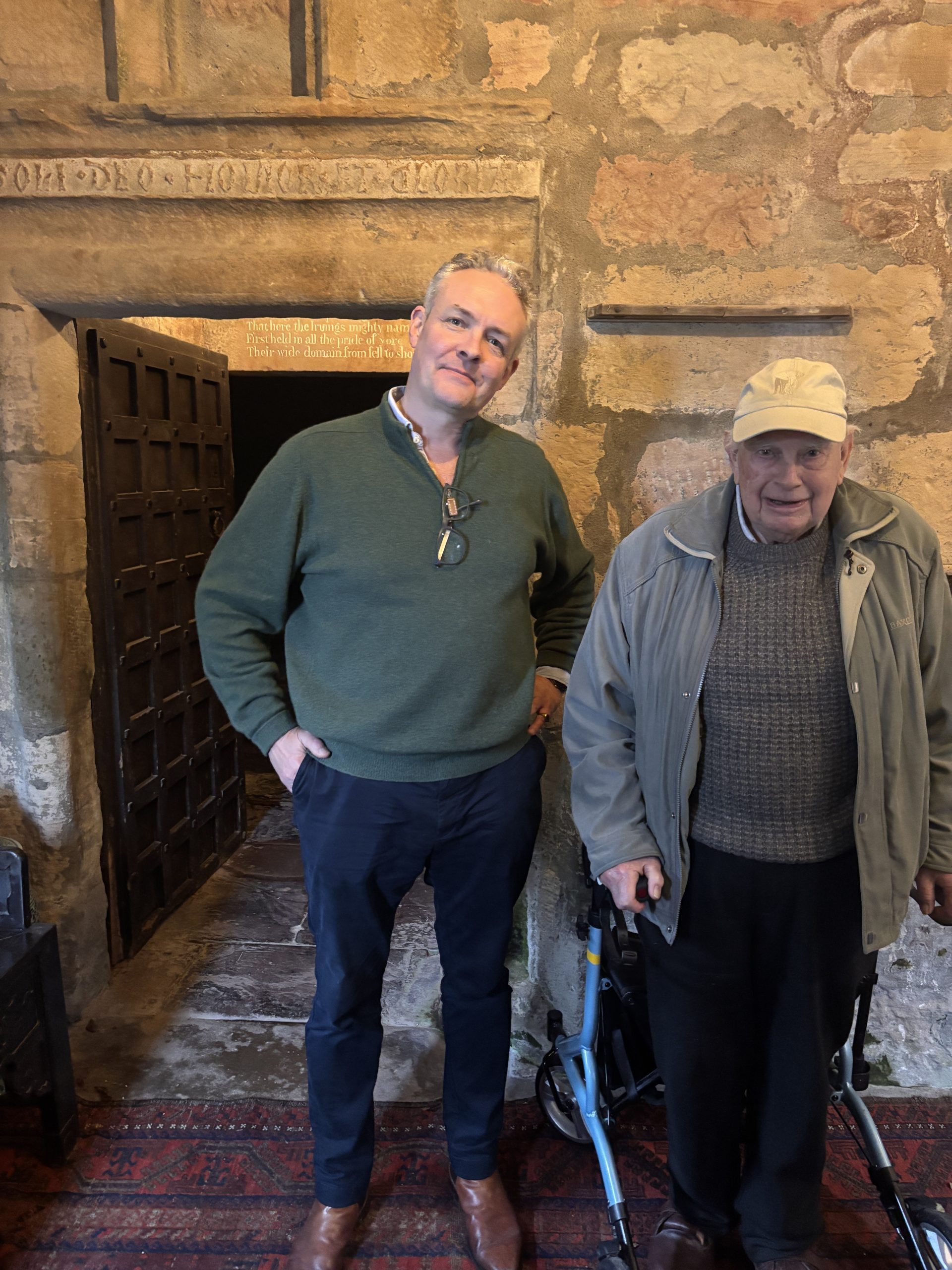
My dad and I are Irvings, who famously joined forces with the Johnstones to defeat the Maxwells in what is said to be the last inter-clan battle, which ended in the beheading of the Maxwell Clan’s chief. Last weekend, we had the privilege of a private tour around Bonshaw Tower, the seat of the Irving Clan since the 1300s, where the family played host to their good friend Robert the Bruce and welcomed a visit from King James VI of Scotland (James I of England). The current tower, built in 1570 by Edward Irving, is remarkably well preserved and one of the best remaining examples of a Border pele tower. It has been owned by the same family of Irvings for over 900 years, and is now home to the current Laird, Christopher Irving, his wife Claire and their four children. Chris kindly gave us a comprehensive tour of the tower, informing us of its fascinating features and colourful history.
A Fortress Fit for Defence
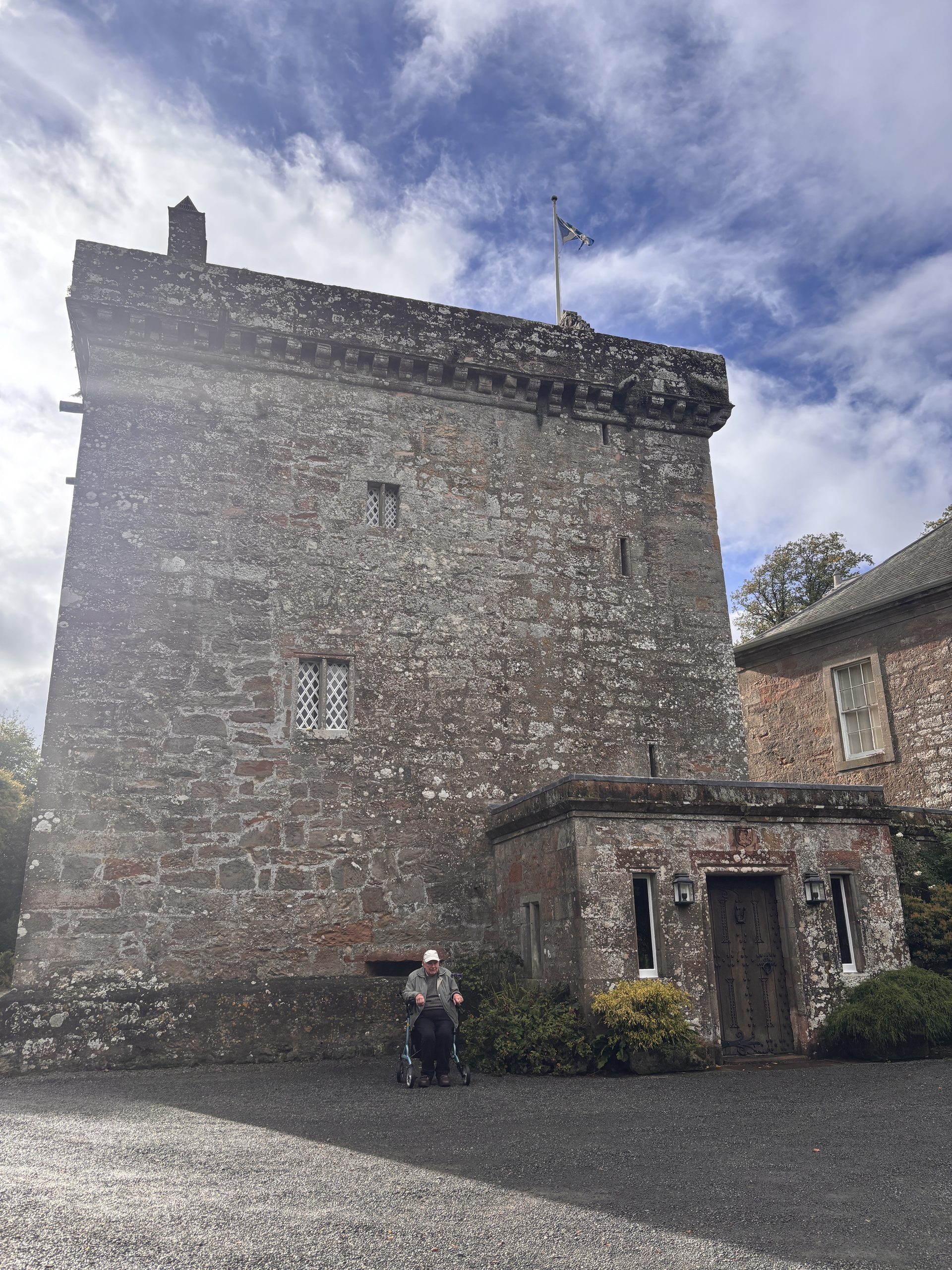
100 miles from Edinburgh near Lockerbie in Dumfries and Galloway, Bonshaw Tower was difficult to access in times of war. Strategically perched on a 70-foot cliff on the west bank of the River Kirtle, the imposing tower is tapered slightly to make it look taller than it actually is and it is surrounded by a ‘barmkin’, a defensive stone wall built around the perimeter. With all the surrounding trees cut down for firewood and to create a clear line of sight, the Irving clan would have had uninterrupted views of attackers advancing from all sides, including along the long, straight Roman road in the distance. Built from Triassic sandstone, the tower has no foundations but still stands strong with six-foot thick walls and narrow windows through which to fire muskets. On our way towards the simple yet elegant entrance, Chris points out the ‘murder holes’ in the parapet above, through which the Irvings would drop stones and oil and fire their muskets to fend off approaching foes.
Robert the Bruce
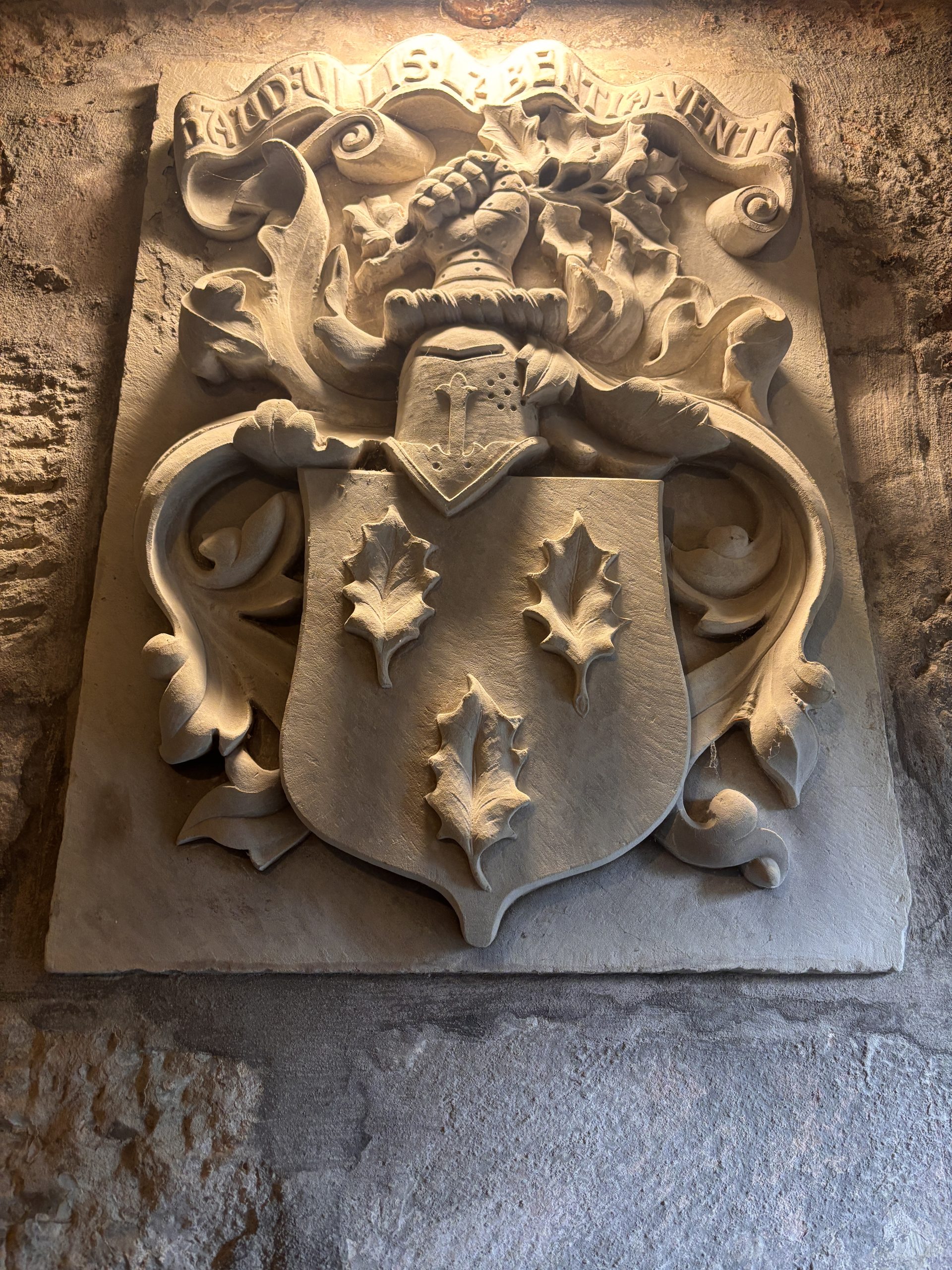
Upon entering the tower, to the right hangs the Irving coat of arms carved in stone, bearing the motto ‘Haud Ullis Labentia Ventis’, meaning ‘Never easily swayed by the wind’. A gauntleted arm holds a sprig of holly with seven leaves, below which a shield is also decorated with holly. This stems from the legend that in 1306, while fleeing the forces of King Edward I of England, a compromised Robert the Bruce sought refuge in the borderlands. He was apparently hidden and protected by William de Irwyn (the eldest son of the Irving Chief of Bonshaw). During one close escape, the King was forced to hide deep inside a holly thicket while his pursuers passed by. William de Irwyn stood guard over his sleeping king through the night. Whenever they went into battle, the Irvings would pin a sprig of holly to their chests to signify which clan they were from. There is still a centuries-old holly tree in the grounds of Bonshaw today.
The Pendant Stone
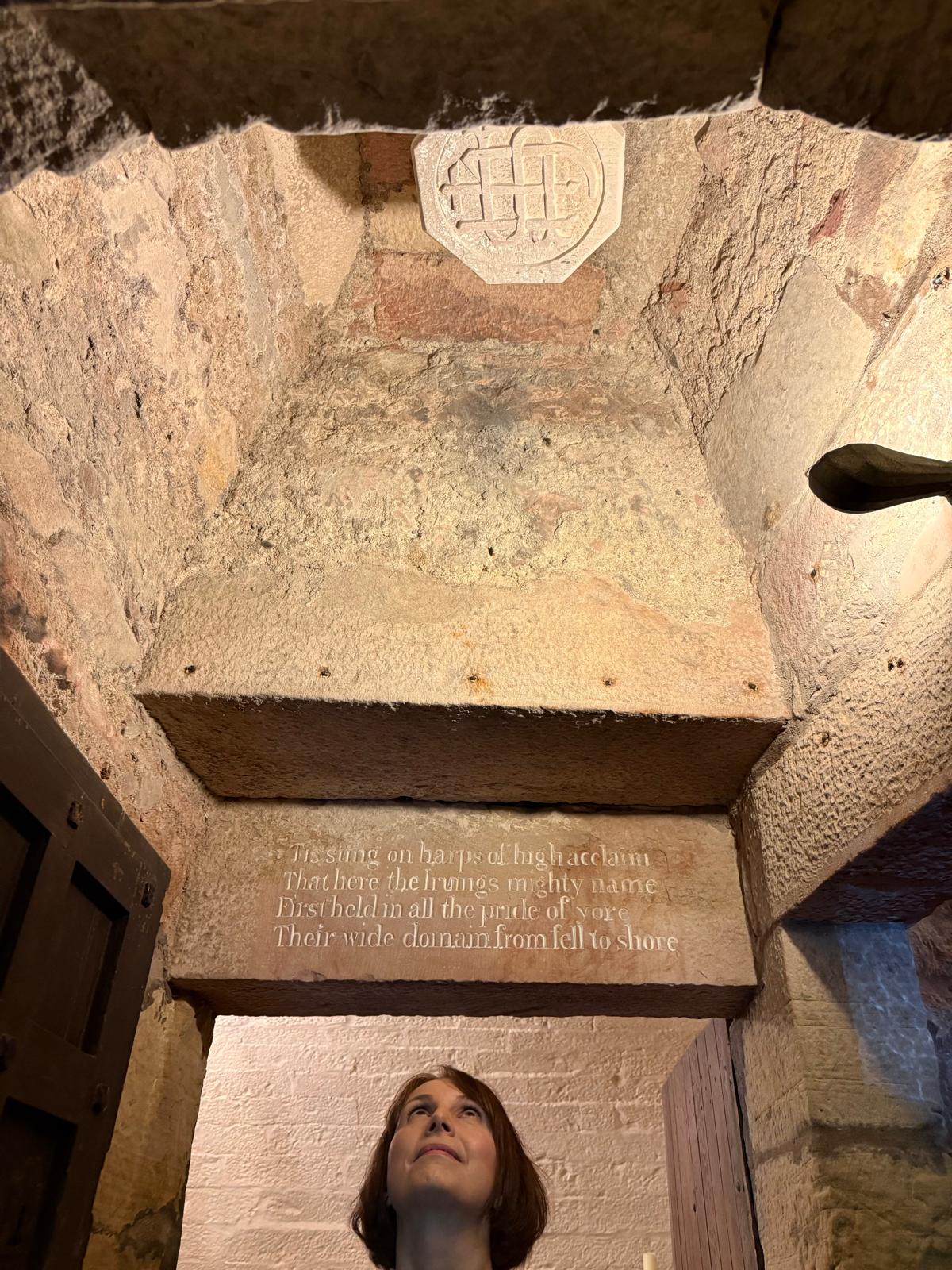
Above the door to the ground-floor room the Latin inscription reads, ‘Soli Deo honor et gloria’ – ‘Honour and glory to God alone,’ an indication of the family’s Catholic heritage. We pass below the ‘pendant stone’ hanging from the vaulted ceiling. Chris reveals: “It is said that any Irving to stand under it will be blessed.”
The Party Room
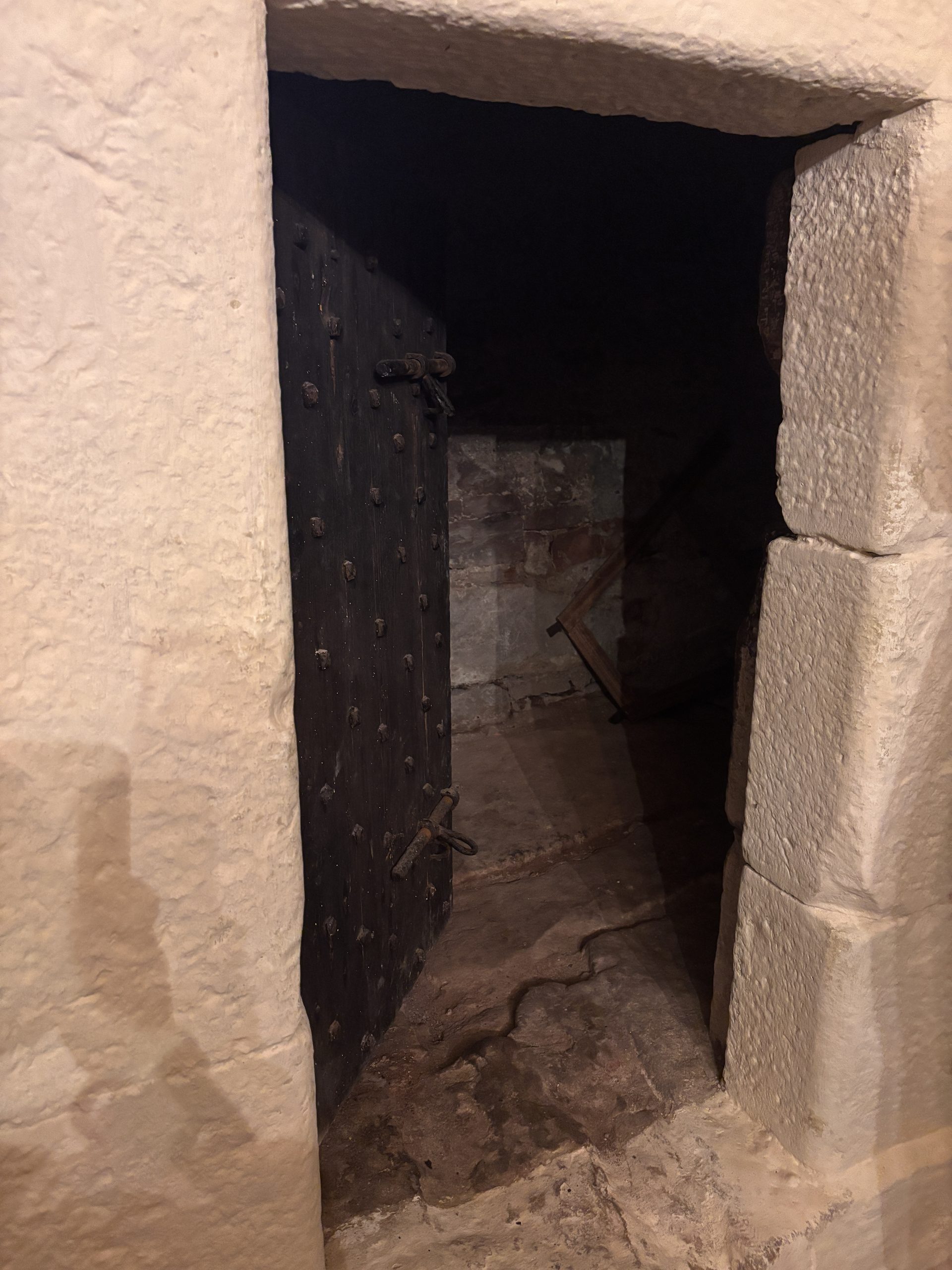
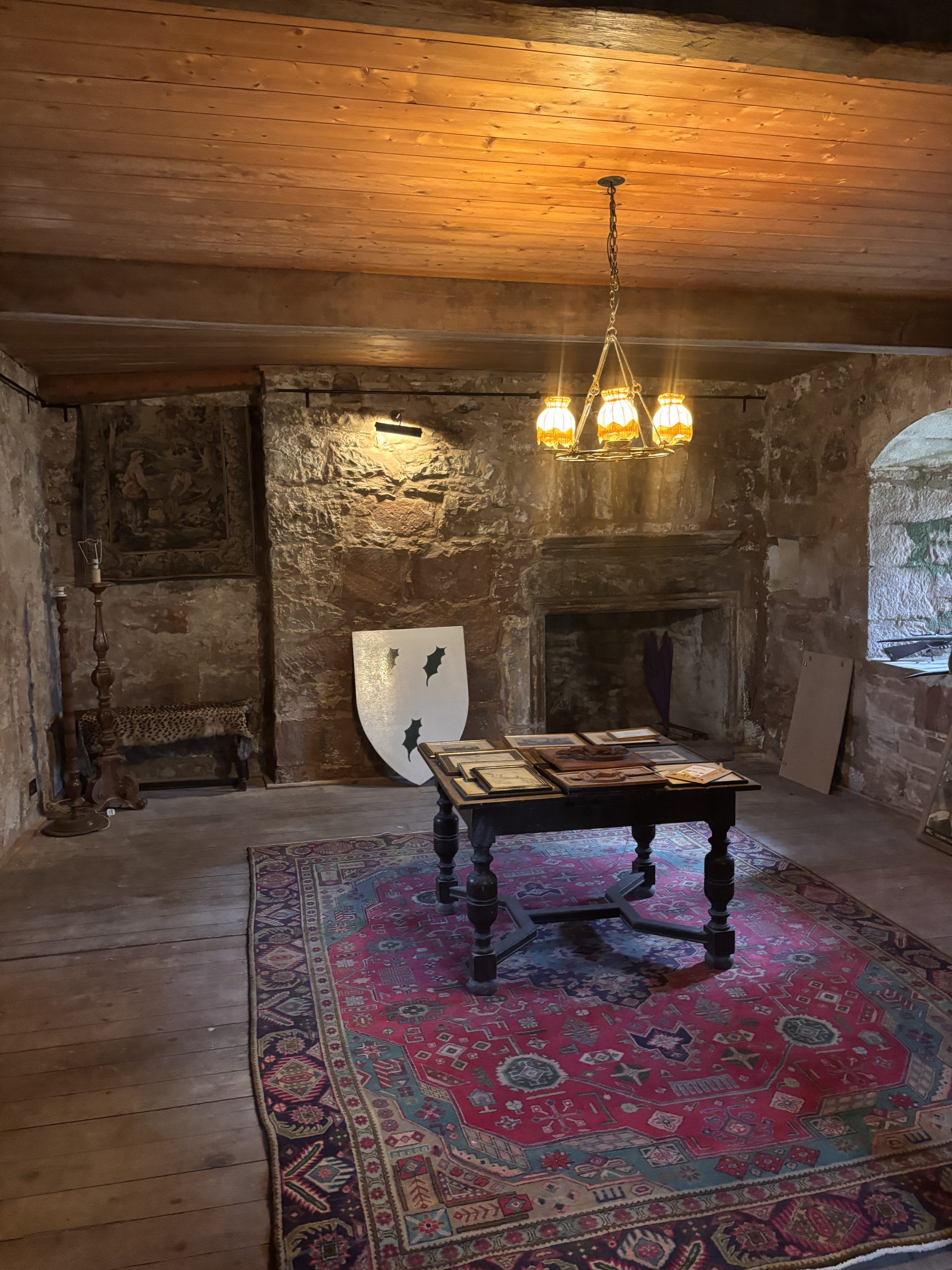
We enter the ground-floor room, where Chris shows us fragments of the former tower from the 14th century that his wife found while gardening. In the corner there is a small dungeon with an original door, where captives were kept to be ransomed. There are also deep, stone grain stores, a barrel vault and a butcher’s hook protruding from the ceiling. “A lot of Reiver raids would have been planned in this room. It’s mainly used for parties now!” Chris muses.
The Chief’s Room
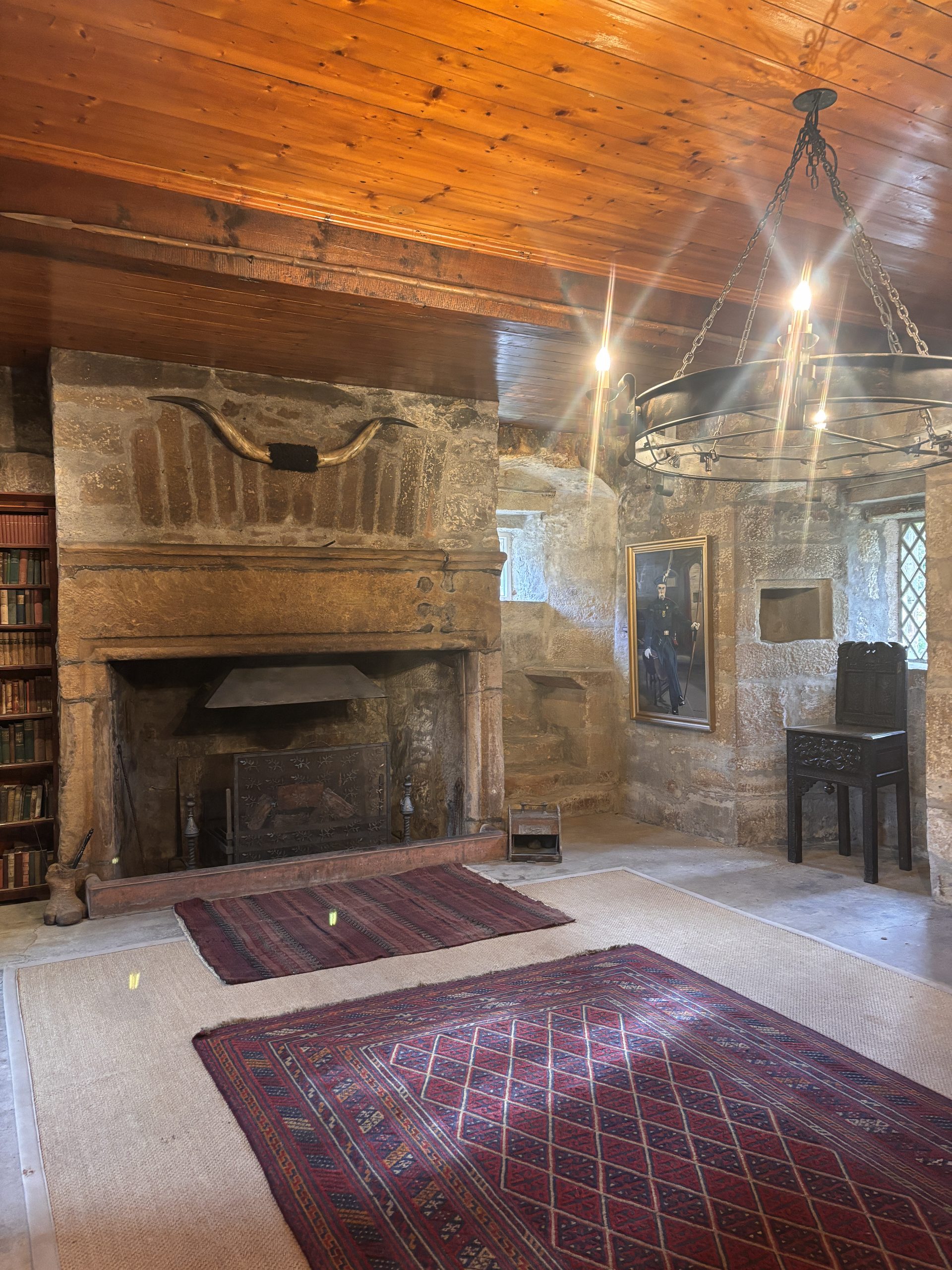
We move on up the stone spiral staircase towards the rather more grand ‘Chief’s Room’ on the first floor. The focal point is a huge fireplace with stone seats carved out by the window to the side so the heat from the fire would not damage the ladies’ complexions. There are also niches carved into the thick walls for the secure storage of salt. A portrait of John Beaufin Irving hangs by the window and large bookcases and antique furniture house historical artefacts including the collection of family bibles.
A Royal Visit
We ascend to the second floor and enter the Laird and Lady’s bedroom, complete with original ‘garderobe’ – a medieval toilet with a chute all the way back down to the ground floor. In 1602, King James VI of Scotland (James I of England) stayed in this room during a visit in which he asserted his authority to try to stop the fighting among the Border Reivers and make them pay their taxes.
A Time of Peace
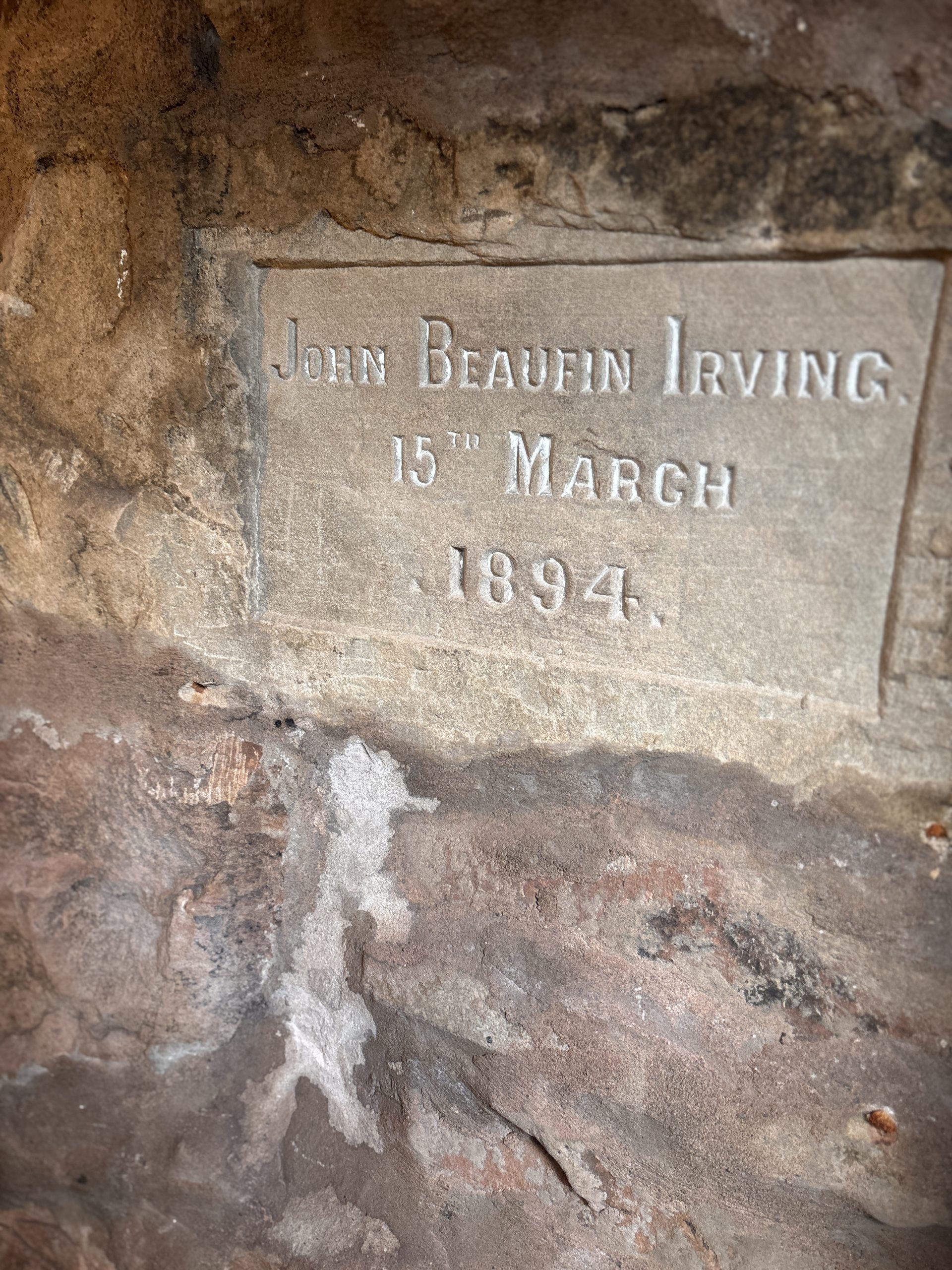
As the feuding ceased and the Borders became more peaceful, many of the peel towers were knocked down and the stone used to build houses. The fact that Bonshaw Tower survives indicates that the Irving family could afford to keep it and preserve their family history, probably thanks to their royal connections. In 1770, William Irving and his wife, Janet Douglas, built a house next to the tower. Originally, the servants lived in the tower, but it was too cold to put up with for very long. Therefore a subsequent owner, Reverend John Irving, built more bedrooms to ensure the comfort of the house staff. The Reverend’s son, Robert Nasmyth Irving, inherited Bonshaw Tower, but drank and gambled all his money away, leaving the estate burdened with debts. When he died, Robert had left Bonshaw to his mistress, Mrs Benyon Barton, but his relative, Colonel John Beaufin Irving, spent two years contesting the will and brought the estate back into the family. The Colonel is credited with rescuing and restoring Bonshaw Tower and the house, settling the debts by selling off much of the land. In 1896 he had a corridor built to connect the two buildings, in which a foundation stone is inscribed with this name.
On top of the world
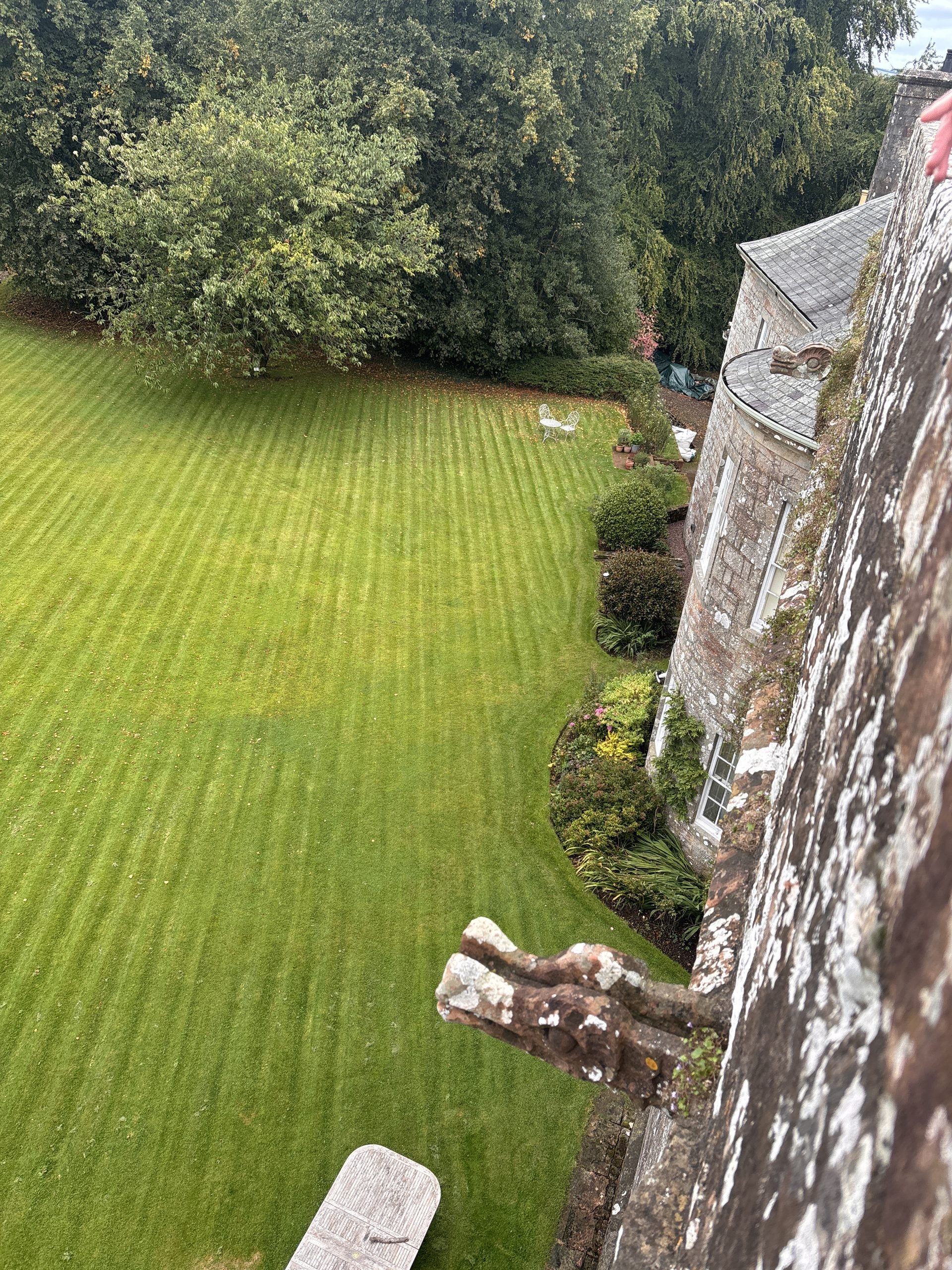
After climbing the final part of the spiral staircase to the roof of the tower, we edge along the high parapet and marvel at the expansive views. Chris’s dad used to tell him as a boy that “the parapet goes up and down to keep the sentries awake!” We get to peer down the murder holes from the perspective of the tower’s defenders and see the gargoyles to the front that are made to look like canons and those to the rear shaped like dragons.
The Irving Bell
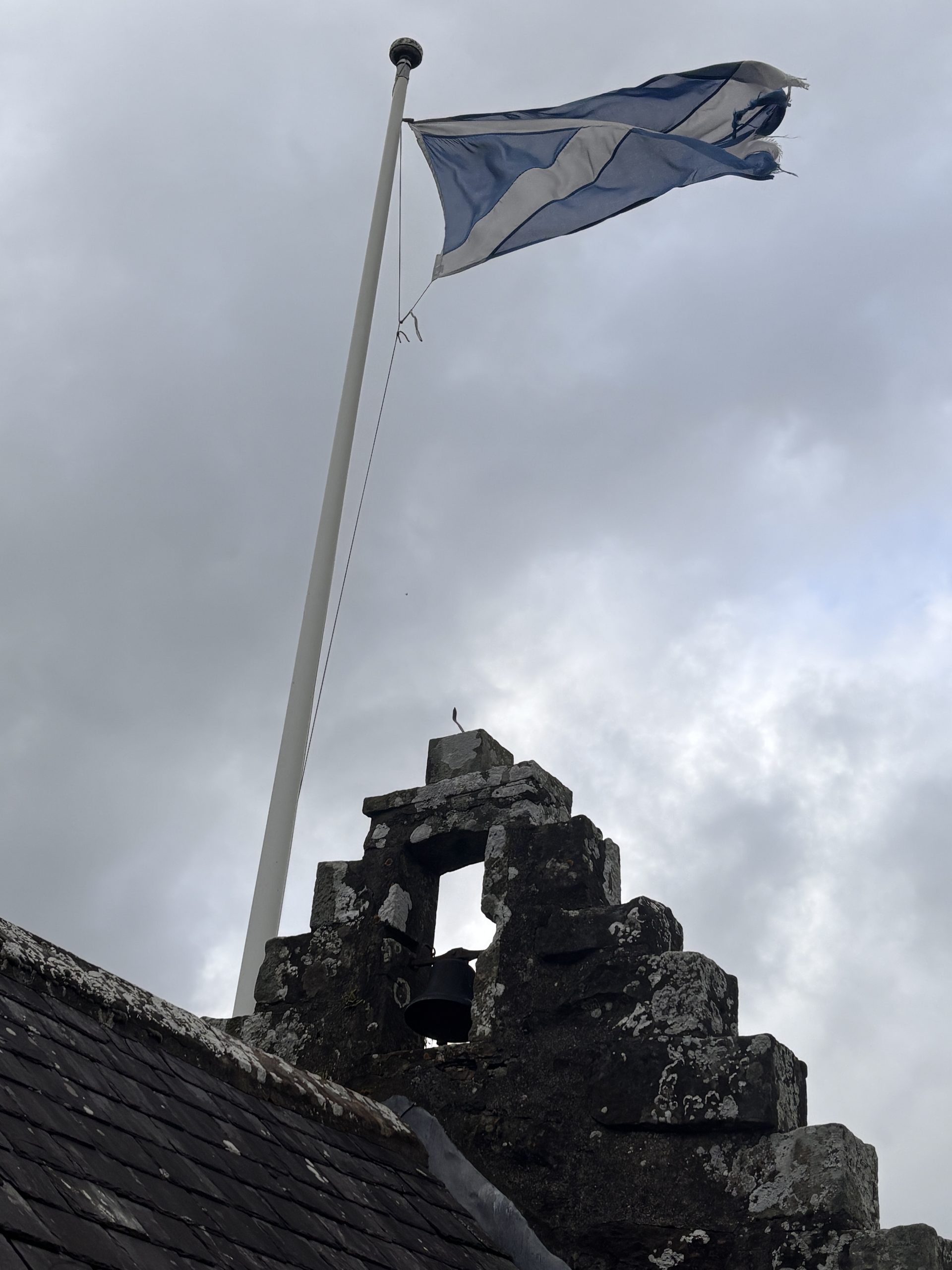
Above the roof hangs the original Irving bell, which was rung to alert the clan at the first sign of attack. The Irvings had a network of seven local towers: Bonshaw Tower, Rob Gill Tower, Woodhouse Tower, Wiseby Tower, Kirkonnel Tower, Stapleton Tower, which ‘Black Christie’, Christopher Irving, and his 19 followers successfully defended against 20000 attackers, and Cove Tower, which is near ‘Bruce’s Cave’, the setting of the famous story about Robert the Bruce and the spider. The ringing of the bell would spread the news of an attack throughout this network, gathering the Irvings to defend their family against the enemy. Pulling the rope to make the bell peal out across the countryside, I feel lucky to have been born an Irving at a more peaceful time in the region’s history.
Bonshaw Tower is now a private home but hired out for occasional weddings and events: Welcome to Bonshaw Tower