
By Alicia Ward
There’s a painting on Paul Harvey’s easel called ‘Never Trust a Hippie’. It features a young Richard Branson and the then Prince Charles. “I don’t really hate them,” Harvey concedes, amused at his own memories of the archetypal hippie/punk subculture clash, “but ‘never trust a hippie’ has stood me in good stead over the years.” It’s a line that says a great deal about the man today – mischievous, principled, and still operating by a code he picked up as a teenager in the late 1970s, when the Sex Pistols’ raw aggression and attitude rewired the way he thought about everything.
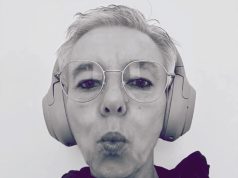
A proud West Midlander by birth, Paul Harvey’s commitment to his adoptive home in North Tyneside was born of his membership of original punk band Penetration, and his PhD in Stuckism from Northumbria University. These twin awakenings shaped him in identical ways, as a guitarist and an internationally renowned Stuckist artist. For Harvey, punk’s declaration of war on stadium rock and hippiedom was matched by Stuckists’ ridicule of the pretensions of the British art establishment.
The Punk Revelation
Harvey was sixteen when his world was shaken by hearing the Sex Pistols. Living in what he describes as a “normal house, normal family, Tory voters”. His father was a working-class man who had done well enough to run his own business. When ‘Anarchy in the UK’ crashed onto the scene, it shifted Paul’s way of seeing permanently. “It was like a paradigm shift in my thinking and I identified with it,” he says. “The lyrics weren’t about pixies in the woods, or hippie shite. They were about real things.”
What punk gave him, beyond the music itself, was permission. The central lesson, and one he has carried throughout his life, was democratic and uncompromising: you have as much right to do something as anybody else. Money, class, race: none of it matters. “So I just formed a punk band and got up on stage like thousands of other kids in the late ‘70s. And it was terrible! But we had the right attitude.” That attitude, he insists, was pivotal. Punk, for Harvey, was never a haircut or a safety pin in an ear. It was a way of living. “It doesn’t make you punk if you wear a safety pin. It’s more of a way of living your life.”




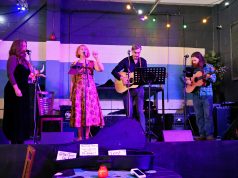
And he still lives by it. Penetration, one of the original late-seventies punk bands, signed to Virgin Records, are still performing. Harvey, who came into the band after initially watching them as a front-row adolescent fan, will headline the Blackpool Winter Gardens ‘Rebellion’ punk festival this August. Billed as the biggest punk festival in the country, they will also play a local gig at the Grove Theatre in Byker and a show in Edinburgh. “Seven years ago, we played the Royal Albert Hall,” he says. “But next month I’m going to play the Grove in Byker. Whatever. It doesn’t matter. That punk attitude will never go away.”
What keeps him coming back to the stage isn’t the limelight – Harvey is candid that he isn’t a theatre person who needs to perform. It’s the music itself, his self-confessed love of his guitars, and the chemistry of long-shared band experience that gets him back on stage. “It’s playing music with other people when you feel that power. Not like a kind of obvious power like volume, but just the power of people who know what they’re doing, and we’ve played together for a long time.”
Their audience has aged alongside them, though new generations are arriving with their own children in tow. Harvey is comfortable with this. The band choose venues not for prestige but for fit. Similarly, in his attitude to exhibiting his artwork, his recent exhibition at the Newcastle Arts Centre was precisely where it needed to be. “I wasn’t painting for the art establishment. I was painting for people like me.”
The Stuckist Awakening
The second revelation came later, and differently. By the mid-1990s, Harvey had spent over a decade drawing comics, work he found frustrating because his characters refused to look like themselves from panel to panel, and he had begun painting again. By the late ‘90s he was showing his work, first at Northern Stage then at similar venues. He painted every day; and has done so ever since.
Yet he felt directionless and alienated from the contemporary art world dominated by conceptualism and the Young British Artists, whose work felt hollow to him. “I don’t like conceptual. I don’t like Damien Hirst. It’s fake.” He was particularly sceptical of artists like Hirst and Tracey Emin who invoked punk as a reference point while, in his view, embodying the opposite of its values. “They’re like businesspeople. They’re not punk.”
Then, around 2001, he bought a copy of the Sunday Times and read an article which replicated the revelatory effect punk had on his music. “It was about being anti-anti-art and supporting painting, as painting pictures is what matters. And it had parts of the manifesto in there, and it just… Oh, man. It’s exactly how I feel. It’s exactly how I feel about the art world, exactly how I feel about painting.”
Stuckism had been founded by Billy Childish and Charles Thomson, the latter’s name becoming familiar to Harvey through the paintings reproduced in that article, works of flat colour and bold black line that chimed immediately with his own style. He did something out of character: he wrote to them. “I actually thought, I’m gonna email these people, because I think that I’m a Stuckist.” Thomson responded, praised his work, and before long Harvey was showing in London and would go on to receive international acclaim. Stuckism had given him what punk had given him decades earlier: direction, community, and the confidence to paint exactly what he wanted.
The movement’s opening manifesto line that Stuckism is the quest for authenticity became a subject Harvey later explored in his PhD, interviewing Stuckist artists and musicians. When he pressed Thomson to define authenticity, the answer was disarmingly simple: honesty. “And that was quite a good answer for me. That really helped me.”
The Art Establishment
Stuckism’s relationship with the British art establishment has been, and remains, one of open mutual hostility. His fellow Stuckists dressed as clowns and demonstrated on the steps of the Tate (under its then Director Nicolas Serota) carrying placards, ridiculing what they saw as an emperor-has-no-clothes moment in contemporary British art. “They just hated it, ’cause we were just calling them out. Meanwhile, some guy cut a cow in half and won the Turner Prize.”
The Tate, Harvey notes, now holds a collection of Stuckist pamphlets in its archive, but no paintings. After a major show in Liverpool, Stuckists offered paintings to the gallery free of charge. The Tate declined, citing lack of artistic merit. Harvey is wry about what the institution will eventually have to reckon with. “When we’re all dead, the Tate will have a retrospective on Stuckism. But they absolutely hated it and they didn’t understand it.”
He draws a direct parallel with punk. Critics said the Sex Pistols couldn’t play, critics said Stuckists couldn’t paint. The dismissal of the work on grounds of technical deficiency, was identical in both cases, and, Harvey argues, it missed everything that mattered. “Punk wiped those hippies away. All those people that could play really well but had nothing to say.”
The art establishment, he believes, is structurally resistant to disruption. He notes that Tracey Emin, whose mocking use of the word “stuck” inadvertently gave Stuckism its name, became a professor of drawing at the Royal Academy, despite having what Harvey regards as rudimentary drawing skills, while Stuckism remains persona non grata. The Tate, he observes, has a history of missing movements it will later be embarrassed to have overlooked: they failed to acquire Impressionist and Post-Impressionist works when they were affordable, just as they are now passing on Stuckism.
Still Painting, Still Punk
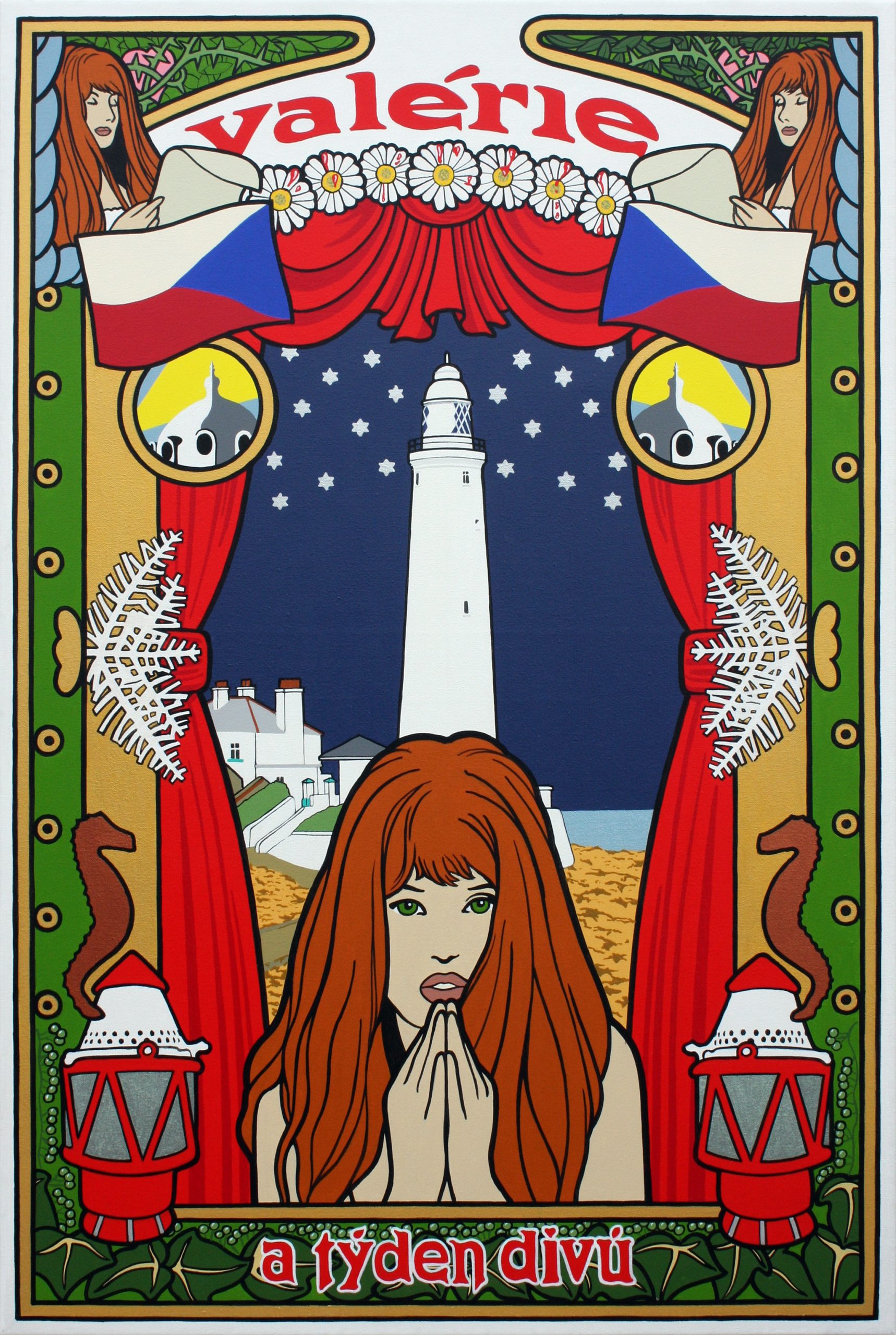
Harvey’s work has evolved over the decades, yet he describes its essential character as unchanged since childhood. As a teenager, before picture sleeves on singles were commonplace, he would design and paint his own. He took a record he loved and created a sleeve, drew a decorative border around the edge, and placed a literal image at the centre. “If you look at my paintings now,” he says, “most of them are still like that. Decorative border, object in the middle, very literal.”
His influences include Alphonse Mucha, the 20th century Czech Art Nouveau master beloved, somewhat ironically, by the very hippies Harvey spent his punk years dismissing, as well as Charles Thomson, Patrick Caulfield and Giotto. The lesson he took from all of them, and the lesson he passed on when he taught art students on Tyneside, was the same: don’t try to be clever. “Stuckism told me that my way of seeing was as valid as anybody else’s. Not better or more important. Just valid.”
Paul has shown internationally, from the Walker and Lady Lever Galleries in Liverpool to top contemporary galleries in Europe, particularly in the Czech Republic. He plays punk to audiences whose members are now bringing their own children, he is painting a picture which embraces his West Midlands beginnings. And he is, by his own account, contentedly living by two sets of rules he learned before he was twenty, and again just after he turned forty – rules that turned out to be the same rule in different clothes.
“Just like punk freed me up musically and creatively,” he says, “Stuckism did the same, like, twenty-odd years later.”