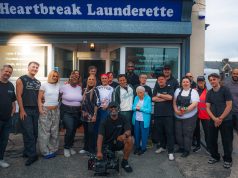
Nearly 70 years on the Fish Quay. A family connection stretching back generations. Thousands of workers, millions of boxes of fish, smokehouses, herring girls, fishermen, cafés, pubs and characters you simply couldn’t invent. In our new video, John Ellis takes us around North Shields Fish Quay and tells its story in his own words.
There are people who know the history of North Shields Fish Quay — and then there is John Ellis.
At 84 years old, John has spent almost 70 years working around the Fish Quay. His connection to the place goes back even further: John tells us his grandfather arrived on the Quay around 1880 and that his family has been connected with the fishing industry for nearly 150 years.
Now John has kindly given I Love North Shields a wonderful film to share.
And rather than us telling his story for him, this time we think the best thing to do is simply listen.
“There was nearly 5,000 people worked on this Fish Quay”
John left school in 1957.
After an unsuccessful attempt to find work at the pit, his father brought him down to the Fish Quay — and a working life began.
The place John remembers is almost unimaginable compared with the Quay we walk around today.
He recalls around 60 wholesalers, hundreds of other businesses and thousands of people making their living around the fishing industry.
The market operated day and night.
Fish had to be physically hauled around the Quay on bogies. John remembers men of extraordinary strength, shops and stores occupying the buildings we still recognise today, and an industry that seemed never to stop.
He recalls conducting a survey in 1975 when around three million boxes of fish were landed in a year.
At the height of activity, he remembers around 20,000 boxes in a single night passing through the fish market.
A very different Fish Quay
But it isn’t only the numbers that make John’s memories extraordinary.
It’s the people.
He remembers the cafés where workers warmed themselves after freezing mornings on the market, the smokehouses producing enormous quantities of kippers, the herring girls, fish merchants, fishermen and the women who carried heavy baskets of fish for miles to sell their wares.
And then there were the pubs.
John’s tour takes us into a North Shields of notorious drinking houses, larger-than-life characters and stories that sound almost unbelievable today.
There is a lovely humour running through John’s memories — even when he is describing just how hard life could be.
He remembers cars being physically lifted onto wooden fish boxes when their owners ignored requests not to park on the Quay.
He remembers fishermen testing their strength.
And he remembers being sent to sea as a young man, becoming desperately seasick and asking the skipper if he could go home — only to discover that “home” was about 75 miles of North Sea away.
From poverty to his own business
Behind the humour is another story.
John grew up as one of 15 children, living in two rooms in North Shields without electricity and with an outside toilet and water supply.
He speaks openly about being poor, struggling at school and being unable to afford a school uniform.
John is dyslexic and says he cannot read or write, but that didn’t stop him building and running his own business for around 60 years.
Eventually he found his own little fish store on the Quay.
The rent?
35p a week.
He recalls another premises costing just £2 a week — a building he says would command thousands today.
It is social history told not through statistics or textbooks, but through the experience of someone who was actually there.
Smokehouses, herring girls and a Quay that never slept
As John walks, almost every building triggers another memory.
He points out the old smokehouses and remembers 17 operating on the Fish Quay when he started.
He talks about the huge herring industry and the women who gutted and packed the fish into barrels.
He remembers women carrying enormous baskets of fish on their backs before travelling out from North Shields to sell it.
He remembers wagons leaving Shields loaded with hundreds of boxes of fish.
And he remembers a Fish Quay that operated:
365 days a year. Day and night.
For John, the buildings aren’t simply old buildings.
They were businesses.
Workplaces.
Livelihoods.
Places filled with people.
The stories hidden in the Quay
John also points out pieces of history that thousands of us probably walk past without ever noticing.
The old lighthouses that guided vessels into the Tyne.
The Victorian buildings.
The smokehouses.
The story of the wartime explosion that killed dozens of people.
The places connected to the lifeboat story.
The former “dead house”, where bodies recovered from the river and fishing boats were once taken.
The huge whale jaw that survives as another reminder of the extraordinary things brought back from the North Sea.
Even the wildlife gets a mention — dolphins, seals and the deceptively small lesser weever fish, whose venomous spines can cause extraordinary pain.
This is why listening to people such as John matters.
A building can survive for 150 years and still tell us very little unless somebody remembers what happened inside it.
The Fish Quay changes
Perhaps the most striking part of John’s story is the scale of that change.
The Fish Quay today is somewhere we walk, eat, drink, photograph and visit.
John remembers it as an intensely physical working environment filled with thousands of people.
Historical accounts support the scale of the transformation. In 2018, John recalled that when he began working on the Quay there were around 200 firms operating there and thousands of boxes of fish moving through in a day.
Yet despite all that change, John is still there.
People still come looking for him when they need to know something about the Quay.
Researchers and university students ask him questions. If he doesn’t know an answer, he says he’ll find somebody who does.
That knowledge is priceless.
Remembering the people
Towards the end of the film, John stops at one of the most poignant places on the Quay.
The memorial wall carries small fish plaques bearing the names of people who have died.
His father is there.
His grandfather is there too.
Looking at the wall, he reflects on just how many people he has known during his lifetime on the Fish Quay.
It brings the whole film back to what really matters.
The history of the Fish Quay isn’t only fishing boats, buildings, catches and industry.
It’s people.
And while we still have people who remember that world, we need to listen to them.
Thank you, John, for allowing us to share your memories.
This is North Shields Fish Quay in his own words — funny, tough, fascinating, occasionally unbelievable and completely rooted in a lifetime spent on the Quay.
And we’re very glad we’ve been able to preserve another little piece of it.
Video production by The Northern Storyboard
WATCH: John Ellis – North Shields Fish Quay in His Own Words