Every year our RNLI save countless lives and ensure the safety of all who venture into the sea, and this was no different 110 years ago, when one Shields family found themselves at the centre of a perilous rescue mission…
Dorothy Brownlee remembers photographs and memorabilia on the walls of her grandparents’ home about a heroic rescue during WWI by Tynemouth’s RNLI lifeboat of 50 people from the wreckage of the hospital ship Rohilla off Whitby in treacherous weather.
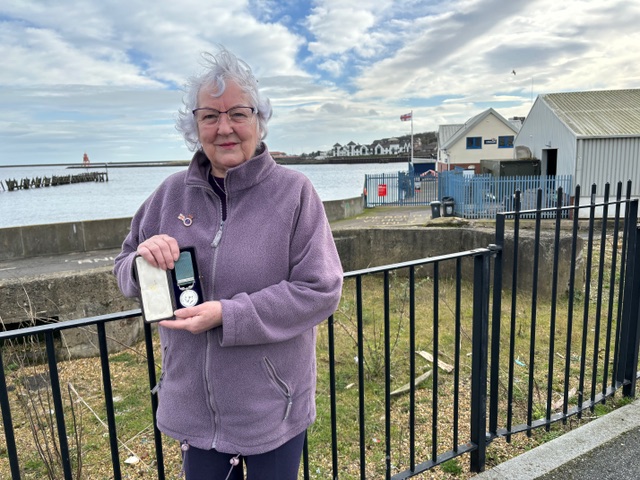
And now, as part of events commemorating the RNLI’s bicentenary, Dorothy has shared these memories on a special display at the Old Low Light Heritage Centre, North Shields Fish Quay.
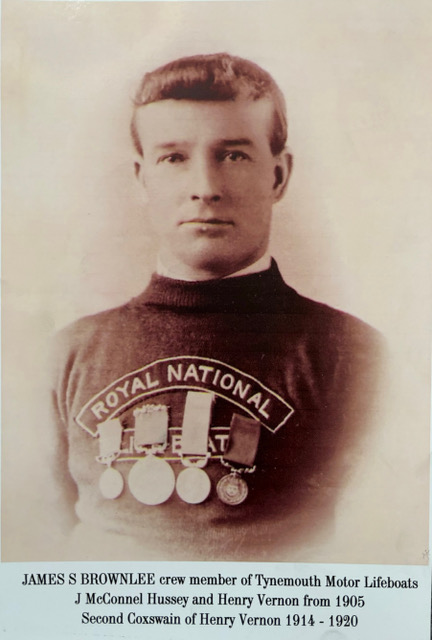
This tells how grandfather, James Brownlee was second coxswain and his brother John, bowman, on the Henry Vernon lifeboat, when it was called to assist. As one of the first motor lifeboats in the country, it had a better chance than the local ‘rowing’ lifeboats of reaching the ship.
On Thursday 29 October 1914, Rohilla, with 324 people on board, was on its way from Leith to Dunkirk to pick up wounded servicemen. A full storm was raging, it was pitch black, with no coastal lights due to wartime restrictions.
Early on Friday, the ship hit rocks off Whitby. The alarm was raised for the Rocket Brigade and local lifeboats but determined rescue efforts were hampered by gale force winds and high seas.
Some crew made it to shore on the only one of Rohilla’s lifeboats not to be swept away or smashed, 35 were rescued by the Whitby lifeboat, others made rafts or tried to swim to safety.
On Saturday at 3pm a telegram was sent seeking the help of the Tynemouth RNLI Henry Vernon lifeboat to rescue remaining people on board.
In just over an hour, a crew of ten, mainly regular lifeboatmen but some Fish Quay workers, set off in atrocious weather, on the 44 miles to Whitby, arriving at about 1am.

Later, Dorothy’s grandfather described the eight-and-three-quarter hour journey in gale force winds, and without navigation lights, as ‘uneventful’, though off Hartlepool the seas ‘had been like mountains’.
At 6am, in slightly improved weather, the Henry Vernon set off from Whitby to the wreckage.
Coxswain Robert Smith stopped the lifeboat seaward of the Rohilla, assessed the situation, then discharged oil from barrels on board to calm the waves. Soon survivors began to drop into the lifeboat from ropes or jumped. As the effects of the oil wore off, the lifeboat was swamped and thrown back by enormous waves that washed right over Rohilla, but the lifeboat moved closer and they were able to rescue all those still on board.
The Henry Vernon returned to the harbour at 8am to crowds cheering, ships’ sirens sounding and church bells ringing, there to welcome the 50 survivors who had been adrift for 52 hours.
Many medals were given, including to Dorothy’s grandfather and his brother.

Dorothy said: “The rescue is an important part of the history of the RNLI, and of its Tynemouth station.
“It shows the bravery of RNLI crew members, including some from my own family, who were willing to risk their own lives in dreadful conditions to save others.”
She added that her family took the rescue in their stride. An entry in her grandmother’s birthday book against 31 Oct/1 Nov 1914 said: “Saved 50 lives hospital ship Rohilla”.