Adapted from the memoirs of Alan Linkleter and research by James Linkleter
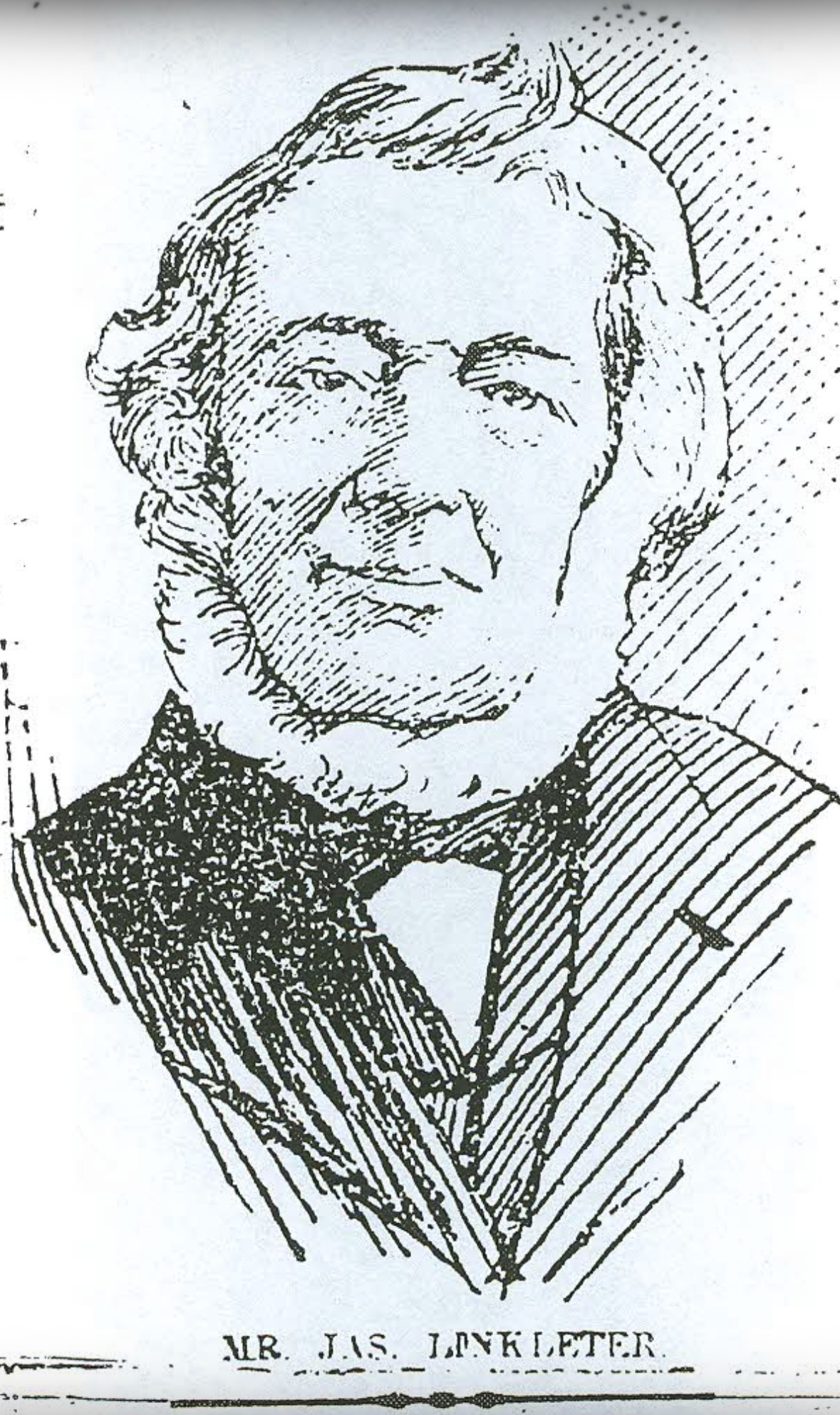
James Linkleter came from an enterprising family whose deep connection to the sea helped shape the history of Tynemouth and North Shields. An ingenious inventor, James made a name for himself all over the maritime world by developing pioneering lifesaving equipment and vessels including the John Foster Spence, and established a long-lasting business that would put North Shields on the map. After providing safety at sea for so many, however, in the end he could not save himself from this powerful force of nature which he had loved all his life.
Seafaring Forefathers
James Linkleter came from seafaring stock. His great uncle, Peter Linkleter, was Quarter-Master on the ill-fated H.M.S Bounty and his maternal grandfather, William Fry, went to sea as a boy. William’s ship came to the Tyne around 1796 and was moored in the estuary awaiting its return up river. He decided to lower the ship’s boat and scull to Prior’s Haven, where some people on the beach offered him money to row them around. His heart immediately taken by Tynemouth, William ‘paid off’ from his ship, set up camp on the green Haven slopes and proceeded to build a few bathing huts on the sand.
William built three flat-bottomed boats with a small ladder over the transom for the use of offshore bathers: ‘Friends’, ‘Friends Goodwill’ and ‘Friends Goodluck’, the names probably originating from the fact that his wife worked in service to a rich Quaker family in the village. Despite being press-ganged onto an H.M. Ship of the Line and wounded in service at the Siege of Ostend, William returned to Tynemouth and continued developing his business, which was continued by his children, Ned, Tom and Sarah Fry. An old poem about Ned Fry is quoted by local character, Lucky Lukey, in the 1928 Newcastle Sunday Sun:
For Aa’ve swum around the Haven an saved the lives o’sum
That might have met a watery grave:
O lads! You should see the watery sport
When the sea gans moontains high,
Hev ye ivver herod tell of a boat gannin doon
That’s been built and rigged oot
B’ the Pride o’ the Haven, Ned Fry?
Tourism comes to Tynemouth
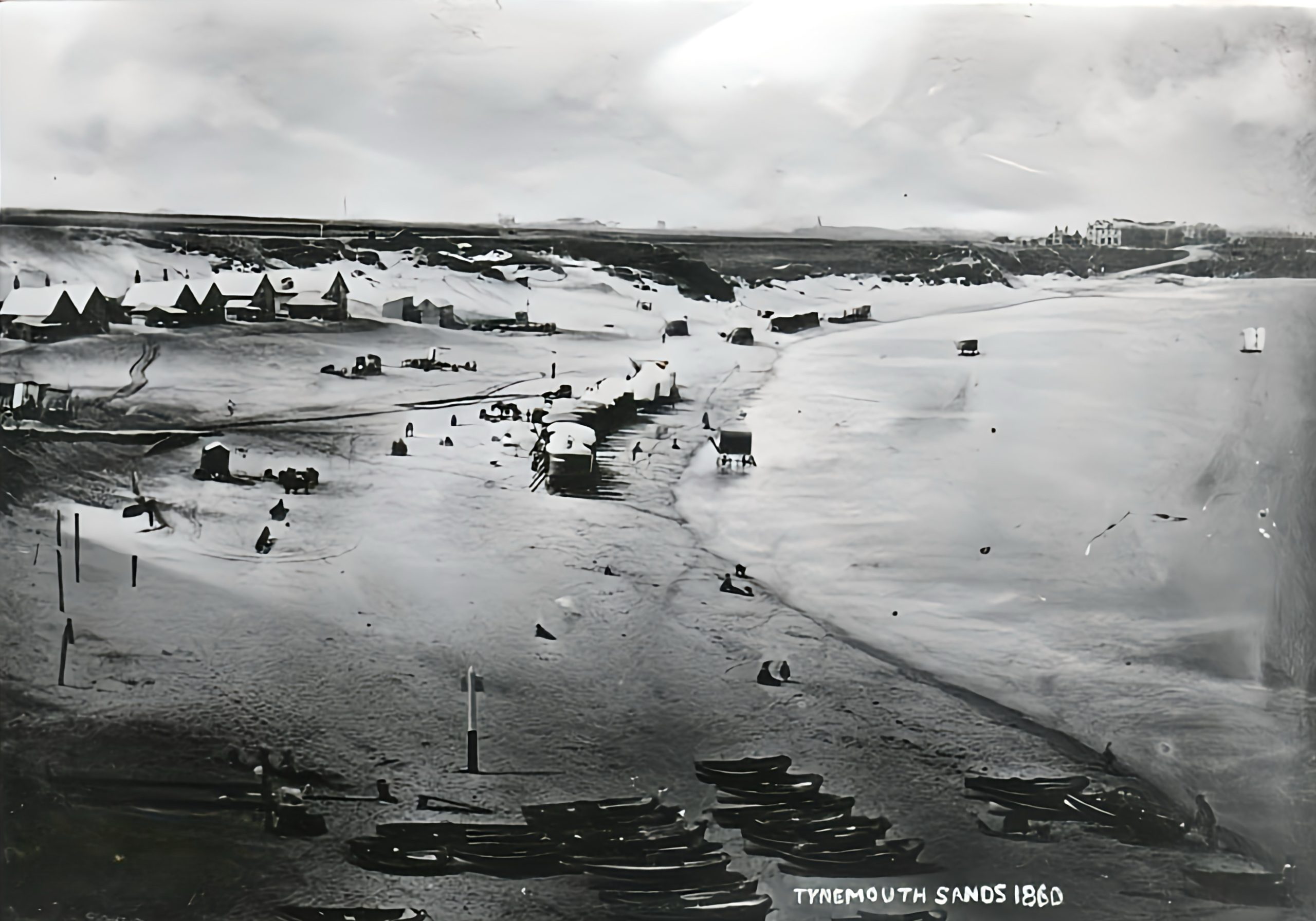
James Linkleter’s father, also James, left Orkney in Scotland to learn the trade of shipwright on the Wear. In his early twenties he shipped aboard a whaler out of the Tyne to the Southern Ocean as a ship’s carpenter and continued in this hazardous but well paid occupation for some years. He then met and married Sarah Fry, who, following in her father William’s footsteps, obtained permission from the Duke of Northumberland to open Tynemouth Longsands as a ‘bathing place’. James set about building some horse-drawn bathing machines and with the opening of the railway station in Oxford Street, Tynemouth Longsands became the main seaside destination for visitors from Newcastle and other urban areas.
James and Sarah had staked the south end of the beach as their exclusive right. More bathing machines were built and Sarah got her brother, Tom, to expand his pleasure boats from the Haven to the south corner of the sands. Although business was blossoming in the summer months, during the winter, James, the strong ‘Orcadian’, supplemented his income by donning a large creel on his back and pushing his shrimp net from Coble Dene, North Shields, to Prior’s Haven. The shrimps were boiled in a coal-fired ‘yetling’ in a small outhouse, shelled and sold to the large houses in the area for one shilling a jar.
Along came James Linkleter Junior and his brothers, Tom and William, who assisted their parents with the build-up of the business. Tom erected a ‘switchback’, a large wooden construction in the shape of a figure of eight, to the east of where the Plaza was later built. Then ponies and donkeys were introduced, which came under the control of William. On a visit to the Liverpool Exhibition, the young James purchased a Camera Obscura – a series of reflecting mirrors rotating 340 degrees and producing an enlarged view of the surrounding banks and beach. Admission was priced at one penny and as well as being a fun attraction, it also helped to find many a lost child! James Linkleter married his wife, Mary Ann Leadley, after purchasing some land next to where 1 Percy Villas now stands. He had the North Shields architects, Haswell & Son, draw up plans for a large detached house looking out to sea, which he then built himself.
The Young Inventor
Although having assumed more responsibility in the direction of his parents’ business, in the late 1870s James Linkleter had his mind on other possibilities. The British Merchant Navy was expanding its fleets of steam-driven iron ships and passenger ships were opening the sea-going routes to tourists abroad. James saw that the practice of boarding ships by makeshift gangway or plank may have sufficed for vessels of small tonnage, but liners and large cargo carrying ships needed something safer and more sophisticated. He visualised a ladder of robust construction which would allow for the rise and fall of ships in tidal waters. His solution was simple and ingenious – a small, right-angled casting attached to a guide bar. Each single step, held in brackets on the inside of stringers or the ladder sides and connected to the top and bottom platforms, gave a level step at all angles when raised or lowered by the ‘falls’ from a davit on the ship’s deck. When the ladder was out of use it could be pulled up to a horizontal position on the ship’s side, turned inward and fastened ‘home’ on the outside of the hull.
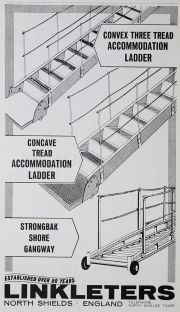
There was an immediate demand for the ‘Ship’s Self Levelling Step Accommodation Ladder’, so James purchased a large warehouse and stables running north to south from the top of Lovaine Row to Percy Street, where he installed a National Gas Engine for motive power, a woodworking plant and a blacksmith’s forge. In 1882, with his younger brother, Tom, a skilled carpenter, he established the business as Linkleter Bros. The now famous entrepreneur and philanthropist, James Knott, was expanding his ‘Prince Line’ fleet of merchant ships, and he ordered all of them to be fitted with Linkleter ladders. James’s next invention was the ‘Bulwark Freeing Port’, which allowed ships in bad weather to readily clear the decks of sea water and restrict its intake, enabling them to increase the Plimsoll line and carry more cargo. James did not limit his ideas to the maritime world. He also had a patent approved the ‘Letter Card’, which simplified sending messages by post, and in later years he turned his mind to aerodynamics with his ‘Swing Wing Application’.
The Perils of the Tyne
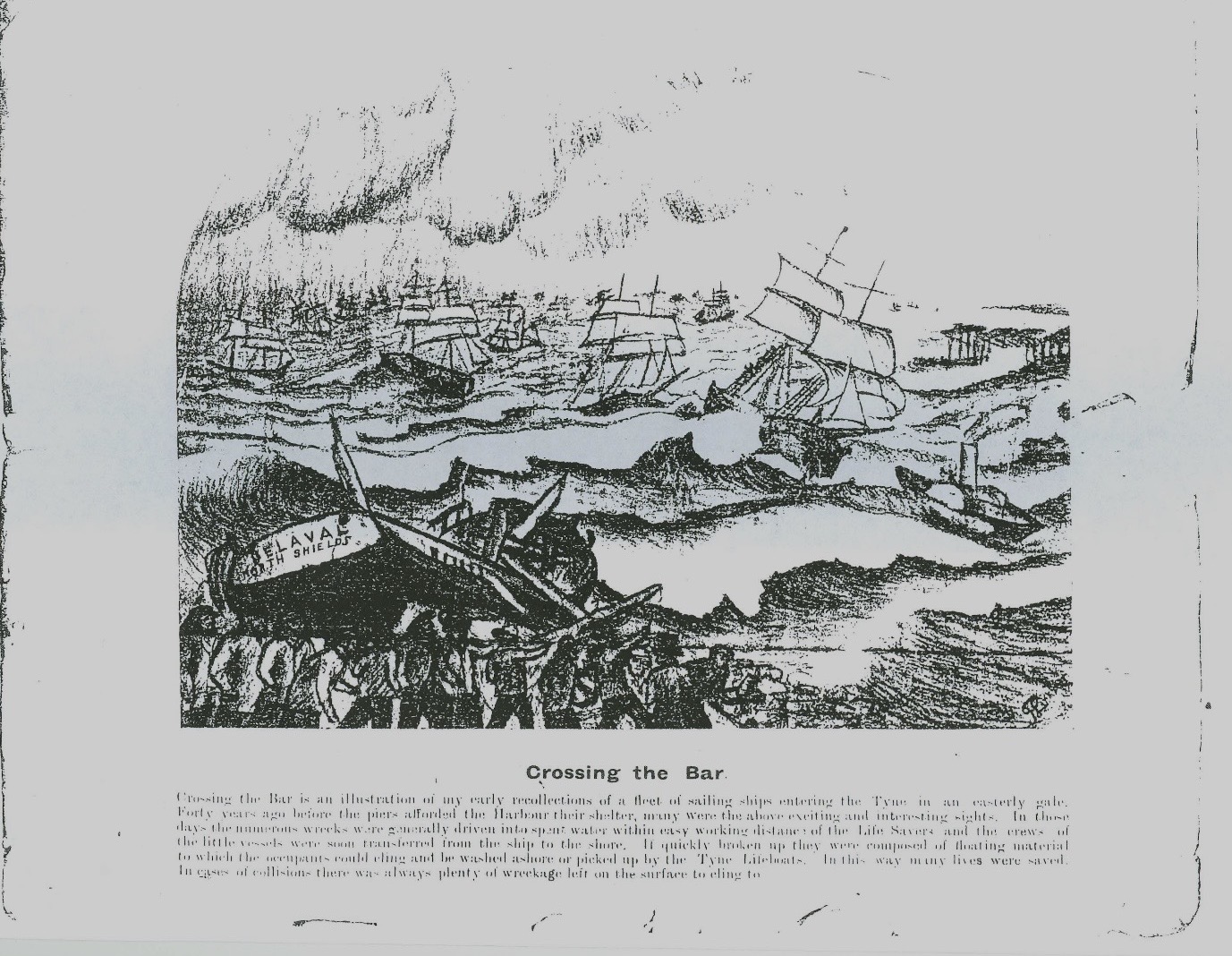
As well as patenting inventions, enterprising James supplemented his income by purchasing shipwrecks that were frequently washed up on on the shore for salvage, including the schooner ‘Jane Roberts’, the barque ‘Salween’, the steamer ‘La Belle’ and the Swedish iron barque ‘Inga’. Without the shelter of a harbour in those days, the conditions for entering the Tyne could be extremely dangerous. This was expressed in a drawing by James Linkleter of a fleet of old sailing ships entering the Tyne in an easterly gale published in the Daily Chronicle on 23d February 1901 entitled ‘Crossing the Bar’. The scene, from around forty years before its publication, depicts a rescue mission for a shattered wreck on the Black Middens whilst an old wooden tug guides the first of the fleet across the bar. These tugs were totally unprotected from the elements and ran great risks. Their fires and engines could be extinguished by one huge wave, rendering them just as helpless as the crafts they were attempting to assist.
The John Foster Spence
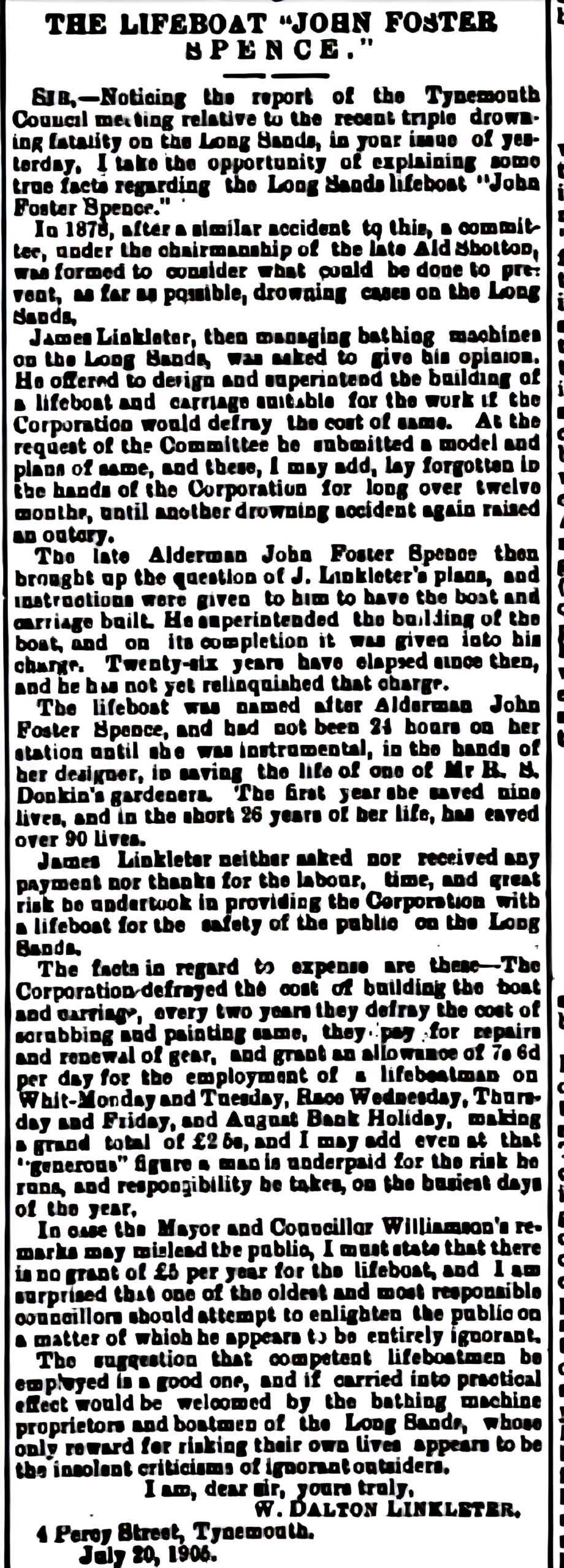
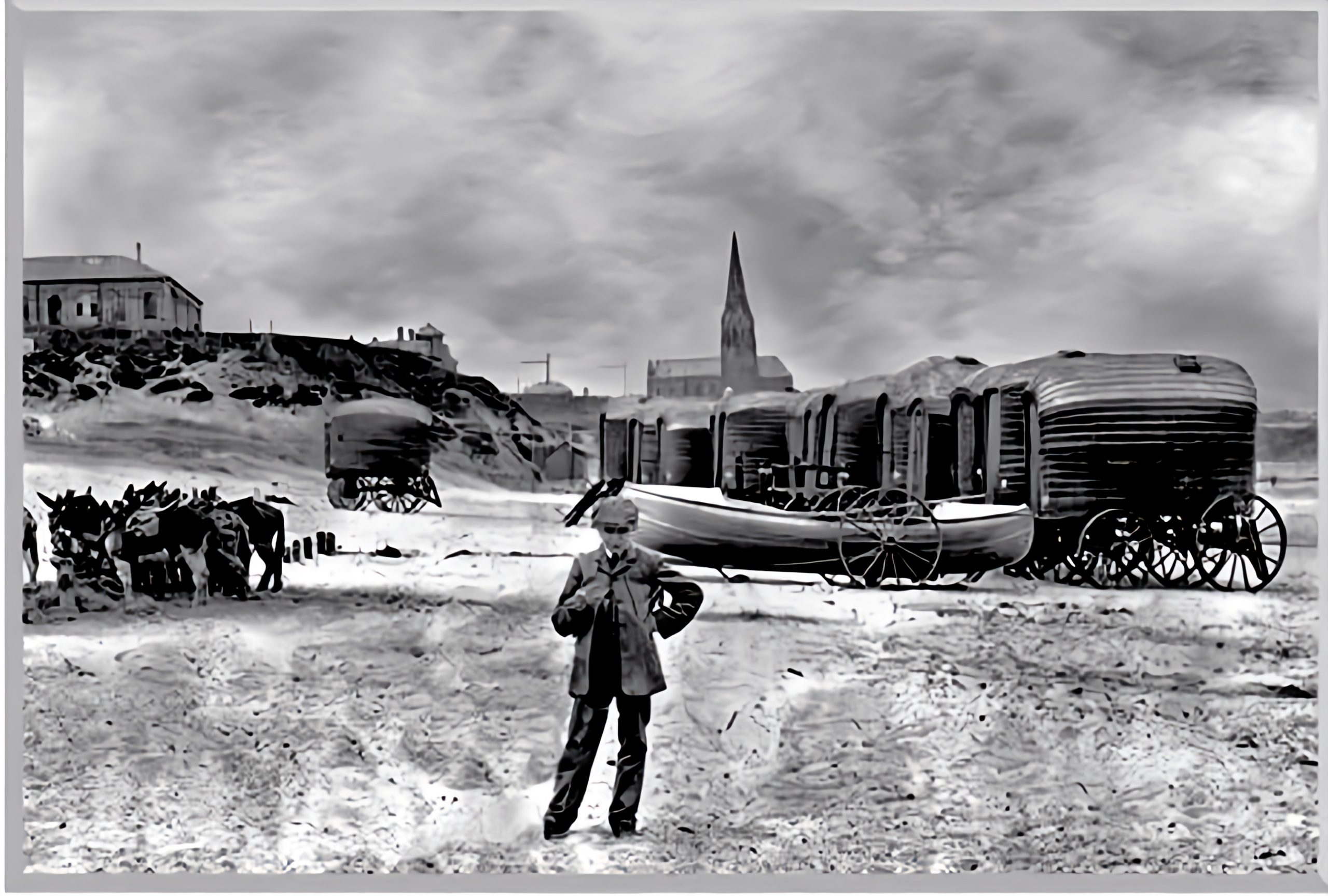
The sea also posed a threat to the area’s many tourists. In 1878, after a spate of drownings off Tynemouth Longsands, a committee was formed to consider what could be done to prevent further fatalities in the area. James offered to design and superintend the building of a lifeboat and carriage suitable for the work if the Tynemouth Corporation would cover the cost. At the request of the committee, James submitted a model and plan of the lifeboat. Years later, a letter from James’s son, William Dalton Linkleter, published in the Shields Daily News in 1905, describes how these plans ‘lay forgotten in the archives of the Corporation for long over twelve months, until another drowning accident gave rise to an outcry.’ He goes on, ‘The late Alderman John Foster Spence then brought up the question of J. Linkleter’s plans, and instructions were given to him to have the boat and carriage built.’ The boat was subsequently named the John Foster Spence, and William describes how she ‘had not been 24 hours on her station until she was instrumental, in the hands of her designer, in saving the life of one of Mr R.S. Donkin’s gardeners.’
At the time, James received no pay and little recognition for his achievements, having built the John Foster Spence with public safety as his sole motivation. The first of its kind, the lifeboat was slack around the bilges, making her very efficient listing over and giving more buoyant control to the lifesavers aboard. The John Foster Spence saved over 150 lives in her 47 years of service off Tynemouth Longsands and her unique design has been emulated by all bay lifeboats ever since.
The Shields Daily News, 1905
The Orcadian
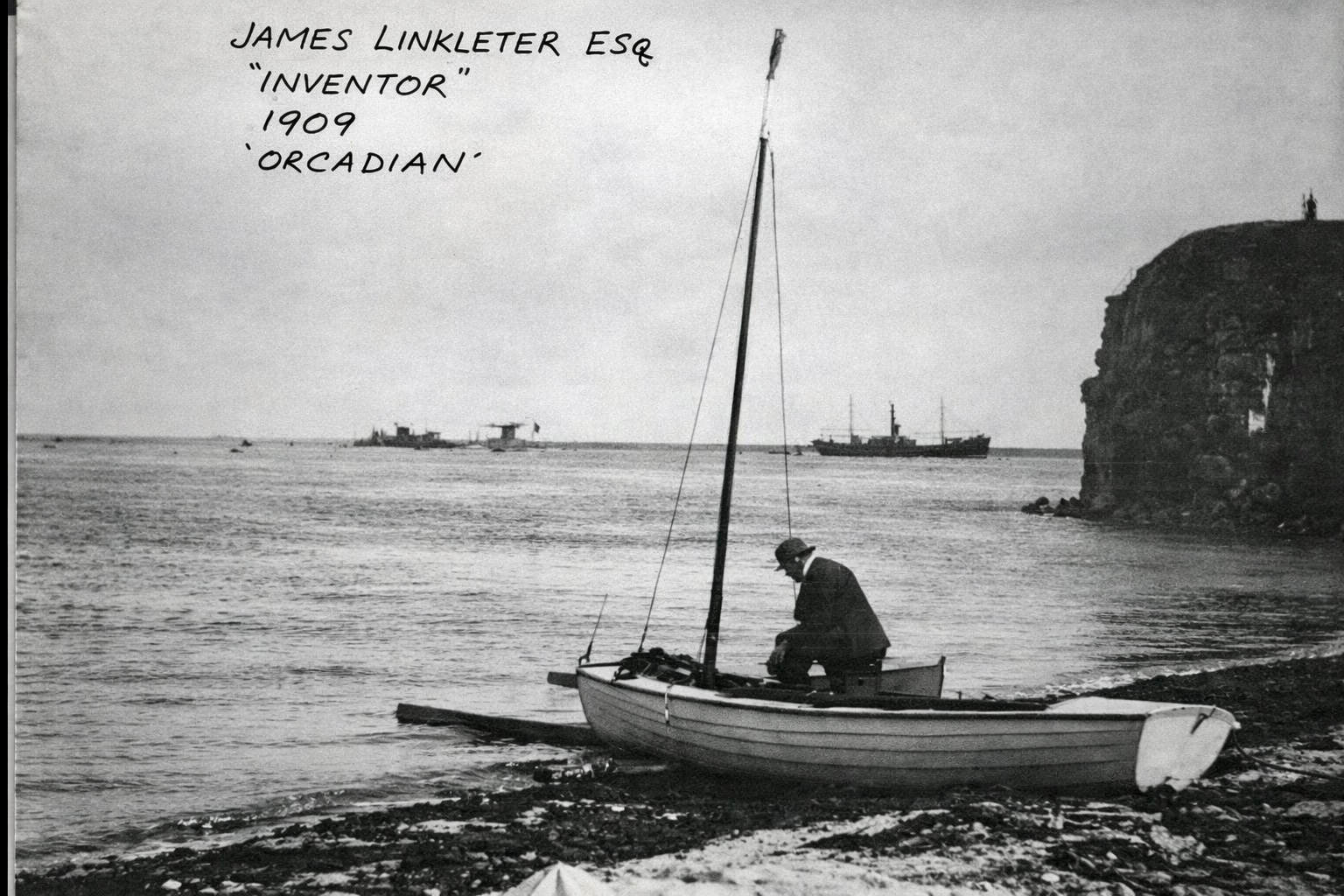
William Dalton Linkleter had obviously inherited his father’s bravery and concern for public safety, and he was awarded a medal for saving the lives of bathers at Tynemouth Longsands, as documented in the Northern Echo and Shields Daily News in October 1905. William had joined his father’s business after attending a small prep school in Warkworth Terrace, Tynemouth, and then Manson’s Academy, North Shields. On leaving school at 14, he was sent to a Shipbroker’s office on Newcastle Quayside. With a natural gift for writing and exceptionally clever with ‘the tools’, he was quick to learn the business, developing a flair for draughtsmanship. In 1896, James’s brother Tom had died prematurely and the firm’s name was changed to Linkleters Patent Ship Fittings Co, with James’s younger sons Herman and James Junior also coming on board after having had a similar education to William Dalton and with the same talents for practical mechanics. In 1906 James helped his son William Dalton to build the ‘Orcadian’, named in honour of James Linkleter Senior, who had left Orkney and settled in Tynemouth all those years ago. She was exceptionally fast for her size and won local sailing races organised by Tynemouth Sailing Club and Tynemouth, Blyth and Sunderland Regattas. Unbelievably, the current James Linkleter still has the Orcadian in his possession today.
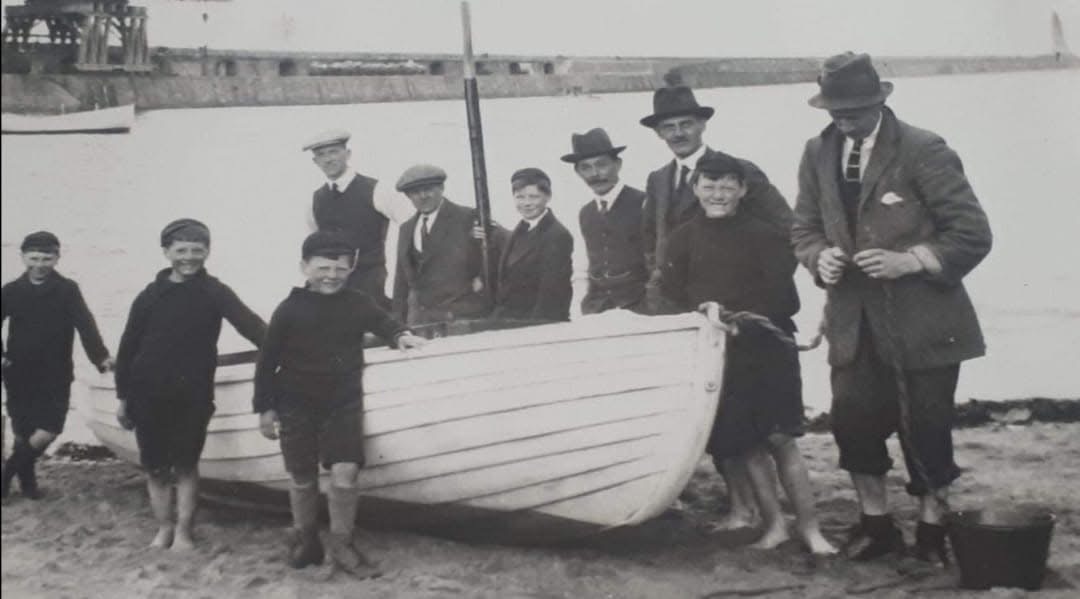
Front from left to right: Denis Linkleter, Jimmy Linkleter and Alan Linkleter
Back from left to right – William Dalton Linkleter, Eric Linkleter, Burt Sherlock (agent for the Duke of Northumberland), Jack Headley, Herman Linkleter and Frank Watts
James’s Greatest Invention
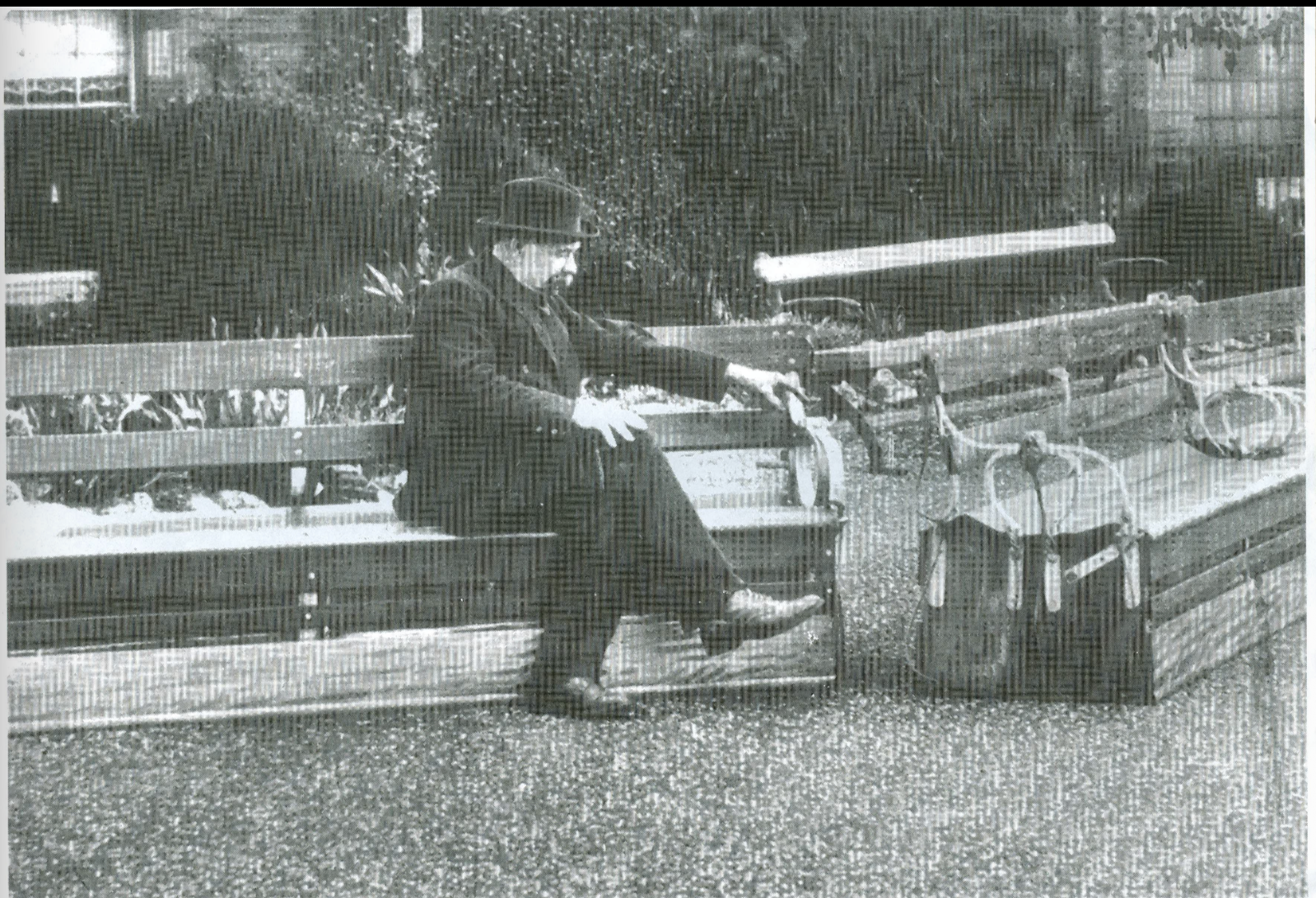
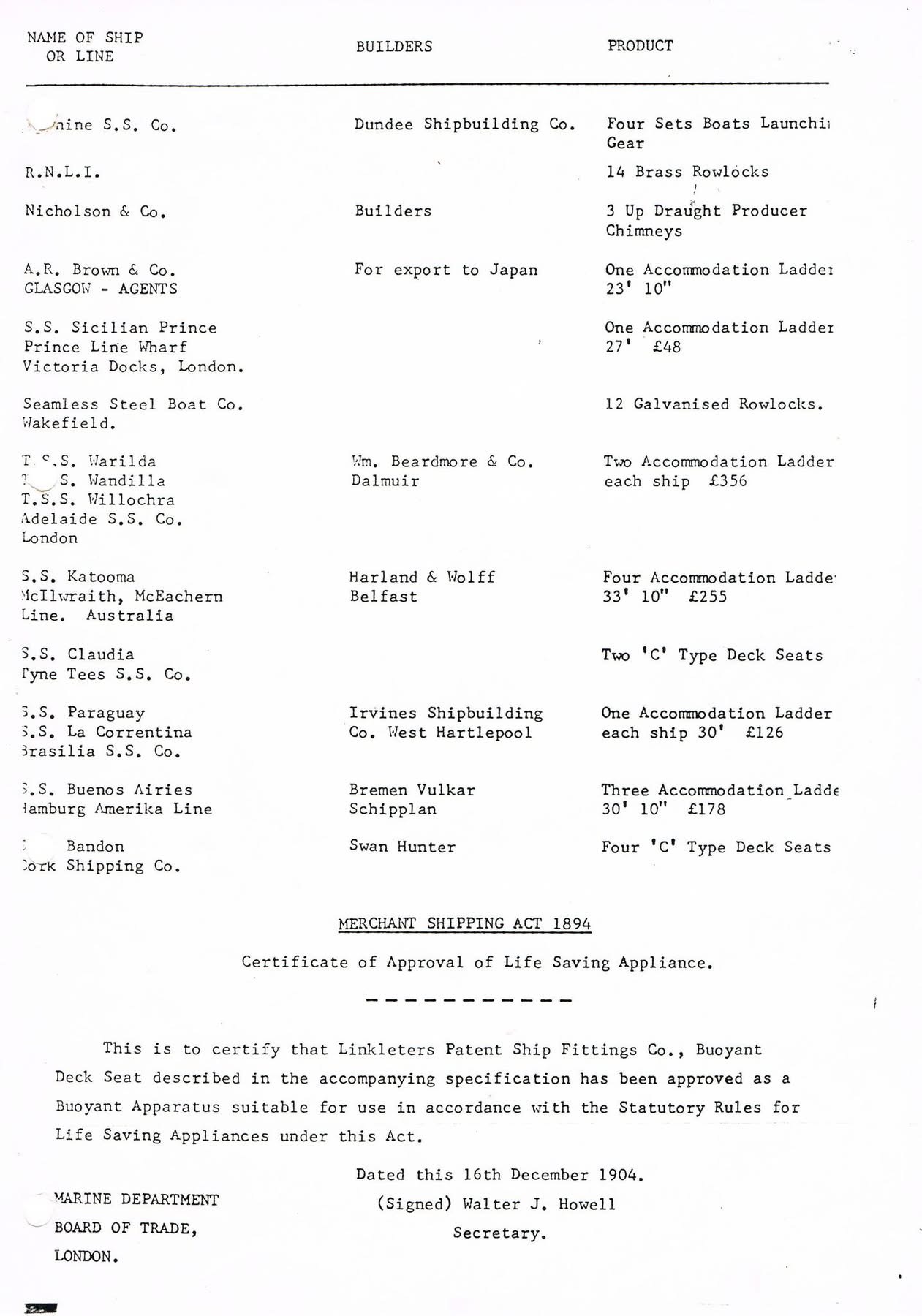
James Linkleter had further inventions patented at this time, including the Ship’s Boat Lowering and Detching Gear, the Up Draught Producer for Ventilator or Chimney and the Boat’s Hinged Rowlock. However, his greatest invention was yet to come at the turn of the century: Buoyant Deck Seats. Designed to play the dual role of seat and raft, the Buoyant Deck Seats had twin base sections fitted with air tight tanks and the top sides in seat form of teak lathes. When placed in the water, they released a locking pawl fitted to the separate base sections by the pressure of flotation, which allowed the seat to open into a raft. Different types were approved for patent rights, but the most popular was the ‘C’ type. They were readily in demand for passenger ships and ferries throughout the world.
Disaster Strikes
It was around this time that the ill-fated passenger liner ‘Titanic’ was nearing completion and James went to see the shipbuilders, Harland & Wolf, in Belfast, equipped with his model of the Buoyant Deck Seat. Alas, he was told that the Titanic did not need such fittings as she had specially constructed bulkheads to make her ‘unsinkable’ and life-saving appliances other than ship’s lifeboats were superfluous.
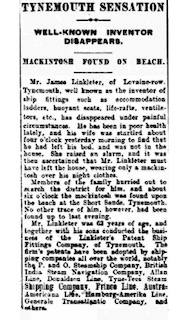
On 15th April 1912, the RMS Titanic tragically sank during her maiden voyage from Southampton to New York City after colliding with an iceberg. Over 1500 of the 2000 people on board perished. This news must have hit James hard, having had his lifesaving Buoyant Deck Seats rejected by the ship’s designers. In November of that same year, James Linkleter went missing. The headline in the Dundee Evening Telegraph on 15th November 1912 reads: ‘TYNEMOUTH SENSATION. Well-known Inventor Disappears. Mackintosh Found on Beach.’ He had got out of bed in the middle of the night, put on a coat over his nightclothes and wandered down to Tynemouth Short Sands, now more commonly known as King Edward’s Bay. He had been in poor health that year and it is speculated that he drowned himself over the needless loss of life in the Titanic disaster. At the age of 63, James Linkleter left behind a company formed from his own ideas, which, although small, had become known in shipping circles all over the world. What wealth he had earned had gone back into the business and for a man of his talents, his financial rewards had been modest. However, he had founded a business that would ensure his family’s livelihood for generations to come.
The Linkleter Legacy
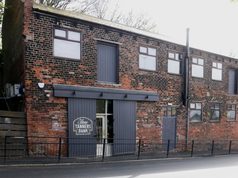
The subsequent Board of Trade enquiry after the sinking of the Titanic eventually decreed that all British foreign-going vessels would carry specific life-saving equipment such as James Linkleter’s rafts. It was bittersweet that the demand for James’s patented products increased dramatically so soon after his death. His sons, William Dalton and James Linkleter Junior, sought larger premises to aid the flow of production. In 1913 William Dalton acquired Robson’s sawmill and stack yards at Hudson Street and George Street, North Shields. He immediately sold the Stack Yards to Percy Hudson, a late employee of Robson’s, to start his business in the timber trade. Percy Hudson timber merchants are still operating in the same location to this day. William Dalton retained the main buildings and adjoining dwelling house, in which he built a large forge facing onto Northumberland Street.
Following the First World War, which had created even more demand for the firm’s products, Linkleters Patent Ship Fitting Company suffered through the Depression of the 1930s but business began to improve again with the government’s re-armament programme. At this time James Linkleter Jnr left to start his own business in Wallsend called Tyne Gangway Co, continued after him by his son, Dalton. The business is still in existence today and Dalton is now aged 97.
After James left, the Linkleter family firm was reorganised to make the Directors William Dalton and his sons, Colin and Eric, a competitive sailor who diversified the business by building and racing speed boats and yachts. In 1939 a young girl, Miss Joyce Mercer, joined the company and loyally served the firm in administrative capacity for the rest of her working life. After the Second World War, Eric’s son, Charles Dalton, and Colin’s son, Roy, joined the firm. In 1956, William Dalton Linkleter died aged 78, after devoting his life to developing the family business from the hard pioneering days through to ensuring its survival at times of crisis.
William Dalton’s son, Denis, stepped into his father’s shoes as Director of the company, which began to move into the manufacture of aluminium products such as the lightweight and rust-proof Strongbak alloy gangway. In the 1960s the old boat shop was pulled down and the large enclosed yard it partially occupied was completely covered in with steel girders and asbestos roofing. One of the dwelling houses was demolished to widen the entrance to the main factory. Colin then sadly died and his son Roy inherited his shares. Tom Bulman, a retired draughtsman from Swan Hunter’s, was brought in to deal with the plans and specifications previously done by Colin. Shortly after this Eric also died, leaving Denis as the last of the third generation in the company. His son, Charles Dalton, obtained his father’s shares. He became Managing Director when his cousin Roy left in the mid-1970s. Denis continued in his role as Director and maintained his cautious and experienced approach for the welfare of the firm.
In 1977 a crucial decision was taken to diversify the business and commence building fast cruising yachts in aluminium and fiberglass. Designed by a South Country naval architect, the yachts required a significant amount of capital investment. The prototype was sponsored to an international yachtsman, who was entered in a single-handed race across the Atlantic to gain publicity and there was TV coverage of the launch at Blyth. Unfortunately, during the race both the yacht and crew were picked up in distress by a passing ship. A few orders were obtained, however, after the second yacht was built, which Charles Dalton raced with some success on the North East Coast.
During the worldwide recession of the 1980s, whilst there was a steady flow of orders for the company’s main products and the developing aluminium structures, the added competitiveness of the yacht market called for very keen pricing. Denis died in 1980 aged 70, after almost 50 years of service to the family firm. He had dealt with all the company’s connections to the shipping world and his personal goodwill had been extremely beneficial in building up the company’s business. Miss Joyce Mercer had also retired and it was necessary to introduce completely new administrative personnel. Despite every effort by Charles Dalton to improve the position, the old company was under severe financial constraints due to the economic climate. In 1983, the old family business was finally taken over by new owners, after trading for 100 years and extending over 4 generations of Linkleters.
The Linkleter name repeatedly pops up throughout local history and there are many more tales to tell. Keep an eye out for future related articles and get in touch if you have any relevant information about this remarkable family.