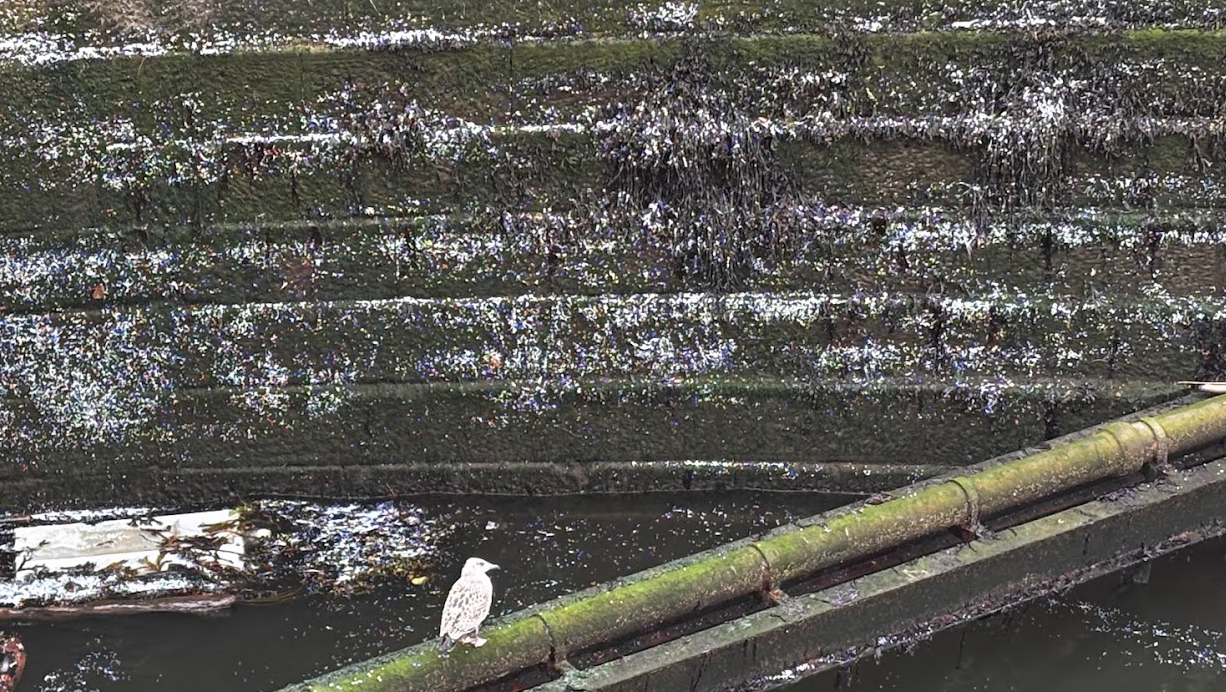
On Sunday 19 July, what began as a shipping collision at the Port of Tyne quickly became one of the most significant environmental incidents the North East has faced in recent years.
Over the following week, plastic pellets known as nurdles washed ashore along miles of coastline, prompting a large-scale response involving the Port of Tyne, local councils, environmental organisations, emergency services and hundreds of volunteers.
The clean-up is still ongoing, but one week on, it’s possible to look back at what happened, what has been done, and why the incident has sparked such strong public reaction.
Sunday 19 July – The Collision
At around 1pm, the offshore installation vessel Wind Orca collided with the berthed container ship BG Orange at the Port of Tyne.
The impact caused a dockside gantry crane to collapse onto the vessel. One worker was taken to hospital with injuries that were not believed to be life-threatening.
During the collision, containers carrying plastic resin pellets—commonly known as nurdles—were damaged. Authorities estimate that around 25 tonnes, or approximately one billion pellets, entered the River Tyne.
Why the Response Wasn’t Straightforward
One of the questions repeatedly asked over the past week has been:
“Why weren’t more of the pellets stopped before they reached the sea?”
The Port of Tyne says the situation was more complicated than many people realised.
The collapsed crane was lying across the ship and had become intertwined with its equipment, creating what the Port described as a complex salvage operation. Before recovery teams could safely work around the vessels, specialist engineers first had to stabilise the damaged crane and assess the site.
At the same time, the Port says it activated its pellet spill response immediately, deploying floating containment booms around the damaged vessel, sending recovery boats onto the river and working alongside partner agencies including the Environment Agency, Maritime & Coastguard Agency, North and South Tyneside councils and Northumbria Police.
The challenge was that the River Tyne is tidal.
Once the pellets entered the water, every tide increased the likelihood that more would escape beyond the river mouth.
The Pollution Spreads
Within 24 hours, nurdles had begun washing ashore.
Initially reported on South Shields beaches, they were soon found at Tynemouth Longsands, King Edward’s Bay, Cullercoats, Whitley Bay, before spreading further south towards Sunderland and north towards Blyth and Northumberland.
Environmental charity Fidra, which campaigns to reduce plastic pellet pollution, warned that nurdles are among the most difficult forms of plastic pollution to remove.
Only 1–5mm in size, they can float or sink depending on conditions, travel long distances with tides and currents and are often mistaken for food by seabirds, fish and marine mammals.
What People Were Concerned About
As more beaches became affected, so did public concern.
Across North Shields and beyond, many residents accepted that the collision itself was an accident.
Instead, questions focused on the response.
People asked whether more could have been done during those crucial first few days to stop pellets reaching the North Sea.
Others questioned whether enough specialist equipment had been deployed quickly enough and whether communication with the public could have been clearer.
Throughout the week, social media became a place where people shared photographs, reported new sightings and discussed what they were seeing on local beaches.
What the Authorities Have Said
The Port of Tyne has consistently maintained that its emergency response plan was activated immediately after the scale of the spill became known.
It says the clean-up has had to run alongside a highly complex crane recovery operation and that safety at the collision site has remained the first priority throughout.
North Tyneside Mayor Karen Clark has called for answers about the speed of the initial response and communication with local authorities, saying residents deserve to know what happened, why it happened and what lessons will be learned.
North East Mayor Kim McGuinness described the spill as “devastating”, calling it one of the biggest pollution incidents of its type in Europe. She has said those responsible should meet the cost of the clean-up and that the response must continue until the environmental impact has been addressed.
A Significant Statement
Almost a week after the collision, Cadeler, the Danish company that owns the Wind Orca, publicly acknowledged the concerns being expressed by local communities.
Chief Executive Mikkel Gleerup said:
“I recognise that the pace of the initial mobilisation of specialist contractors has not met community expectations.”
He added that Cadeler shares concerns about the environmental impact of the spill and that “time is of the essence”, with significant specialist resources now deployed to support the clean-up.
For many residents, this marked an important acknowledgement that the concerns raised by local communities had been heard.
The Community Response
Alongside the official response, another story unfolded.
Hundreds of volunteers came together across North Shields, Tynemouth and South Shields.
Some arrived before sunrise.
Others came after work.
Many returned day after day.
Armed with sieves, buckets, brushes and gloves, they worked patiently across the beaches, removing as many pellets as possible before the next tide arrived.
Community groups worked alongside residents, environmental charities shared guidance, photographers documented the scale of the spill and local organisations helped coordinate volunteers.
It was a reminder that while environmental incidents may begin unexpectedly, communities often play an important role in the response.
One Week Later
Today, the clean-up continues.
Experts agree that it will be impossible to recover every pellet. Their small size and the tidal nature of the coastline mean some will continue to wash ashore for some time.
Investigations into the collision remain ongoing.
There will undoubtedly be further questions about prevention, preparedness and how similar incidents can be managed in the future.
But one thing has already become clear.
This has not only been a story about a shipping collision.
It has been a story about people.
About volunteers giving up their weekends.
About organisations working together.
About residents who refused to stand by and do nothing.
And about a community determined to protect the coastline it calls home.
Timeline
Sunday 19 July
- Around 1pm: Wind Orca collides with BG Orange at the Port of Tyne.
- Gantry crane collapses.
- One person taken to hospital.
- Plastic pellets released into the River Tyne.
20–22 July
- Nurdles begin washing ashore at South Shields before spreading along the North Tyneside coastline.
- Local authorities begin monitoring beaches and issuing public advice.
23–24 July
- Port of Tyne publishes detailed updates explaining its response.
- Floating booms, recovery vessels and multi-agency clean-up operations continue.
24–27 July
- Hundreds of volunteers take part in organised and community-led beach cleans across North Tyneside.
- North East Mayor Kim McGuinness and North Tyneside Mayor Karen Clark call for answers and continued action.
27 July
- Cadeler acknowledges that the initial mobilisation “has not met community expectations” and confirms additional specialist resources have been deployed.
Sources
This article has been compiled using information from:
- Port of Tyne – Official Updates & Q&A
- Port of Tyne – Plastic Pellet Spill Response
- ITV News Tyne Tees
- BBC News coverage (reported via Yahoo News)
- The Guardian
- Fidra – The Great Nurdle Hunt
- Sunderland City Council
In addition, I Love North Shields documented the volunteer response throughout the week, attended beach clean-ups, spoke with volunteers and residents, and photographed the clean-up efforts across North Shields and Tynemouth.