
By Noreen Rees and Sue Wilkinson
Peter Mortimer – poet, playwright, theatre director, journalist and blogger – opens up to I Love North Shields about his adopted home of North Shields/Cullercoats and his history of extreme challenges.
To enter Peter Mortimer’s house is to visit another world, a sort of timeless, mythical place with its roots in the 1970s.
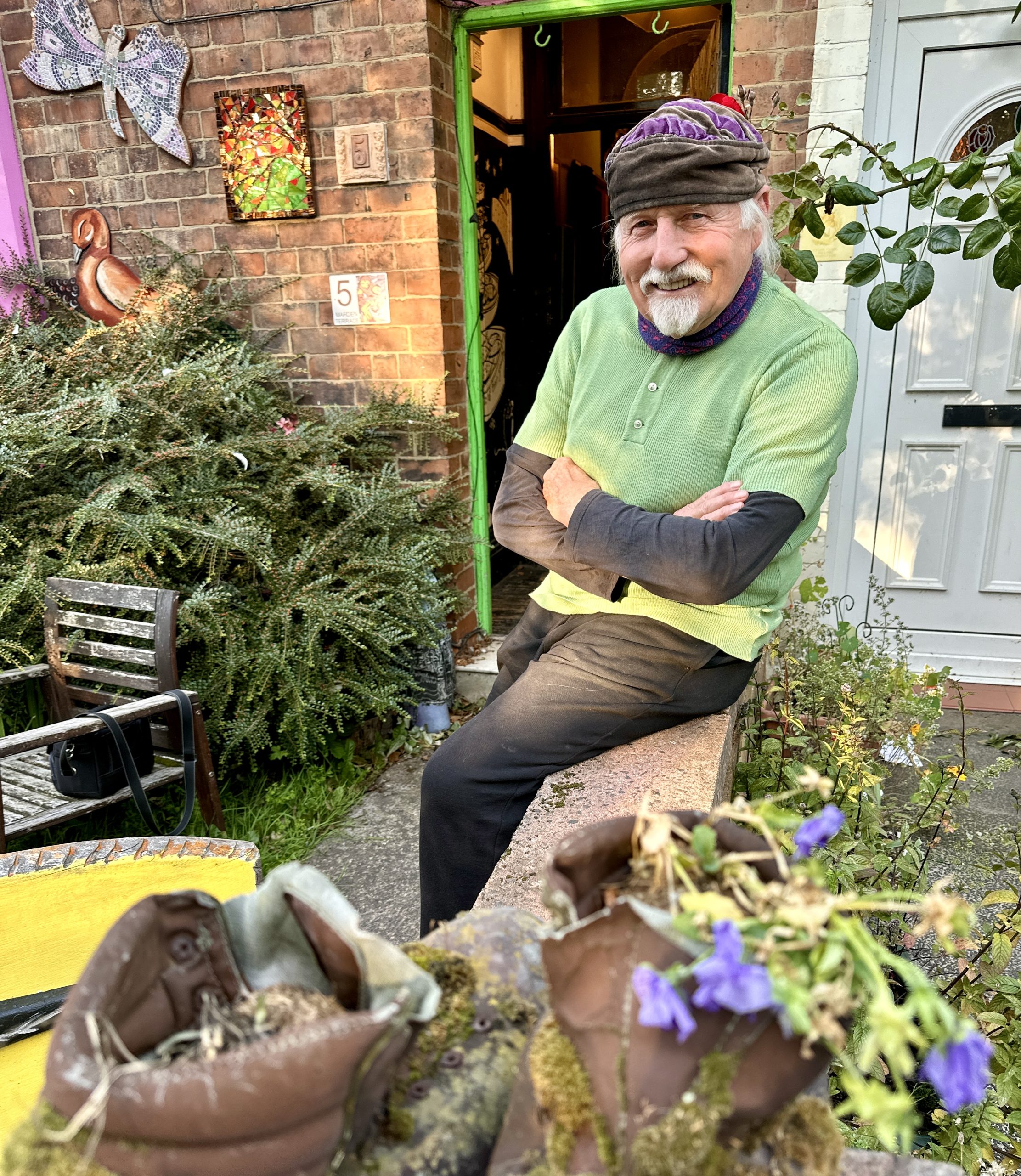
Artwork and calligraphy cover the walls, and books are stacked floor to ceiling. This is clearly a house dedicated to creativity. Peter himself embodies this, opening the door wearing an embroidered velvet cap and a bright green jumper. He welcomes us in enthusiastically, wearing a broad smile.
Peter’s passion for life has not diminished down the many years he has been writing. He’s still funny, enthusiastic and brimming with creative ideas.
Once inside the house, there is evidence of Peter’s phenomenal literary output everywhere including stacked books and scribbles plus a strange-looking mannequin which appeared in one of his plays several years ago.
Peter remains at the literary cutting edge and has no plans to stop 55 years after arriving in the North East as a young journalist.
To kick off the interview, I ask him how he thinks he might be viewed by the neighbours and the Cullercoats community where he lives. Tongue in cheek, he answers with a witty retort: “Suave and handsome, and incredibly rich.”
One of the joys of Peter is that he doesn’t always take himself too seriously despite his incredible talents and lifetime achievement awards.
The street in which Peter lives is populated by artists, musicians, and writers, and is known fondly as ‘hippy hill’. Over the years he feels that the neighbourhood has been transformed into an artistic community. Happily the one neighbour whom Peter once had a disagreement with, and who threatened to ‘duff him up’, has long since gone.
Switching to being more serious, he says that most people know him from his small press imprint, Iron Press. He even has a special gate at the front of his house with the words ‘Iron Press’ emblazoned across it, signalling that visitors are entering a world of literary magic and imagination.
Peter’s writing career has taken many twists and turns over the decades, and has come full circle in many ways.
Born in Nottingham, after university he earned a living as a journalist first in London, and then in the North East where he worked in Thomson House, Newcastle for the The Journal.
He still writes for the The Journal today, producing his extremely popular blog, Beyond Planet Corona.
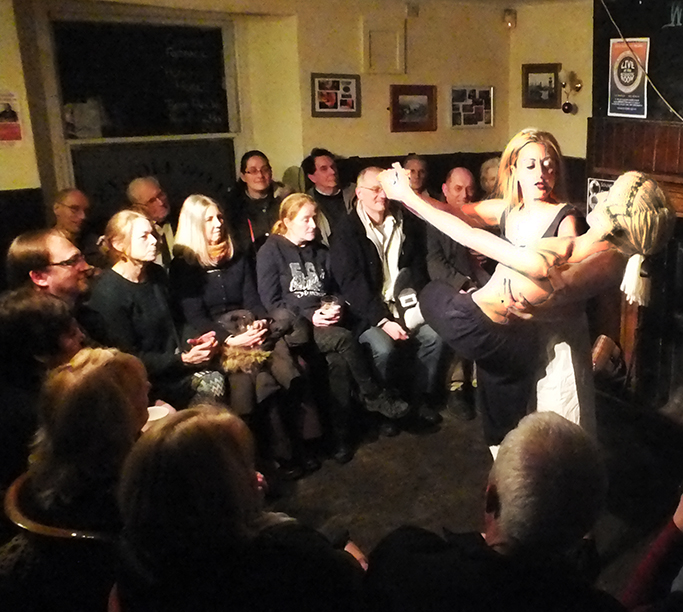
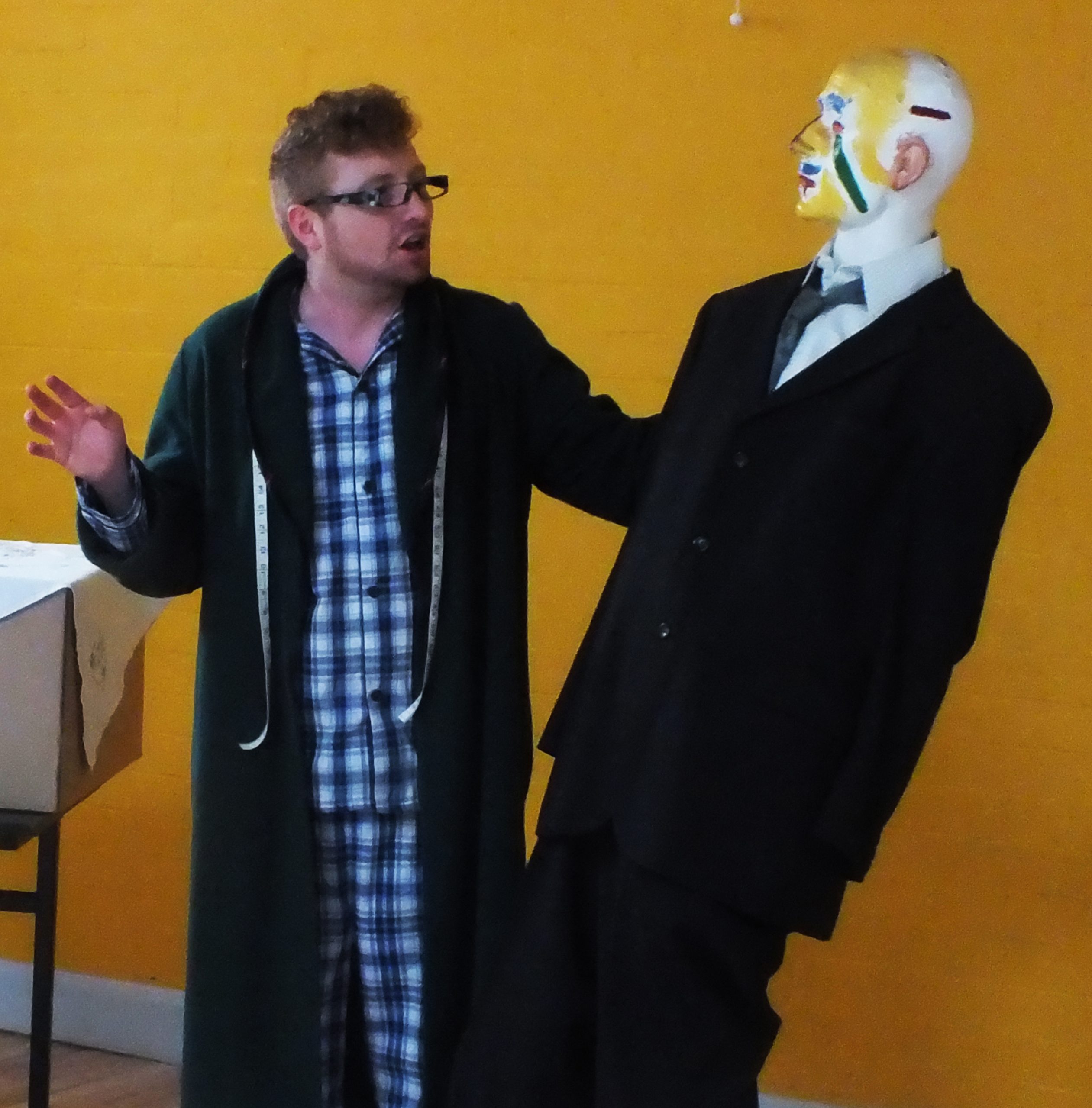
In the meantime Peter’s writing career has encompassed poetry, short story writing, journalism, a novel and several plays. As well as Iron Press, Peter established Cloud Nine Theatre Company, dedicated to new writing for the stage.
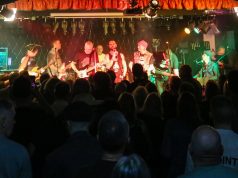
Tom Hadaway’s last play (sadly unfinished) about Laurel and Hardy’s visit to North Shields in 1932 was performed by Cloud Nine. For many years the company were based in The Exchange, North Shields.
He has gained a reputation for what some have called ‘extreme travelogues’, although in many ways these works resemble serious documentaries with a strong sense of humanity. You can imagine that in such a large body of work, some pieces stand out.
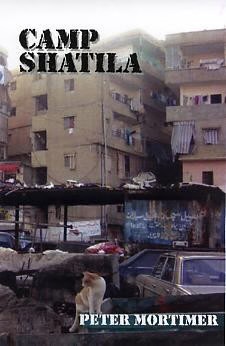
There are two that Peter is most proud of, Broke Through Britain and Camp Shatila.
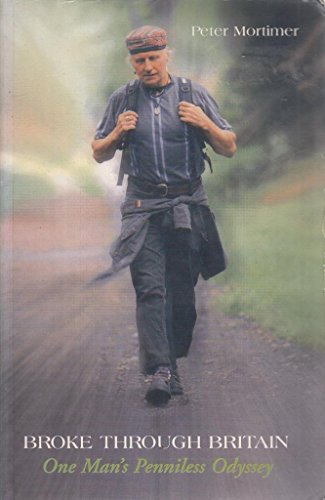
In 1998 Peter wrote Broke Through Britain which detailed his 27 day journey from Land’s End to Edinburgh with no money and no clear idea of where he might be given hospitality along the way. The challenge was to survive this ‘penniless odyssey’ whilst relying on the kindness of strangers. Peter says he wrote every day about his experiences – good and bad – and felt both physically and mentally tested.
In 2008 Peter tested himself a second time by spending time in Shatila, a refugee camp for displaced Palestinians in Lebanon. As Peter recounts, he felt completely out of his comfort zone, not being able to speak Arabic, though he did study the language for a short while. In his book, Camp Shatila he later wrote about the experience.
He writes, “After (studying) I could no more hold a conversation in Arabic than build a spaceship.”
In such a potentially dangerous place Peter says he never had a master plan, just adapted. He feels that, although not religious, “there was something there looking after me, a guiding star.”
Peter says that he nearly gave up after the first day because it was such a tough challenge, especially communicating with a group of strangers.
“I didn’t have an interpreter, I just had to pick it up as I went along.
“But I always had faith in myself”.
Earlier in his career, Peter faced another challenge – being embedded with the North Shields fishing fleet, which he wrote about in The Last of the Hunters. Working conditions were grim, primitive and insecure.
“It’s a very hard way of life and there was very little security”.
It was one of the toughest of Peter’s extreme challenges; “I was sea sick a few times. I used to kiss the ground when I got back home.”
He was amazed to discover that many sailors couldn’t swim. He describes leaving North Shields and the feeling that, “heading over the horizon – you could be on the other side of the world.”
Peter speaks of the difficulties in getting visas for the Palestinian children and their teachers to come to the UK. He was helped in this by Tynemouth MP, Alan Campbell (now Rt Hon Sir Alan Campbell) who agreed to be a trustee of the Shatila trust, set up to enable the young Palestinians to visit. As part of the visit, Peter worked with the group to stage a play, which was performed in English in several locations.
Peter says of the experience, “It was one of the most uplifting moments of my life”.
Peter has a long association with North Shields and feels that the town has come up a great deal in recent years. At the beginning of its 800th celebratory year, in February 2025, Peter gave a talk at North Shields Library about his experiences with the North Shields fishing fleet.
He read out some of The Last of the Hunters to the assembled group, some of whom were too young to remember the times when North Shields literally teemed with fish. It was a suitable start to North Shields 800—recalling the past but moving to a very different future.
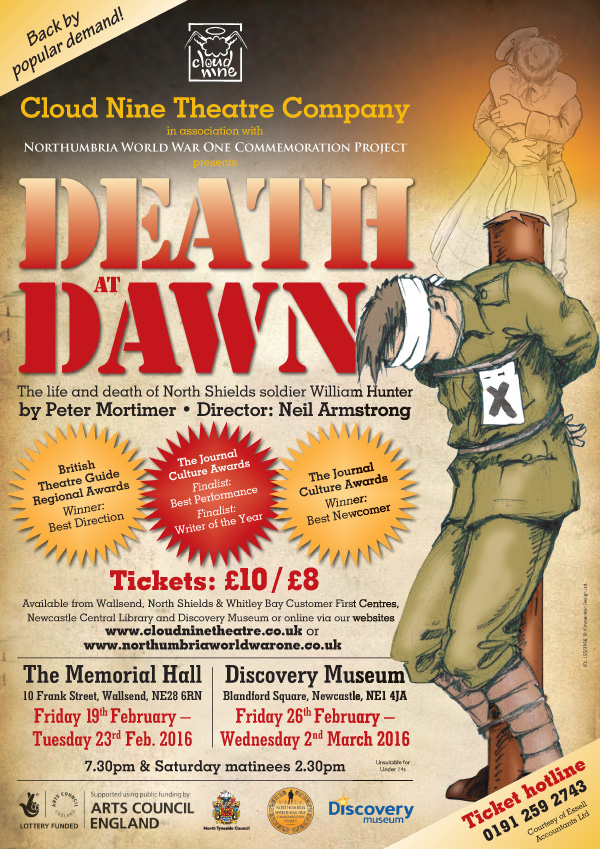
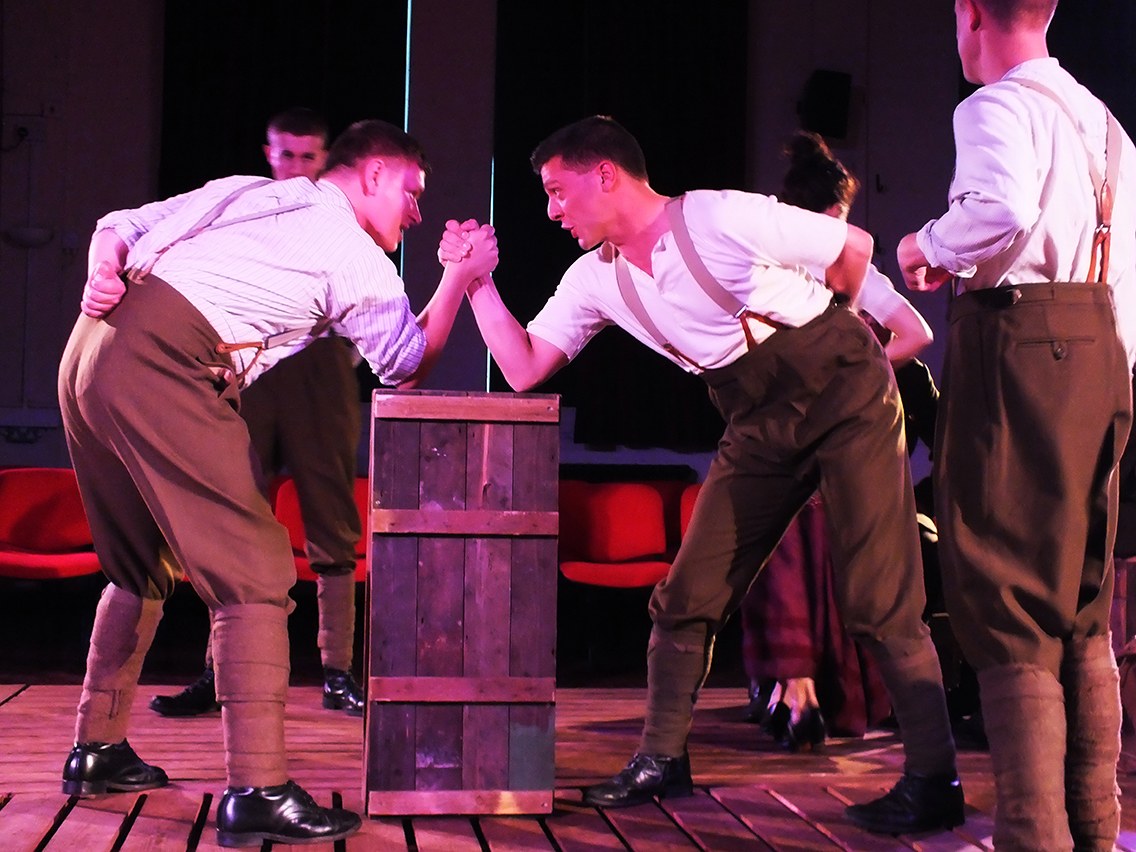
Over the past decade, he has written a trilogy of historical plays about people connected to North Shields, whom history may have forgotten. The first, Death at Dawn focused on William Hunter who signed up to join the army in WWI, but was underage. He was later accused of desertion but despite pleas for leniency, was executed by firing squad.
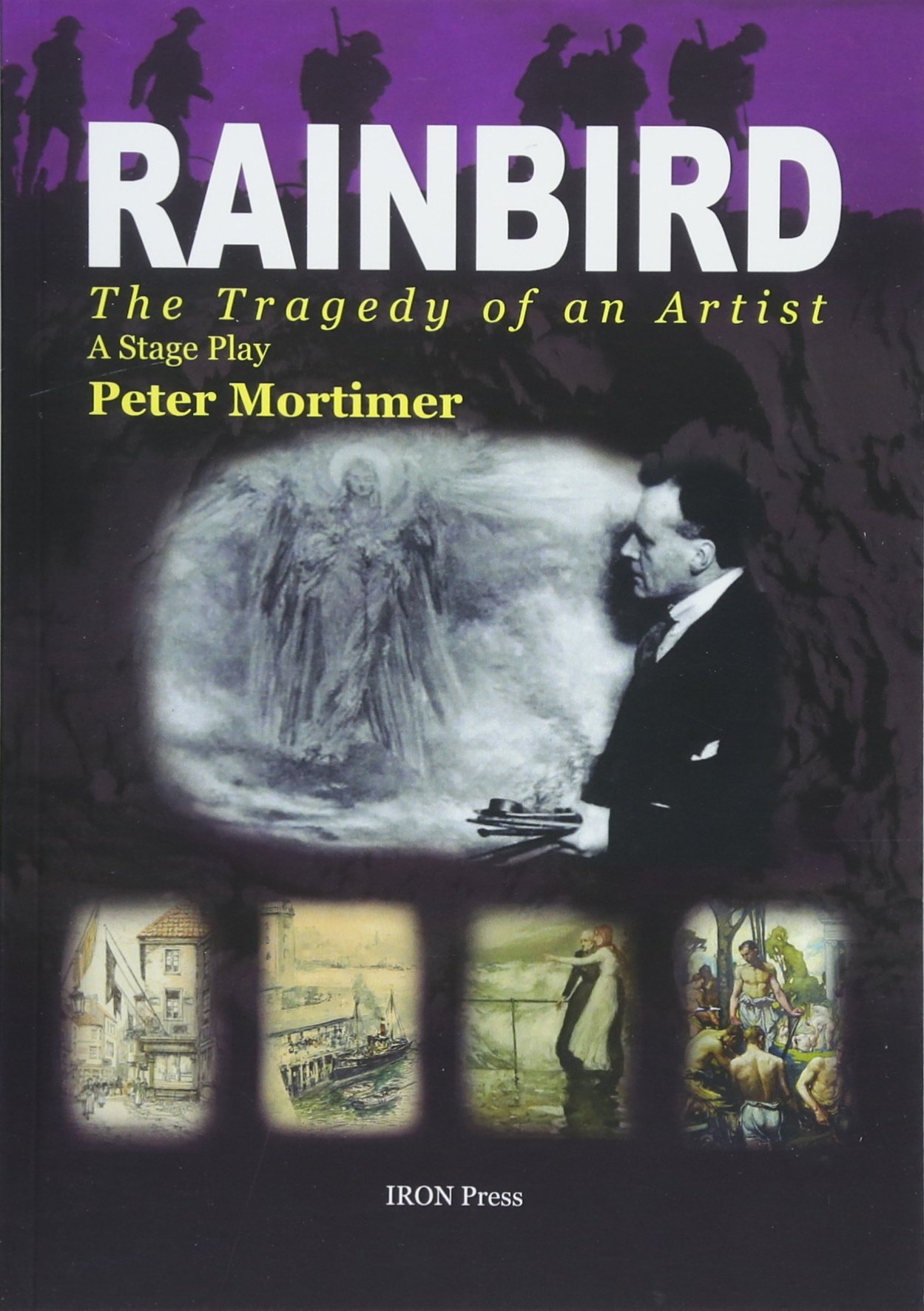
Rainbird recalled the life of talented North Shields painter Victor Noble Rainbird, who became an alcoholic after his experiences in WWI, and was known to paint his subjects in the pubs of North Shields in exchange for drink.
The third play, Fire and Water has a direct link to The Exchange theatre in which it was performed, and detailed the life of Thomas Brown, who played a key role in snatching German code documents from a sinking U-boat in 1942. The Exchange 1856 has a room dedicated to Thomas’s memory as well as a stained glass window.
I ask Peter which three things he most likes about living in the Cullercoats/North Shields area. Top of the list is Cullercoats and its village vibe. He loves that it isn’t too inward looking, and also has a Metro station connected to Newcastle.
The sea is important to Peter, though he hasn’t swum in it so far this year.
And the third thing?
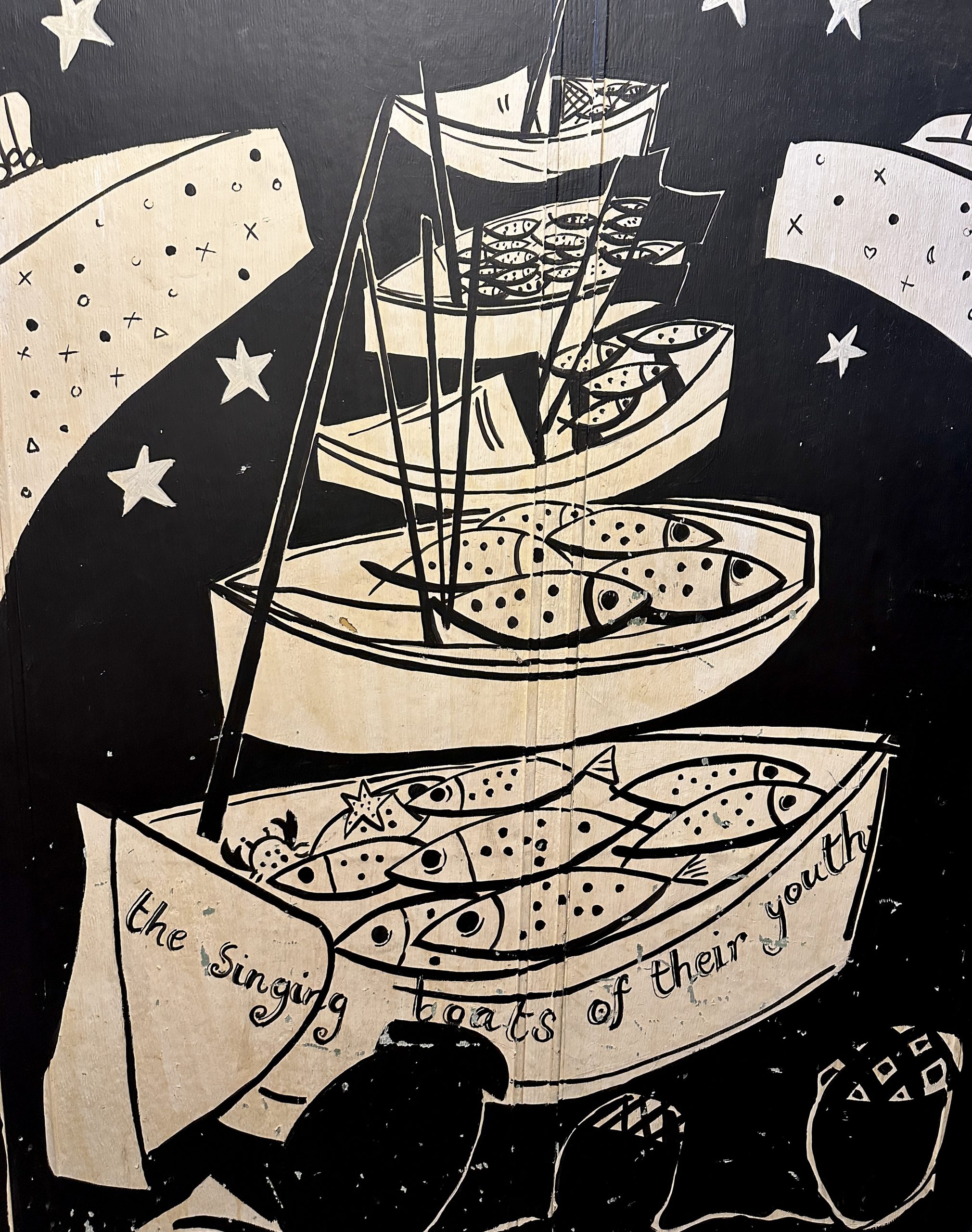
(Image credit: Peter Mortimer)
“Walking out in winter in Cullercoats. I feel that I can repossess it, like an old friend.
“Most people come in summer but I like walking on the seafront when fewer people are about.”
I ask Peter about his long-term partner, Kitty, also a writer. He has written very movingly in his blog about her deteriorating health, and has received many sympathetic responses. However, Peter has some good news about Kitty.
An Argentinian film company based in Buenos Aires would like to turn her award winning novel, Pigtopia into a screen play. North Shields played a part in Peter meeting Kitty as the first Fish Quay Festival helped to launch Peter’s The Last of the Hunters, while Kitty’s screenplay, In Fading Light (written by Tom Hadaway and produced by Kitty and others) also formed part of the festival.
I wonder whether Peter might be up for any more challenges such as walking the length of Britain or cycling 400 miles round Northern England and Scotland in order to play chess with random strangers. He feels that a physical challenge would be too demanding, but a cerebral one could be achievable.
I wonder if I Love North Shields readers may be able to suggest one? Perhaps something that would tax his imagination and creativity?
Finally, I ask Peter what he’s currently working on. He’s still in the process of bringing out more titles with Iron Press, and there will shortly be another volume of the Beyond Planet Corona blogs.
Age is just a number it seems as Peter quips, “I have never been as old as this and I’ll never be as young again.”
There’s still much to keep Peter occupied as he ends our interview and heads to the kitchen to cook his tea.
Later that night, I imagine him sitting creating another writing challenge… whilst his trusty mannequin friend – dressed as a gas meter reader – hovers over his shoulder!
Discover more of Peter Mortimer’s work on the Iron Press website here.
Featured image credit: Sue Wilkinson
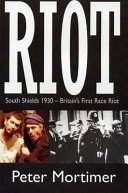
Book covers reproduced with permission from Iron Press
Stage production photographs reproduced with permission from Cloud Nine Theatre Company and Dave Turnbull
© I Love North Shields
Fill your spring with wonderful things! Pre-order the ILNS spring mag here

Our Spring Issue is almost here — and it’s packed with local news, history and community spirit as North Shields pushes forward with its Town of Culture 2028 bid.
Inside:
• The Lost Painters of North Shields
• A special collaboration with AmberSide archives
• Music, film and local creative voices
• Hidden town history and public art
• Our latest Local Heroes
• ILNS projects, photowalks and what’s coming next
This is a snapshot of North Shields in motion.