
From historic roots to a trailblazing future.
By Caroline Oswald
I meet Heather McDermott of Tynemouth Rowing Club at her place of work, the YMCA.
Straight away she points out the link between the two organisations – North Shields philanthropist, Rowland Lishman.
As well as being integral to the founding of the town’s YMCA and bestowing upon them the generous gift of the Patterdale Estate in the Lake District, among his many other exploits Lishman was also President of Tynemouth Rowing Club.
“This was back in 1904, when it was in a beautiful old wooden building”, Heather explains.
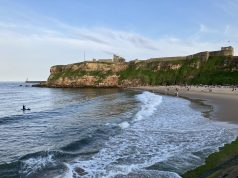
The club occupies the same location today on Prior’s Haven at the mouth of the Tyne, but the club house was replaced by a modern red-brick construction in 1947 after the old one was bombed in the Second World War:
“We would love to rebuild it how it used to look.”
The current President of Tynemouth Rowing Club is Heather’s dad, David McDermott, whose lifelong love of being on the water began as a child with the Tynemouth Sea Scouts.
Despite his daughter’s life taking a different sporting direction, with her family history it was only a matter of time before she ended up on the sea.
Growing up in Seaton Sluice, Heather trained to be a figure skater and ended up as an elite ice hockey player, becoming Assistant Captain for the England Women’s team. She worked as Head Coach for the Sheffield Ice Hockey Academy and coached Sheffield Juniors as well as Newcastle Junior Vipers.
There is definitely a sporting streak in Heather’s family, her nephew having played football for Newcastle United Academy, her sister coaching figure skating in the recent Youth Olympics and her cousin rowing up to Great Britain’s under-23s.
Her ancestors were ‘wherrymen’, rowing for their living on the River Ouse in Byker. Perhaps this is why, after retiring from ice hockey, Heather has been able to gain her sea legs so quickly within just 18 months of becoming a member of Tynemouth Rowing Club.
She was still learning to row when she found herself competing in a quad team event at Talkin’ Tarn.
Heather’s team won every race that day, a sign of things to come.
Talking to Heather, you would think she had been rowing all her life, such is her knowledge and passion for the sport:
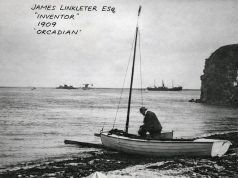
“It evolved from the wherrymen, a working men’s thing. They used to race each other to get payment for getting the boats in. Then it got a lot bigger, and became a gentleman’s sport. We have old photos of them at the club with their top hats and pocket watches!”
There was professional rowing on the Tyne up until the 1960s and the sport has continued to evolve since then, with various types of rowing on lakes, rivers and the sea.
Samantha Daniell, who was a cox at Cambridge, has been the Captain of Tynemouth Rowing Club since 2019.
“She’s the lynchpin of the club”, Heather states enthusiastically. “What she doesn’t know isn’t really worth knowing.”
Like many organisations, the club has been slowly rebuilding since the blow of the COVID-19 pandemic. Now they are seeing a real resurgence, with more investment in coastal rowing in particular, since the beach sprint became an Olympic sport.
Heather exclaims excitedly:
“An explosion is coming!”.
Since first dipping her toe in the water so to speak, Heather has worked her way up to become the club’s Beach Sprint and Offshore Coach:
“I fell into it by accident, helping with dry land training. I took a career development course run by British Rowing at Redgrave Pinsent Lake in Caversham, where 70 women were given the opportunity to take part and have a coach developer.”
Since then Heather has never looked back.
Tynemouth Rowing Club is the only sliding seat club on the coast for over 100 miles, and one of the first GB Coastal Sculling Academies.
Join the club…
Anyone can join, whether you are a complete novice or a seasoned rower.
There is a:
- Recreational squad is for those who would just like to enjoy time on the water, spotting wildlife such as seals and dolphins.
- Learn to row course aimed at complete beginners who don’t need to know anything about rowing or boats.
- Development squad for more experienced rowers who would like to take part in entry-level competitions.
- Senior squad is for more confident rowers who would like to compete in river and coastal events.
- High Performance squad of national and international-level rowers who train independently in coastal and fine boats.
All members can compete at different levels, whether just for fun or more seriously. Heather tells me that members of the Development squad have the opportunity to take part in the Sunday League run by Northern Rowing, where each club hosts an event on the first Sunday of the month, at locations including Durham, Talkin Tarn, Cambois, Hexham and Berwick. This involves competing as a quad – four rowers plus a cox.
There are other events around the country of varying difficulty, from the 3km head race on Derwent Water to the ‘Monster of the Loch’, which involves rowing 31km across Loch Lomond.
As I express surprise at this distance, Heather tells me that her first race was 28km from Newburn down the river to Tynemouth.
She has come to discover her passion lies with coastal rowing, which differs from rowing on a river or a lake:
“It’s known as river rowing’s crazy cousin! The sea is more challenging. The boats are heavier, around 36 kilos, and they are flatter, wider, sturdier and more stable. They have to have a ‘wet launch’ from the beach.
“When you are a beginner, you start off in a quad for safety reasons. It’s the other way round in a river club, where you start off on your own as a single rower and work up to a quad.”
This is why theelite rowers she coaches prefer topractise their technical work on the river:
“They row up to Jarrow and back, working on the stroke and the catch, which you can’t do offshore as the sea is unpredictable and rushes you into doing things.”
It may be what makes coastal rowing so exciting, and even more of an achievement to cover long distances:
“Two of my rowers recently completed a 26km row to Seaton Sluice and back!”

Since Heather started coaching there, a few of Tynemouth Rowing Club’s standout rowers have gone on to achieve great things.
Last season, Natacha Searson won a number of medals in the British, English, Scottish, Welsh and Jersey Beach Sprint Championships and took the World Beach Sprint gold medal in Genoa, Italy. She also became the first Senior World Champion as the able athlete in a mixed para boat at the last World Championships.
The club’s High Performance Squad Captain, Hal Flowerdew, won the silver medal at the 2022 Commonwealth Games in Namibia and finished fifth in the 2024 World Rowing Coastal Championships. He was England Captain for the Home International Regatta Beach Sprints in Bournemouth last summer. Each nation takes their turn in hosting the event, including Jersey, and it will be held in Ireland next year.
At the age of 22, Hal has a promising future ahead and Heather is pleased that he will be remaining at Tynemouth Rowing Club for atleast the next four years while he completes his PhD. He is fortunate to have gained funding from Sport Newcastle to help with his training and travel:
“This year he’ll be travelling to the Swift Home Nations Regattas in England, Scotland and Wales, the European Rowing Coastal and Beach Sprint Championships in Turkey and he is aiming for the World Rowing Beach Sprint Finals in Rio.
“Then there are the Commonwealth Games in November. With the cost of the boat and the blades, it all adds up.”
Heather is however keen to highlight the fact that coastal rowing is more accessible to people from all backgrounds:
“River rowing is traditionally very collegiate. 92% of the British rowing team were privately educated. It’s the money involved in buying the boats. With coastal rowing, the boats are standardised and are all provided at the location, so you don’t need to have your own.
“You could end up rowing in the same boat that six-foot-six London2012 Olympian Charles Cousins has just competed in. It’s a great leveller. Also, you don’t have to travel to a special lake to train as there are beaches all over. As an island nation, the UK is so well placed to be successful in this sport.”
Funding from the Sir James Knott Trust enabled the club to buy two Swift coastal boats, which are the same as those used to race nationally and internationally.
Heather has travelled all over since becoming involved withthe club, and she is looking forward to events this year in Whitby, St Andrews and maybe even Barbados!
On 23 of March this year, Heather had organised the region’s first ever Beach Sprint event on Tynemouth Longsands. A taster and training day for rowers from all around the country of all abilities, from beginners to champions.
Alas, the weather conditions did not allow the event to run as planned, a huge disappointment to Heather, who had worked so hard on it.
Not to be defeated, she still managed to lay on a no-row coaching session on the beach in the morning with some practice in the water of boat handling and entries and exits, an important part of beach sprint competitions.
Usually, each rower runs from the start line across the beach to the boat, which is held by boat handlers. The competitors then row out to the course, slaloming around buoys, before turning and rowing back to the beach, where they jump out and race back to where they started.

There are so many different skills involved that there was still plenty to learn on the sand. Heather hopes that the full Beach Sprint Taster & Training Day will still go ahead on another date:
“As this was to be the first event of its kind in the North East, people from all over pitched in and pulled together to help organise it, such as the Canoe Club and Cullercoats RNLI.
“The North Tyneside Council events team were amazing. It’s great how these organisations can come together to help each other host stuff.
“We have lots of crossover skills. It’s great to be part of something fresh and new.”
After the morning session everyone was invited back to the club house for refreshments including homemade quiche by her dad, Dave. His home cooking often features in Tynemouth Rowing Club’s social events, and he told me about how he prepared a three-course meal for 20 people last Bastille Day and showed photos of the traditional Scottish meal he made for this year’s Burns Night.
I was also treated to a tour from the club’s captain, Sam, who brought to life everything Heather had explained by showing me their various boats in person.
Looking at the old photos and memorabilia and talking to some of the long-term members, who have connections with the club going back years, there was a great sense of history.
Alongside this there was also a warm, welcoming atmosphere, appreciated by newer members from all over the world, who had not been there long but seemed like part of the family already.
So what is next for Tynemouth Rowing Club?
“We are quite a small club with around 30members. We have new people joining all the time and we have the capacity to increasefurther.” Heather goes on to explain that all ages are welcome, and that they even have members who are in their 80s!
“It’s a great way to enjoy the great outdoors whilst maintaining your overall fitness. It’s a common misconception that it’s all in the arms – it’s actually 60% legs, 30% body and only 10% arms!”
The club has a range of sculling boats of different conditions and sizes, fitting from one to four people with a cox. The club house has its own gym and there are regular social events such as pizza nights, cheese and wine parties, barbecues and murder mystery nights.
Various rowing sessions are held onTuesday and Thursday evenings and on weekends. Through her coaching activities Heather has found herself involved in all of them:
“Sometimes people just come for the tea and biscuits!”
After our initial meetings, Heather got in contact to share the wonderful news that Tynemouth Rowing Club would be hosting the British Coastal Rowing Championships on Tynemouth Longsands from 1 to 3 August. They hope it will be one of the biggest and best offshore championships held in Britain.
In the meantime, she kindly invited the ILNS team for their own private rowing taster session. Sensing my shock, she reassured me:
“Don’t worry, you’ll have a rope attached to your boat!”
Check out our follow-up article by Noreen Rees to find out how it went!
If you would like to try out Tynemouth Rowing Club, email hello@tynemouthrowing.club or go to https://www.tynemouthrowingclub.org.uk