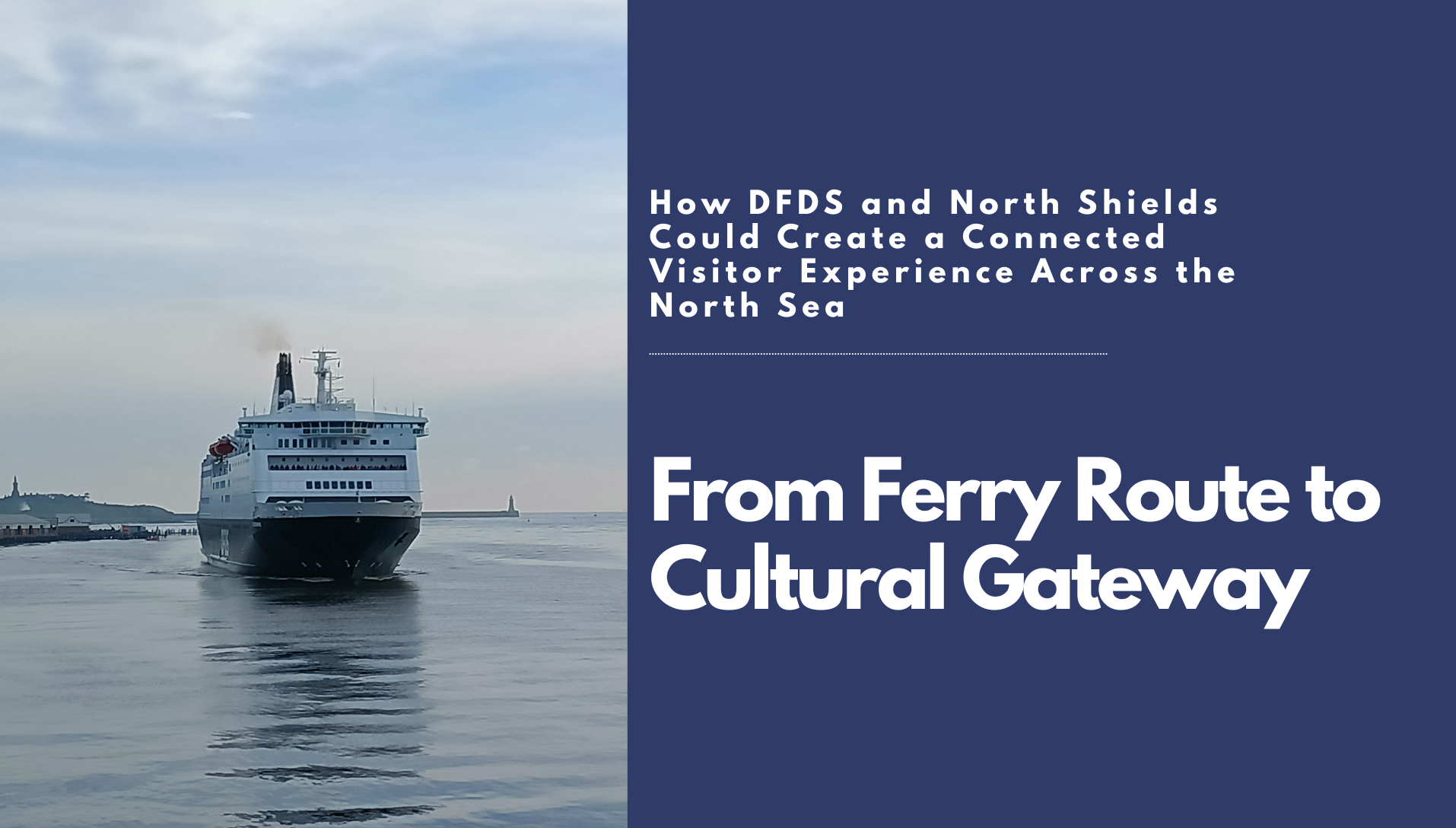
North Shields has always been a town shaped by arrival.
For more than 800 years, people have come here by sea — to work, trade, travel, migrate and explore. Today, that story continues every day through international ferry sailings to the Netherlands and a growing cruise programme at the Port of Tyne.
This places North Shields in a rare position: not simply as transport infrastructure, but as an international gateway. The opportunity now is to think differently about what arrival can mean — for visitors, for the town, and for the partners who make these routes possible.
A gateway with real scale
The Newcastle–Amsterdam ferry route is one of the UK’s most established international crossings. Over three decades, it has carried millions of passengers, with hundreds of thousands travelling each year.
Those passengers include:
- leisure travellers and mini-cruise guests
- cyclists and motorbikers touring Europe
- camper-van travellers
- families and solo visitors
- pet owners, particularly dog travellers
- freight drivers and logistics workers
Alongside this, cruise tourism at the Port of Tyne continues to grow. Recent seasons have seen over 160,000 cruise passengers a year, with ships capable of bringing up to 2,000 visitors in a single call.
These are not abstract numbers. They represent people arriving with time, curiosity, and an expectation of experience.
Arrival versus experience
North Shields already offers a great deal within a short distance of the port:
- a working Fish Quay with deep maritime heritage
- independent food and drink businesses
- walkable riverside and marina routes
- a growing collection of public art and murals
- a strong creative and community-led culture
Yet for many visitors, arrival still feels understated. Some are quickly directed onward without realising how close they are to the town’s cultural and historical heart.
This is not about criticism. It’s about connection — how clearly a place tells its story at the moment people step ashore.
Learning from other port towns
Across Europe, ports are increasingly treated as cultural gateways, not just transit points.
- Hamburg integrates its port into civic life through Harbour Festivals, ship tours, music, and public art, making maritime identity visible and celebratory.
- Rotterdam uses World Port Days and waterfront cultural programming to connect residents and visitors to its working harbour.
- Smaller ports across Scandinavia and the Baltic embed art, walking routes and heritage storytelling into arrival areas, encouraging visitors to explore locally before moving on.
These places recognise that ports are often the first and last impression of a town — and that culture, visibility and wayfinding matter.
IJmuiden and the power of port-based art
One particularly relevant example lies at the other end of the Newcastle–Amsterdam route.
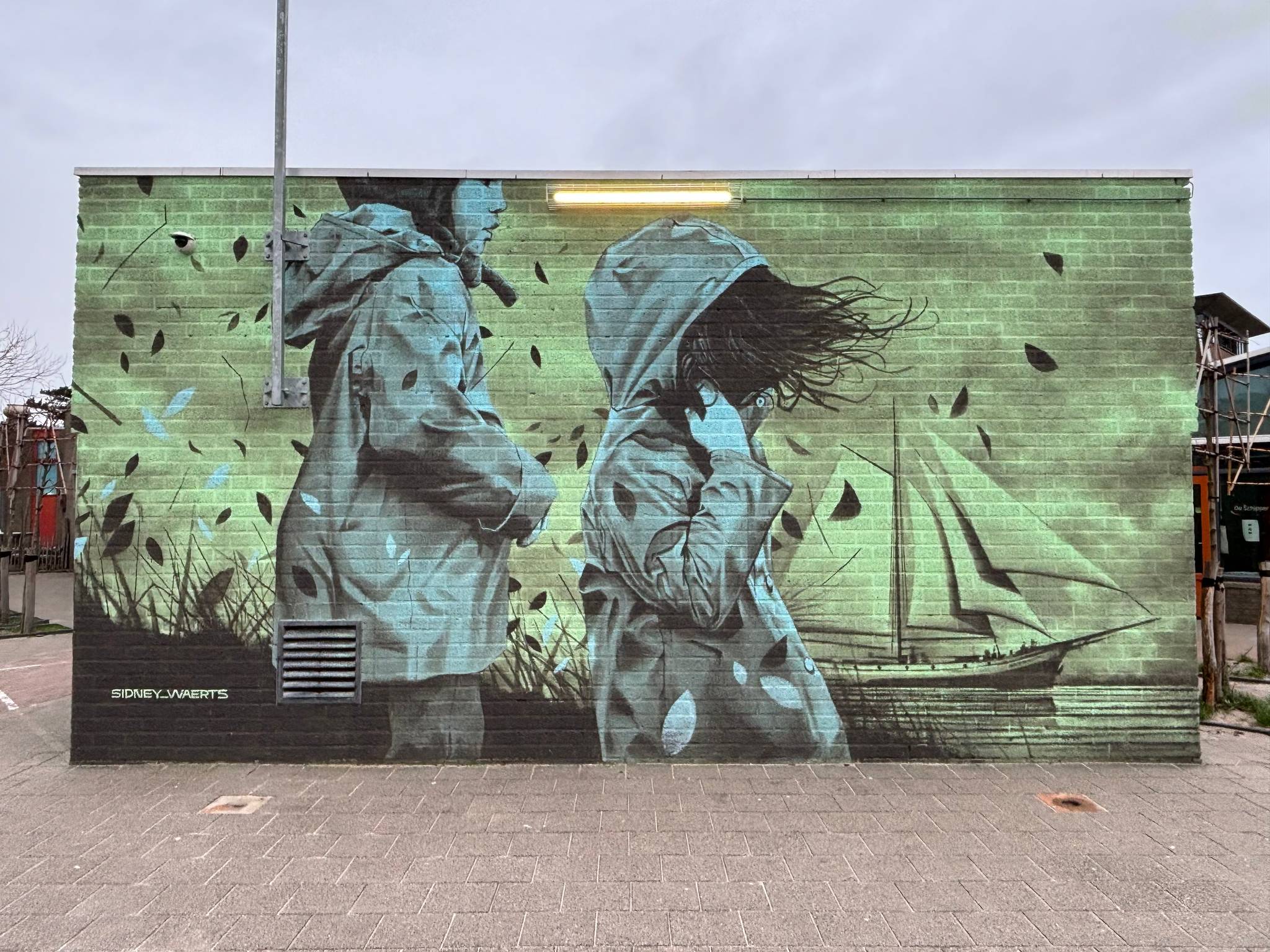
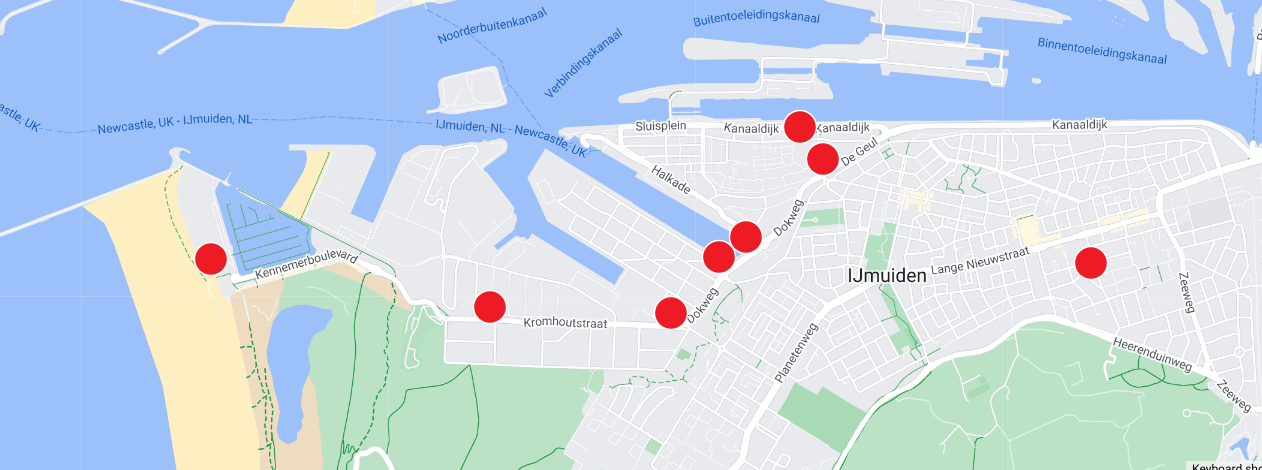
In IJmuiden, the municipality of Velsen developed a harbour-based mural and walking route known locally as Kantje Pikken. Large-scale artworks were placed along working port infrastructure and natural walking routes, celebrating maritime labour, fishing, shipping and local identity.
The project did not attempt to hide the industrial nature of the port. Instead, it embraced it — using art as wayfinding, storytelling and invitation. Visitors are encouraged to walk through the harbour landscape, engaging with place rather than passing through it.
North Shields already has the foundations
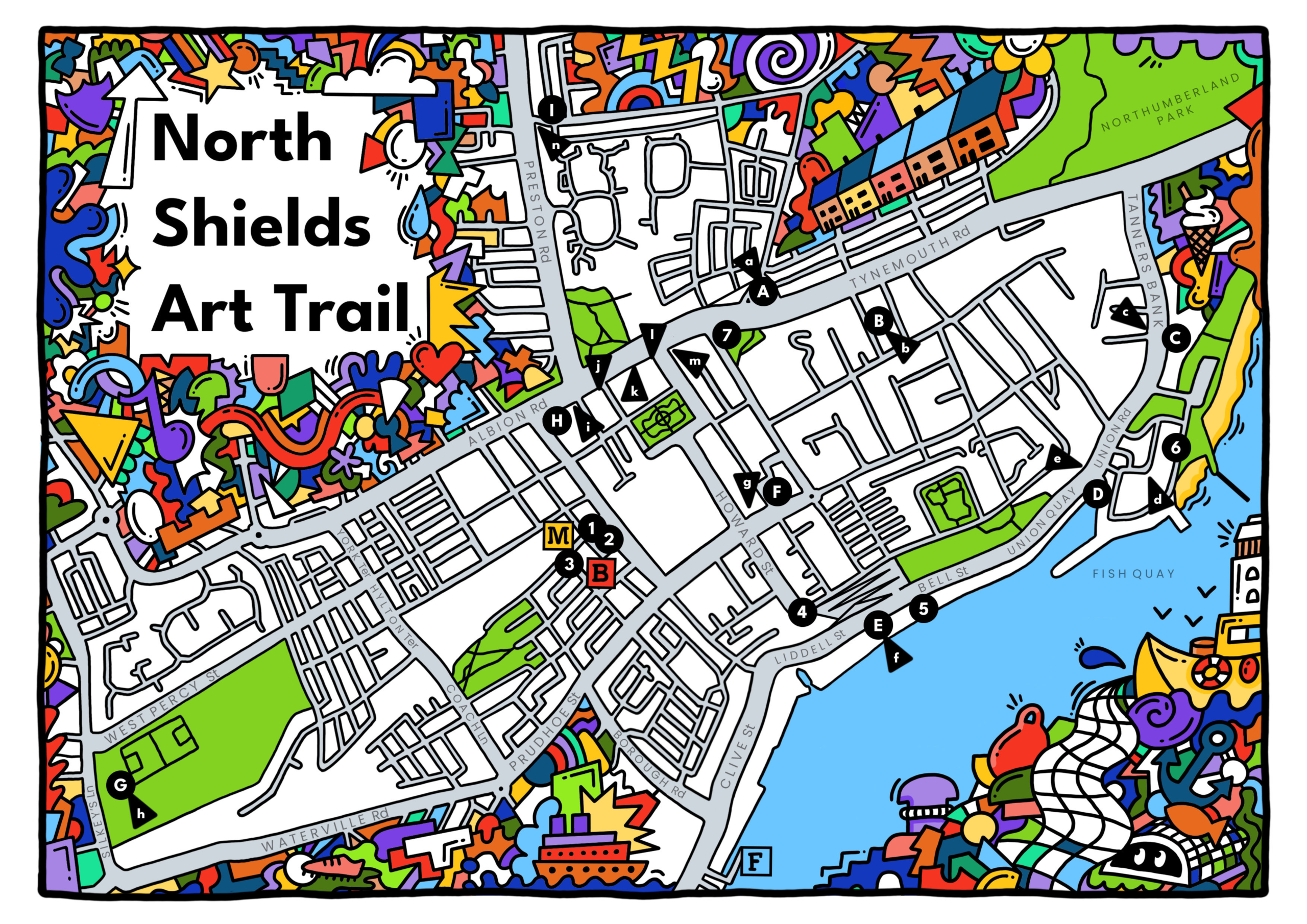
North Shields has recently developed its own mural trail, created as part of the town’s 800-year celebrations. The trail features large-scale works by respected artists, celebrating fishing heritage, community, music and working-class identity.
Importantly, this is not art placed at random. The murals form a walkable route, linking the town, marina and Fish Quay — exactly the kind of structure that supports visitor exploration.
What’s missing is not content, but connection and narrative.
A cross-sea idea: linking two port mural trails
This creates an unusual and exciting possibility.
By linking the North Shields mural trail with IJmuiden’s harbour murals — using the ferry as the connector — the two towns could create a shared port-to-port cultural experience.
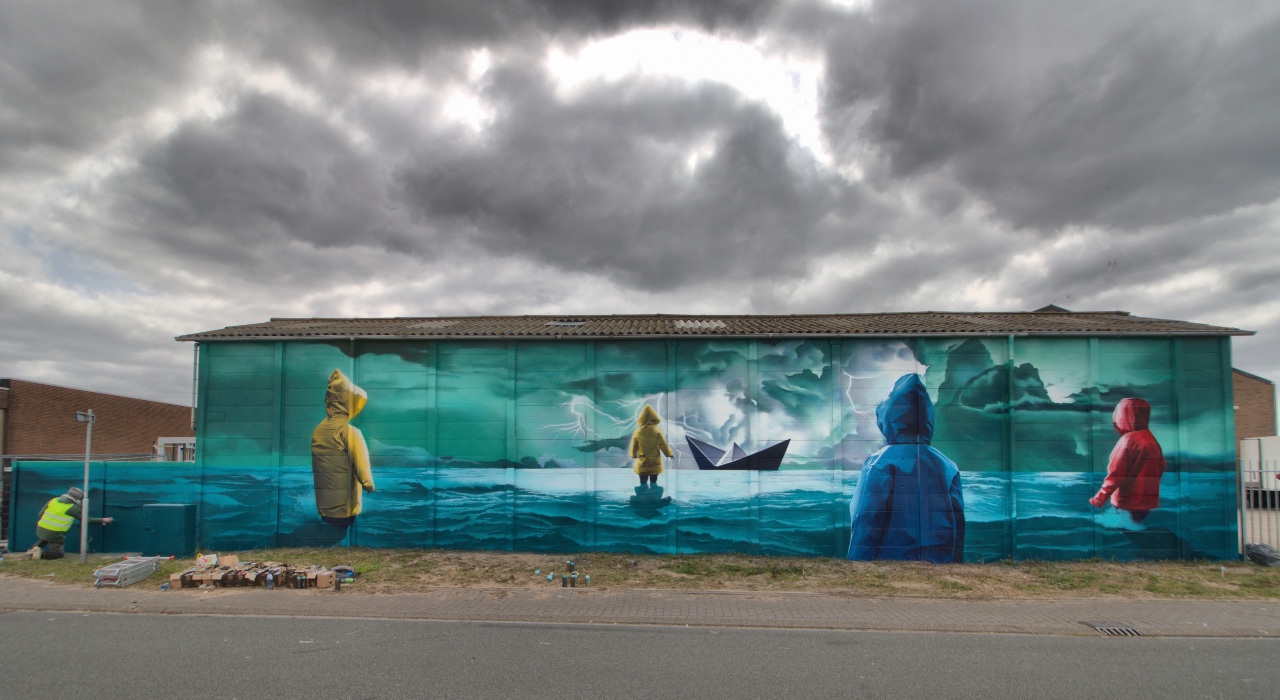
While there is no formal designation for a “longest mural trail in Europe,” a themed, continuous art route spanning two countries and connected by sea would be genuinely distinctive. There are few, if any, comparable examples where public art trails are intentionally linked across an international ferry route between two working ports.
The result would not be a single city-based trail, but a North Sea cultural corridor — one that begins on land, continues by water, and resumes on the opposite shore.
Beyond murals: people-to-people exchange
The real strength of this idea lies not only in walls and routes, but in relationships.
A port-to-port cultural connection could include:
- Student exchanges between UK and Dutch art, photography or design students, travelling via the ferry and working on place-based projects.
- Photography exchanges, documenting everyday port life — fishing, shipping, communities, landscapes — and exhibiting the work in both towns.
- Artist residencies, where creatives produce work inspired by the partner port, adding depth and authenticity to the story.
- Musician exchanges
Across Europe, similar exchanges have strengthened cultural ties between coastal towns, added international visibility, and created meaningful experiences for both residents and visitors.
Connecting ferry and cruise visitors into one experience
Cruise and ferry passengers often share similar needs:
- limited time ashore
- interest in authentic local culture
- walkable, clearly marked routes
- food, views and photo opportunities
A small number of designed arrival experiences — such as a 90-minute harbour art walk, a half-day food and heritage route, or a dog-friendly coastal loop — could transform how North Shields is experienced.
This is not about competing with nearby destinations. It’s about ensuring North Shields is visible, legible and confident as a place in its own right.
Making arrival legible: the role of a simple shuttle connection
One of the most practical ways to connect arrival with experience is transport that reflects how visitors actually move.
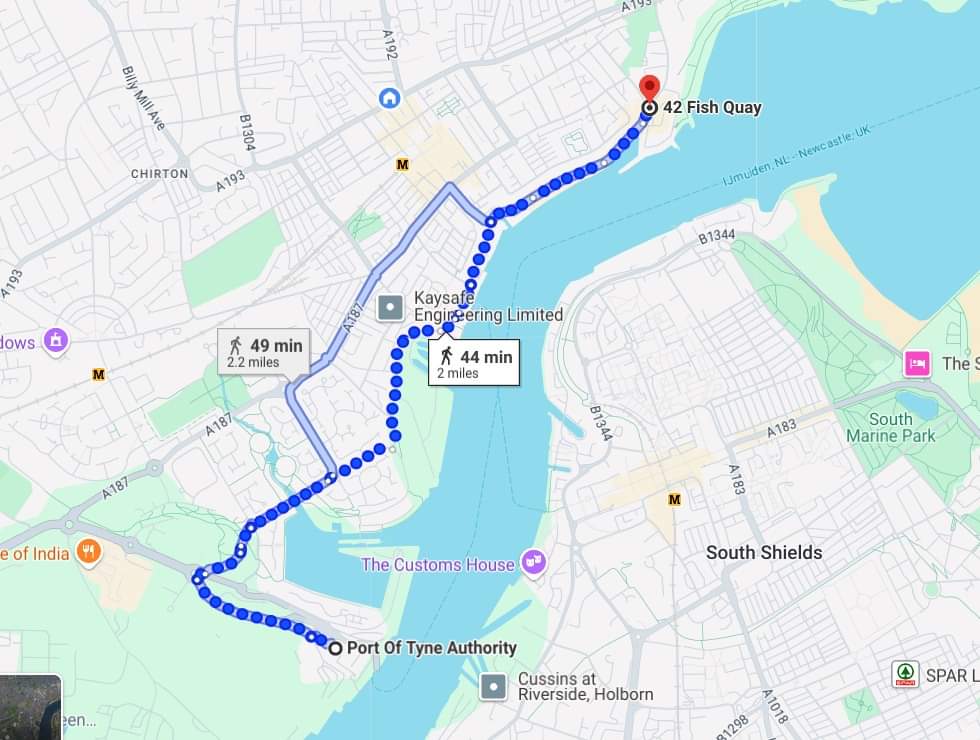
At present, many ferry and cruise passengers are directed quickly onwards, often without realising how close they are to North Shields’ key destinations. Yet within a short distance of the terminal sit the Marina, Fish Quay, town centre, murals, independent venues and coastal walks.
Other European port towns address this gap through short, clearly branded shuttle connections that serve local destinations as well as regional hubs.
A modest pilot shuttle in North Shields could:
- link the International Passenger Terminal with the Fish Quay, Marina and town centre
- operate seasonally or on cruise / peak ferry days
- support foot passengers, cyclists, dog owners and short-stay visitors
- work alongside existing public transport rather than replacing it
This doesn’t need to be a permanent or high-cost service. Even a limited trial would significantly change how visitors perceive the town — turning North Shields from a place people pass through into a place they actively choose to explore.
Crucially, a shuttle route could be designed to support the proposed harbour and mural walking trails, acting as both transport and orientation for visitors unfamiliar with the area.
Why this matters (and why it’s realistic)
Many ports across Europe already use shuttle services to:
- reduce congestion
- improve accessibility for foot passengers
- connect terminals to cultural and heritage areas
- increase local dwell time and spend
In North Shields, a shuttle that prioritises local places of interest — not just onward travel — would be a visible signal that the town values arrival, welcome and connection.
The role of community-led platforms
Delivering this kind of experience requires collaboration — between ferry operators, the port, local authorities, cultural organisations and businesses.
Community-led platforms such as I Love North Shields can play a practical role by:
- mapping and communicating walking routes
- connecting artists, photographers and venues
- producing accessible visitor guides
- telling authentic local stories rooted in lived experience
This helps ensure any cultural offer feels genuine and grounded, rather than imposed.
Looking ahead
North Shields already welcomes the world by sea.
It already has heritage, creativity and community energy.
It already has international connections through ferry and cruise routes.
The opportunity now is to connect these elements more intentionally — turning arrival into exploration, and transport into cultural connection.
By linking two working ports through art, people and shared stories, North Shields and IJmuiden could demonstrate how ports don’t just move people — they bring places together.
🔗 Further Reading & Links
North Shields – Elevation NS800 Wall Murals (I Love North Shields)
- North Shields Art Trail – Elevation NS800 Murals & Public Art Map
https://ilovenorthshields.com/north-shields-art-trail/ - Net Worth – Prefab77 wall mural (Elevation NS800)
https://ilovenorthshields.com/elevation-mural-festival-prefab77-networth/ - I Beg That Sound – Ricky Also wall mural (Elevation NS800)
https://ilovenorthshields.com/elevation-mural-festival-ricky-also/ - Elevation NS800 Wall Murals – YouTube playlist
https://www.youtube.com/playlist?list=PLdZ_Da7ZODJL9zWPOUfPcE3JuY678bpWU
North Shields 800 – Additional Trail Resources
- Elevation NS800 murals photo gallery
https://www.northshields800.com/news/elevation-north-shields-800-murals-photo-gallery - Find the North Shields 800 murals trail on Google Maps
https://www.northshields800.com/news/find-the-north-shields-800-murals-trail-on-google-maps
IJmuiden – Harbour & Wall Mural Trail
- Kantje Pikken murals – IJmuiden (Amsterdam Street Art)
https://www.amsterdamstreetart.com/smates-for-kantje-pikken-in-ijmuiden/ - Karski & Beyond murals – Kantje Pikken, IJmuiden
https://www.amsterdamstreetart.com/karski-beyond-for-kantje-pikken-in-ijmuiden/ - IJmuiden harbour street art – Rauw aan Zee
https://rigoverffabriek.nl/inspiratie/blog/streetart-ijmuiden-rauw-aan-zee?lang=1 - IJmuiden street art guide (Street Art Cities)
https://streetartcities.com/cities/ijmuiden
Ferry Route & Port Information
- DFDS Newcastle–Amsterdam ferry route
https://www.dfds.com/en-gb/passenger-ferries/ferry-crossings/ferries-to-holland/newcastle-amsterdam - DFDS Mini Cruises (via North Shields)
https://www.dfds.com/en-gb/passenger-ferries/mini-cruises/england/mini-cruise-to-newcastle - Port of Tyne – Ferry & cruise passenger information
https://www.portoftyne.co.uk/passenger-information/ferry