
By David Scholey
The Wooden Dollies are fairly well known to most visitors to North Shields but not so many people know their history.
To trace the origin of the tradition we need to travel back in time to a christening on the 11th February 1756 of David Bartleman, the son of Alexander Bartleman and his wife Margaret nee Murray, one of four children of the couple. It is worth mentioning that David’s older brother Alexander had a son in 1803 also called Alexander, who, in 1851, became mayor of Tynemouth. In addition, he ran Northumberland Brewery which was to later merge and become Bartleman and Creighton Brewery.
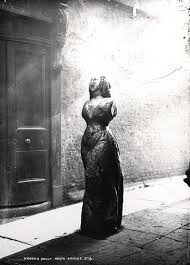
Returning however to Alexander and Margaret, assisted by his wife, Alexander senior was both a brewer and a shipbuilder and one ship built was a coal brig called appropriately The Alexander & Margaret. Like many ships of the era, the ship had a figurehead, this was in the form of a woman and was supposed to denote good luck. The figure has been described as: ‘no slim, simpering, Goddess-looking creature, but a bluff, saucy, hearty-looking hussy, with a full flaunting petticoat something in the style of good Queen Bess.”
This ship in January 1781 was captained by the above-mentioned son David and was sailing off the Norfolk Coast. Also at sea was a notorious pirate and privateer who went by various first names: William, Daniel and John. His surname, however, was always constant – that was Fall. At this time the American War of Independence was ongoing and it should be remembered that France had aligned themselves with the Americans in this war.
Fall held a Letter of Marque from America. This document authorized the captain to capture enemy ships, their crews, and their cargoes. Fall’s practice was to demand a ransom from the captain and, once paid, he would allow the ship to travel freely. The Alexander and Margaret had a crew of ten men and boys, it carried only light armaments amounting to 3-pounder cannons, one of the smallest types in existence.
On the 31st January Bartleman’s ship came under attack off the Norfolk coast from Fall’s Cutter ‘Fearnought’. The cutter carried a crew of nearly one hundred and was armed with 18 4-pounder cannons. Miraculously the much smaller coal brig managed to fight off the attack and make its escape. Two hours later, however, Fall’s privateer again launched an attack. This attack was far more ferocious and Daniel McAuley, the mate, was badly injured and died from loss of blood. Daniel too was seriously injured and obliged to yield to Captain Fall. The ransom was 400 guineas, which, in modern terms equates to about £72,000. Having paid the ransom, the ship limped into Great Yarmouth but David died of his wounds just two weeks later on 14th February aged just 25. Alexander had a memorial (pictured) erected over his son’s grave.
Two hundred and thirty years after his death, a family called Pearce, who believed that their ancestors had been pirates, paid for the restoration and repositioning of the gravestone in St Nicholas Churchyard, Great Yarmouth. Meanwhile, Alexander had recovered the wooden dolly from the ship and had it transported back to his home at 23 Front Street, Tynemouth, where he stood it in the front garden. The property no longer has a front garden and is home to ‘The Wine Chambers’. In 1814 the dolly was moved to a position on the Custom House Quay, Low Street, North Shields. This was the first of what have been to date seven ‘wooden’ dollies.
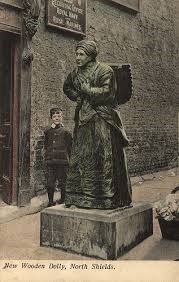
It was situated in one of the busiest places at the time in North Shields. All of the adjacent buildings were involved in trade of one form or another, there were no less than 50 public houses, dance houses, coffee houses, chandlers and ropemakers in the vicinity. The dolly was used to haul spars and wood from the quay using rope wrapped around her. Seamen took to cutting chunks off her as good luck charms on their subsequent voyages. This custom led to local urchins also hacking away at her and eventually a group of drunks pulled her out of the ground and cut off her head. This was in 1850.
This of course was a year before David’s nephew became mayor and one has to assume that he already carried some influence. What is certain is that a new dolly was quickly constructed to replace the first, built by a sailmaker called Hare. She had a shorter life than her sister and just 14 years later she too was replaced on the 22nd June 1864, the day before the laying of the foundation stone for the new Low Lights Dock. This dolly had previously been attached to the barque ‘Expert’.
She too was attacked and chipped away. Her nose was totally hacked off and replaced with an iron one by local blacksmith Robert Pow. Sailors then began drilling holes in coins and nailing the coins to the dolly. This dolly was replaced in 1901, however that was not the end of her. In the 1930s she appeared in an antique shop in Newcastle after the owner, a Mr Seery, had bought her from a fisherman’s widow. She was subsequently bought by a Dane and it is believed that she now resides in a Denmark Museum.
The 4th Wooden Dolly from 1902 was carved by May Spence of North Shields. This dolly did not resemble the previous effigies but was more in line with the typical image of a Cullercoats fishwife with shawl and creel on her back. The unveiling of this dolly included a procession with band and speeches. Inevitably she too was vandalised for souvenirs and good-luck charms – her right elbow found its way to an hotel in Melbourne, Australia, and the rest of her remains were found in a Whitby Breakers Yard. She was removed in 1957.
In 1958 the fifth wooden dolly was created by Robert Thompson Ltd in Kilburn, North Yorkshire, and it had incorporated into the sculpture two mice, as was the tradition with that company. Mahogany was used to create this figure, who still stands today, but unlike her sisters, she graces the library overlooking Northumberland Square in North Shields.
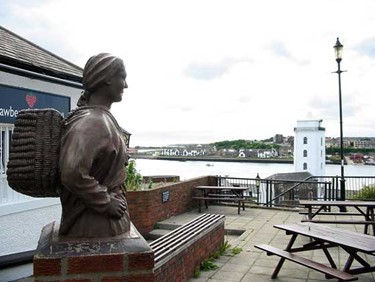
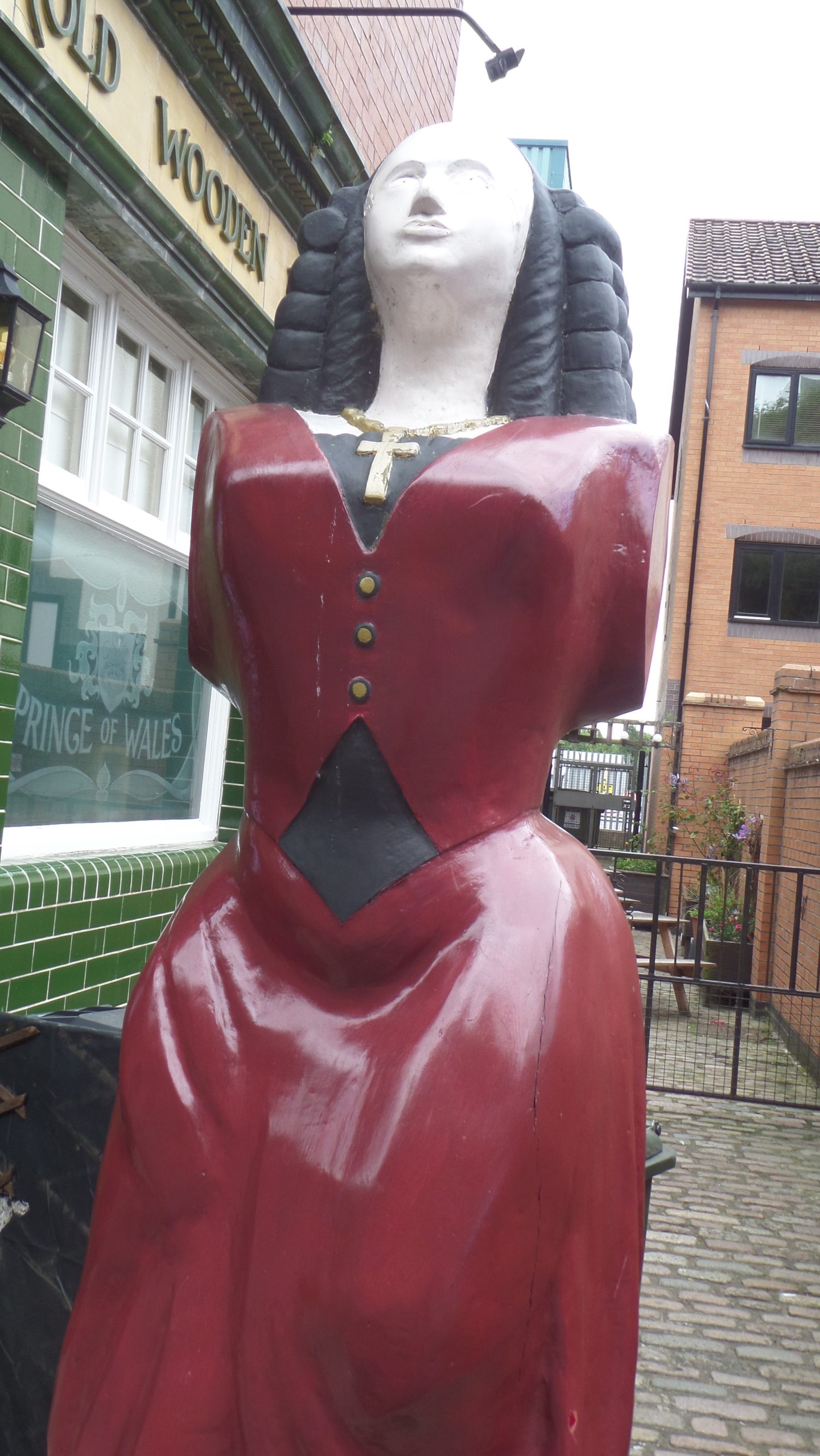
The other end of North Shields, however, was not to be denied its dolly and an additional one was erected beside the Prince of Wales Pub, formerly called The Wooden Dolly, on the original Custom House Quay site. This is still there and is a larger copy of the 3rd dolly. The most recent dolly is in fact only half a dolly, as her body is only from the waist up. It was installed in 1993 at the Wooden Doll pub, formerly The King’s Head and now How Do You Do, overlooking the Fish Quay. Although referred to as a wooden dolly, it is in fact made of clay and cast in plaster. So the actions of an 18th century pirate resulted in a succession of seven different wooden dollies, three of which remain to this day, still serving as an important reminder of the remarkable history of North Shields.
Adapted from an extract from Secret North Shields & Tynemouth by David Scholey.
All images courtesy of David Scholey.