

Historic England is launching an interactive map of historic coastal landmarks, celebrating the country’s vibrant seaside heritage.
Historic England is asking people to contribute to the Missing Pieces Project, adding to the story of coastal places that hold a special place in their hearts and minds.
The map celebrates nearly 300 years of seaside history, from elegant Victorian piers to beloved twentieth century amusement parks, in seaside destinations that continue to welcome millions of visitors each year.
From piers and pavilions to beach huts and bandstands, lidos and lighthouses, the project celebrates the evolution of Britain’s seaside resorts from health retreats for the Victorian wealthy to holiday destinations for everyone.
People across the North East are encouraged to submit photographs, drawings, written information or audio recordings about coastal landmarks that hold personal significance – whether it’s a childhood holiday destination or a local landmark that symbolises home.
Heritage Minister, Baroness Twycross said: “Our seaside communities play a huge role in telling our national story. I encourage everyone to contribute to the Missing Pieces Project to preserve the history of our coastal towns and breathe new life into their future.”
Duncan Wilson, Chief Executive, Historic England, said: “Our seaside places hold a special place in our national story, yet the full richness of their heritage cannot be captured without the first-hand accounts, images and memories of those who’ve experienced them. I encourage people to contribute to the Missing Pieces Project, so we can all help ensure these treasured coastal landmarks are celebrated.”
Look Out for Seaside Landmarks in the North East this Summer
Historic England’s new interactive map shows the listed places – including rollercoasters, bathing pools, railway stations, chalets, public gardens and more – that can be found around England’s coastline, including, in the North East:
Bamburgh Castle, Bamburgh, Northumberland (Grade I listed)
Stately Bamburgh Castle sits above the spectacular Northumberland coastal landscape. Over 1,400 years old, it is one of the largest inhabited castles in the country.
Saltburn Cliff Tramway, Saltburn-by-the-Sea, Redcar and Cleveland (Grade II* listed)
The Saltburn Cliff Tramway opened in 1884 and is the oldest water balanced funicular still in operation in Britain. It links the Victorian town of Saltburn with the pleasure pier. The characterful red and cream buildings are home to a pay office, engine room and waiting room, which is now a shop.
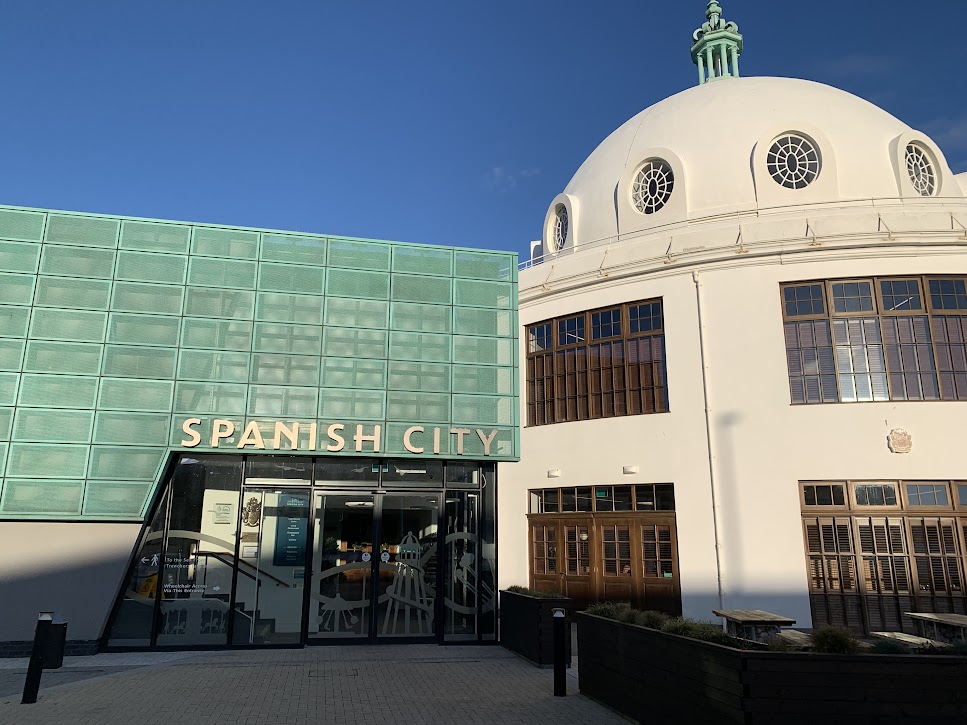
Spanish City, Whitley Bay, North Tyneside (Grade II listed)
The striking Spanish City building in Whitley Bay was built in 1908-10 for Whitley Pleasure Gardens Ltd. The landmark Spanish City Dome was thought to be one of the largest in the country at the time, after St Paul’s Cathedral in London. The buildings contained a theatre, shops and fairground, with an animal menagerie, with a cinema and ballroom added later. The Spanish City was restored and reopened in 2018 as a leisure complex with restaurants and an event space.
The Zetland, Saltburn-by-the-Sea, Redcar and Cleveland (Grade II listed)
The Zetland Hotel was designed by William Peachey, architect for the Stockton and Darlington Railway for the seaside resort of Saltburn, which was developed by Henry Pease, a director of the Railway. Built in 1861-63, it was one of the world’s earliest purpose-built railway hotels, complete with its own private platform. It is now a private residence of apartments.
Share your Seaside Stories and Memories
The stories of these historic seaside places are still being written – and they won’t be complete until you share your memories and first-hand experiences of these gems. Go online and share at https://historicengland.org.uk/SeasideStories
Historic England wants to see your photos and memories so that visitors to the website can learn more about what makes these places special.
Perhaps there’s a local landmark that means home to you, or a special place that shows you’ve reached your favourite holiday destination once again. Maybe there are local maritime traditions to be shared that have been passed down the generations, or a quirky mid-century marvel that brings a smile to your face.
Your view of a place is as unique as you are, so every snapshot and story you add is an important piece of the picture. You could add photos, audio, text, drawings and more.
The Missing Pieces Project recognises that every person’s connection to these historic places adds a unique dimension to their cultural importance, helping to build a more complete picture of England’s cherished seaside heritage.