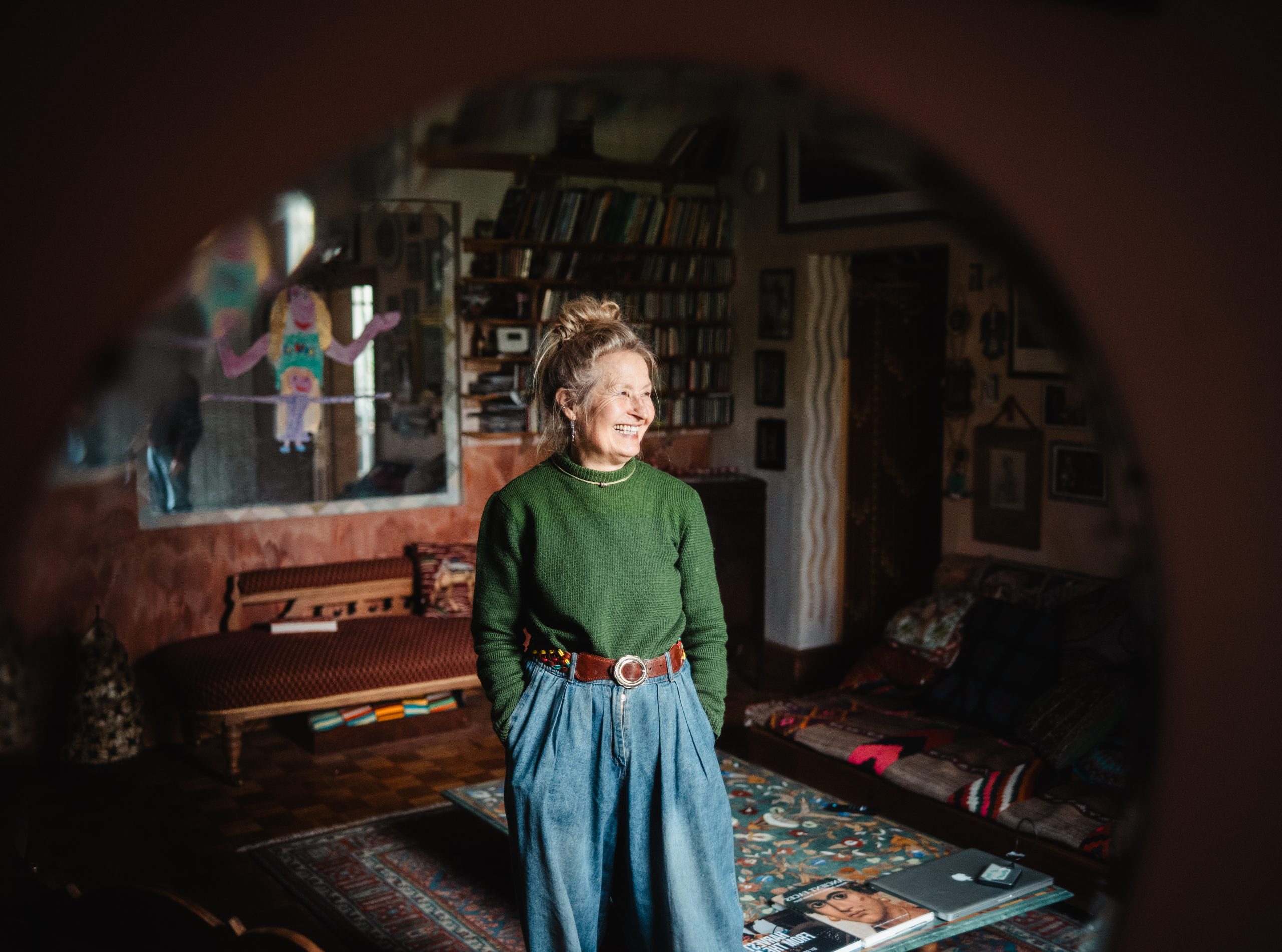
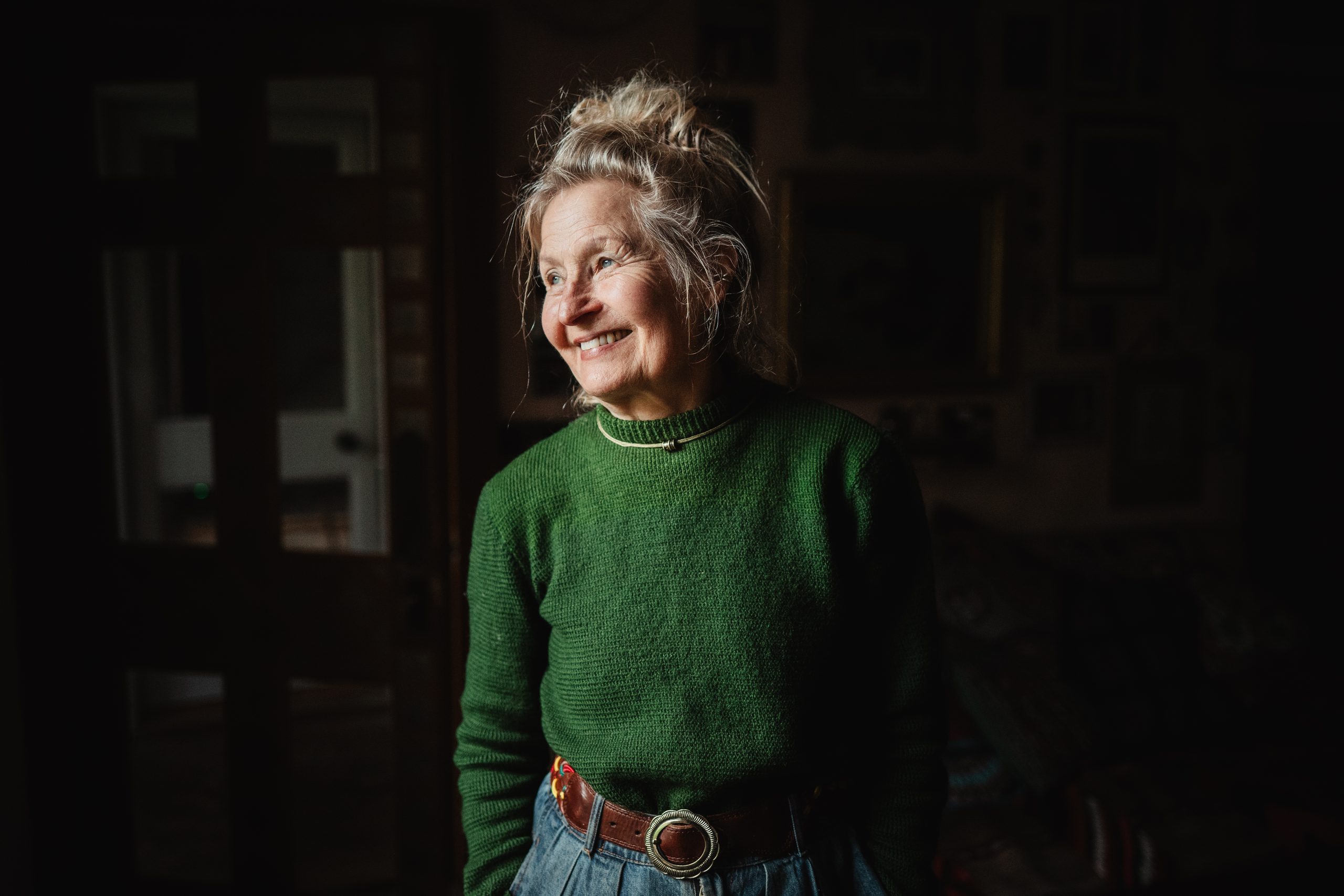
Sirkka-Liisa Roberts MBE, more well known as Sirkka-Liisa Konttinen, is a celebrated Finnish-born photographer and founder member of the Amber Film & Photography Collective. Since the 1960s Sirkka has traced the social and industrial history of working-class communities in the North East with her seminal collections of documentary photography.
Early Years
Sirkka-Liisa Konttinen greets me with excitement after just having visited a new bakery in Cullercoats: “The only place that I’ve found selling genuine Finnish rye bread!” This must stir up memories of growing up in the small village in Finland where her love of photography took shape: “Many of my relatives were school teachers, so we would spend a whole three months at the summer cottage, which was by a lake in the middle of a forest. My auntie would photograph the family – spontaneous little moments. It was documentary photography, really. Then in the middle of winter we would re-live the summer by diving into her photo albums and giggle at our capers!” The same auntie lent Sirkka her camera when she was about twelve and from that moment she was hooked: “I never took many pictures though, it was an expensive roll of film for a twin lens Yashica.” She saved up her pocket money to buy her own little camera and at fourteen or so got the train to a camera club in a nearby town, where the members taught her to process film and to print: “Kind middle-aged men!” Like many youngsters now, Sirkka wanted to travel the world, so she went to study languages at Helsinki University, and at the same time worked as an apprentice and a darkroom assistant at the studio of a fashion photographer. Sirkka loved writing too and she dreamt of becoming a photo journalist: “I had no idea how to go about it. At the time there wasn’t anywhere to study for it in Finland.” Then an English filmmaker spotted potential in her work and encouraged her to move to London to study film: “It was very expensive for foreign students and there were no student loans then. Somehow I managed to persuade my village bank to give me a regular loan and then eked along on that. I couldn’t have a party lifestyle like my British peers. In the end I couldn’t support my studies beyond the first year.”
Amber
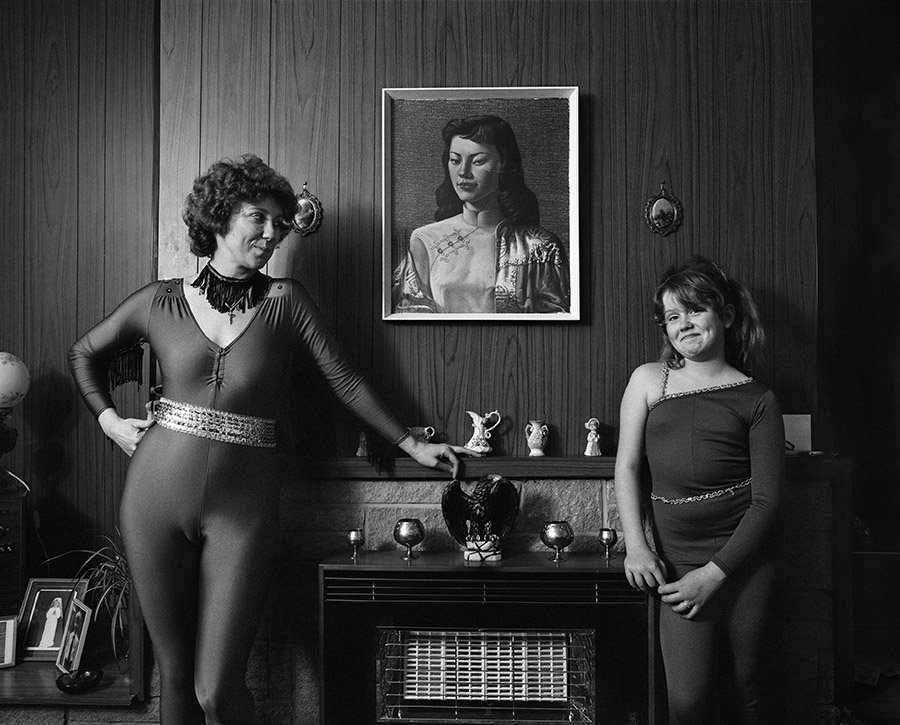
In 1968 at the Regent Street Polytechnic Sirkka met Murray Martin and a small group of final year students around him. Along with them, Sirkka formed the fledgling Amber Film & Photography Collective. “I was excited by the vision of working as a collective.” Murray, who grew up around the potteries in Stoke-on-Trent, felt that there was not enough representation of working-class culture in the arts and suggested leaving London to document northern industries and communities. “The Amber Collective was based on egalitarian principles. We were all jobbing to bring in money with our assorted skills: teaching, crewing for local television, frame making, photography… Everything we earned went into a single pot from which we all took an equal wage, initially £8 a week! Shows how long ago that was, but it was enough to eat out every day! The remainder was invested into photography and film equipment. Having our own gear meant we were independent – we could go off to film without expensive hire costs. If a ship was being launched, we could go straight over and document it.” Eventually they had a rolling contract with the newly established Channel 4 television for eleven years, maintaining editorial control and ownership of everything they created. As Sirkka explains, “We shaped the documentaries but all the stories came from the community – we were their conduits.”
Byker
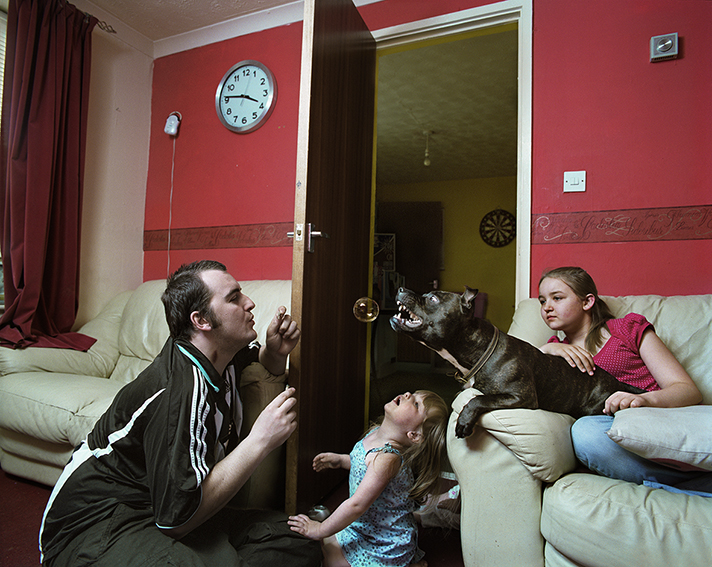
Sirkka became accepted into one such close-knit community when she moved to Byker. She ended up staying there for seven years, documenting the area, its people and their stories right through to the demolition of their homes, including her own. From this unique experience came possibly one of her most famous books, Byker (1985). Then with Byker Revisited (2009), Sirkka found herself returning to a completely different world: “I didn’t think I would ever return to photograph the new Byker but I was invited back when Byker was at a new juncture again. There had recently been opened a reception centre for asylum seekers and refugees and there was vibrancy and colour in the streets. I couldn’t just wander round the streets though, taking photos like I used to. The Byker Wall Estate was a more private world with people leading much of their lives indoors, not necessarily even knowing their next-door neighbours. My new project Byker Revisited became a collaboration with the residents who wanted to take part.” Sirkka asked the participants: “If you had just one picture to introduce yourself to your neighbours and the rest of the world, what would you have in it?” Sirkka would then photograph a spontaneous moment within that, keeping the element of documentary. Like a ‘calling card’, the chosen photos were shown to their new neighbours, creating a virtual community through the project: “The original community was long gone. The demographic in Byker is now very wide – there’s every kind of human being in that microcosm!” Sirkka exclaims. This was the reason for the photos of the new Byker needing to be in colour, to reflect the more colourful modern architecture as well as the colourful personalities of its residents: “Each time you embark on a new project you take on the challenge of finding an appropriate approach for it.”
North Shields Residency
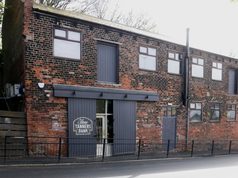
As well as working in Byker and the surrounding areas in the 70s and 80s, the Amber Collective liked to hang out in North Shields: “It was our favourite place – there was loads going on, life in the streets. There was self-made entertainment, like in Byker. We loved it. None of us had any home life! I don’t remember ever cooking at home, I think we lived on fish and chips. There were great second-hand shops and everything we owned came from them. We loved the pubs, the singing in the Ballarat and the ‘Vic’, everyone having their performance piece, their own song.” The collective eventually moved to North Shields for their planned five-year residency, taking over an ex-chapel overlooking the river: “The first Northern Arts Winter Ball was held there! We had music events, cinema screenings…. I remember sequencing the photographs for the film The Writing in the Sand there on the big floor. There was a secure room for storing our film equipment but it was ram raided so we had to move.” Amber subsequently acquired the New Clarendon pub on Appleby Street and used it as a meeting space with the community and a base for their filming. Sirkka was primarily a photographer but her images were incorporated into many of Amber’s films through the collaboration with her now husband, Peter Roberts, who joined Amber as an animator: “We gelled into a photo-film unit.” At New Clarendon, with its manageress, Eileen, they put on singalongs, formed a women’s darts team and made films hiring locals as actors and extras. They even bought a decommissioned fishing boat to set a new film and to immerse themselves in the fishing community. Tom Hadaway wrote the script for In Fading Light (1989). “We originally wanted to title the film Strange Boat after the Waterboys song, which they let us use in the film, but we didn’t get the rights to have it as the title. After all, it was a strange fishing boat, with a woman on board!” Other films during that time include The Filleting Machine (1981), Keeping Time (1983), the series Shields Stories (1988), From Marx & Spencer to Marx and Engels (1989) and Dream On (1991). “It was a very productive five years, we made a lot of work.”
Step by Step
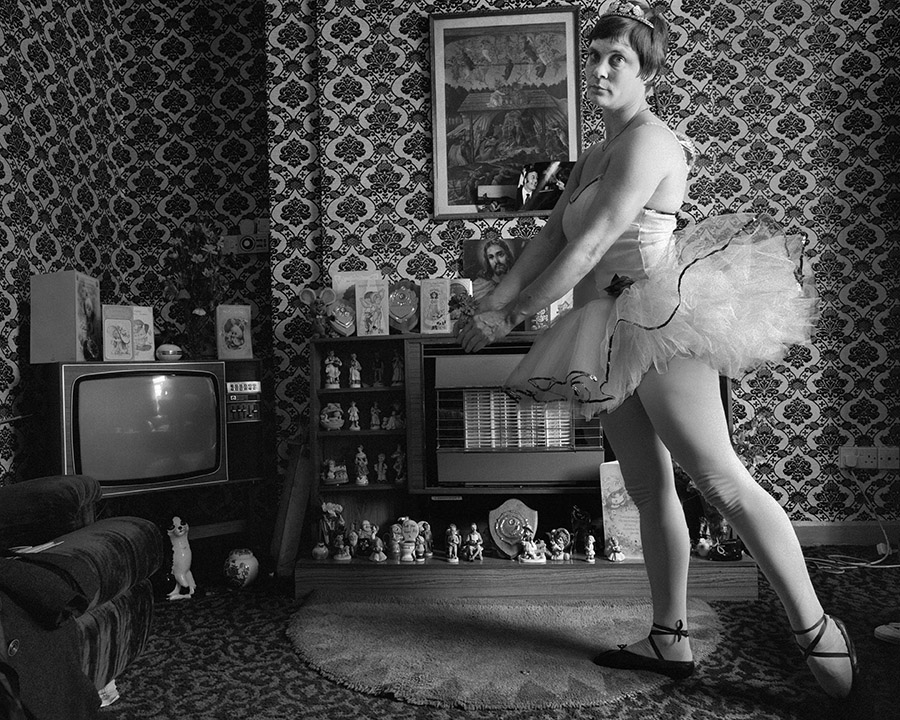
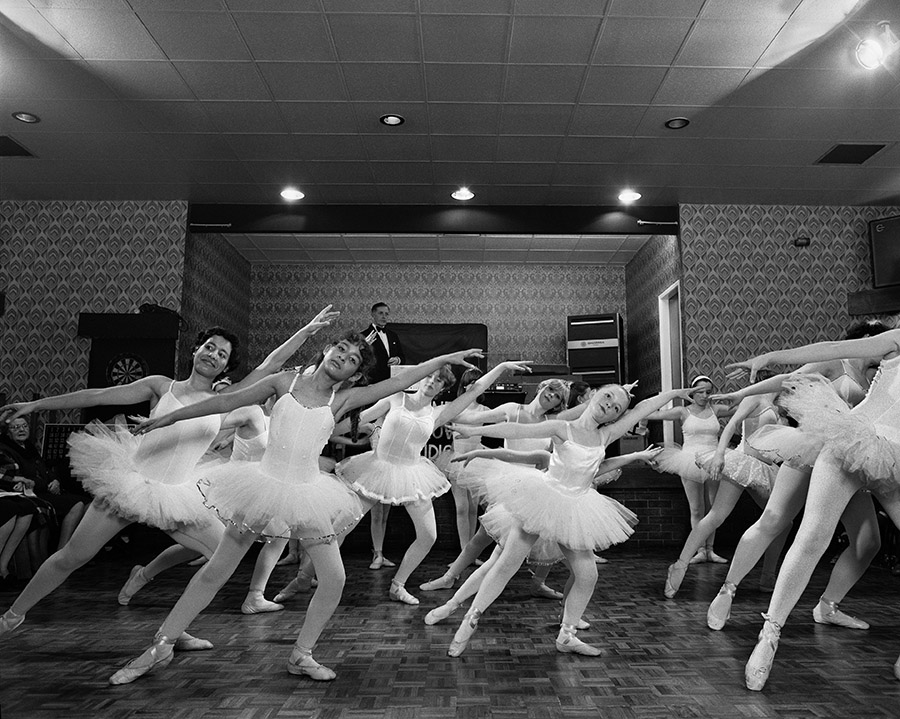
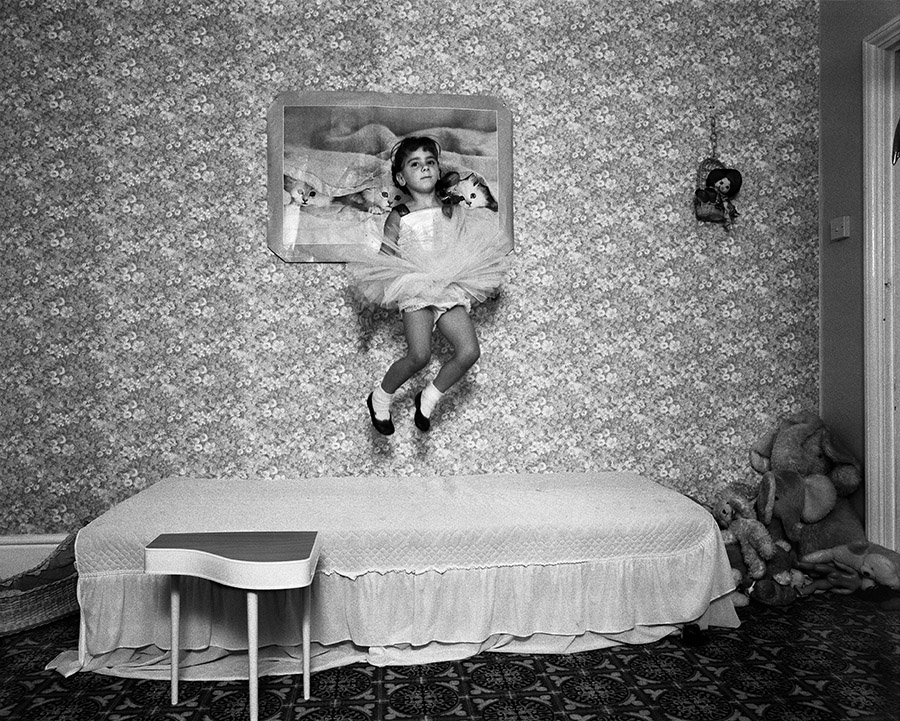
Many of Amber’s films highlighted women-centred themes that were close to Sirkka’s heart. After becoming a mother, she began a project at the Connell-Brown Dancing School in North Shields, drawn to its community of women and girls that she would find herself revisiting over an extensive period of time. “What I found so interesting about the activities around dancing was how they forged a bond between mothers and daughters – getting many of the mothers into dancing, too.” The Step by Step project, first published as a book in 1982, offered a unique insight into the relationships between young dancers and their dedicated mothers. “For me, as a photographer, it’s my most challenging and complex work to date, dealing with the dreams and realities of the women in a stark economic landscape, much the same as it is now.” The series fed into the Amber Films 1983 docudrama, Keeping Time, and was an inspiration for the writer Lee Hall of the 2000 hit film, Billy Elliot. The 2018 film, Still Here, revisited four people from Sirkka’s previous projects, including women who appeared in Step by Step and Keeping Time. Now as middle aged women they are shown watching themselves performing at classes as teenagers. “When the women came to the screening of Still Here at the Side Gallery, I just remember the laughter filling the gallery from top to bottom – they were laughing at themselves laughing at themselves in the film!” Sirkka goes on to enthuse about the new revised edition of Step by Step, set for publication later this year: “There are more images included that I had not yet found for the first edition. At that time I was having to make decisions based on small contact prints. Now that I’ve started digitising my negatives, I’ve unearthed so many more photos that I love. Also, everything in the new edition follows the women’s own narratives, for example the environmental images, how the advertising boards in their surroundings bombard their mental landscapes.” The quality of the images in the new book will be far superior to the original: “It will be printed in Italy by one of the best art printers in Europe.” The women’s characterful quotes will remain: “All their sharp observations and humour is there in their own words.”
Coastal Environment
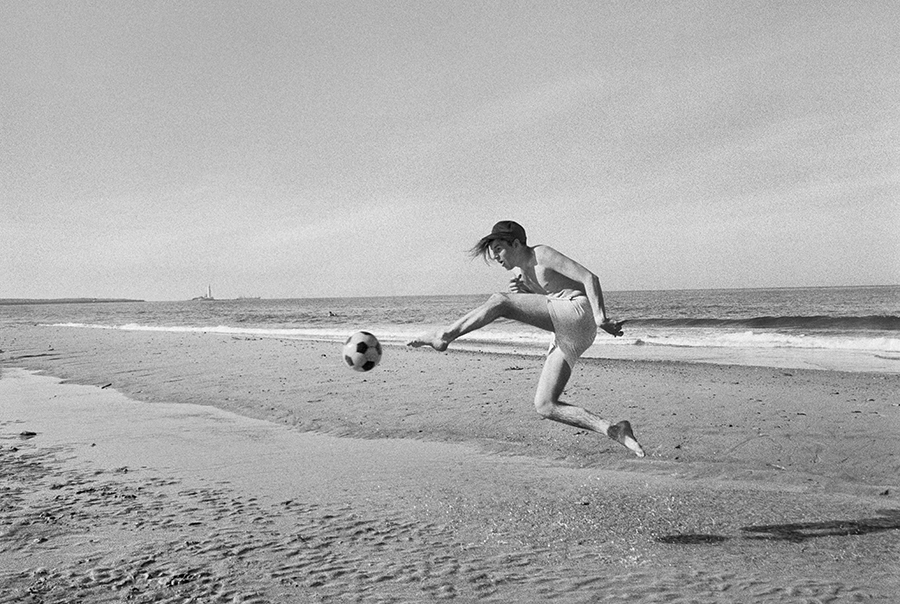
Sirkka admits that Step by Step was a real passion project to have lasted so long: “Overall my work is a celebration of relationships, it’s about being involved in a community over a long period of time. The friendships become a two-way thing. It makes for a real richness in life for me. I’ve never been interested in just walking through.” Her encounters were more transient in Writing in the Sand (originally published in 2001 with a revised edition in 2025), but nonetheless important, as a quote from the book emphasises: “However fleeting the encounters, they stay with me.” Sirkka remembers: “The beach was a sort of open community.” There she captured all walks of life, young and old, defiantly braving the cold to embrace the joys of the seaside: “That’s what I love about the North East – its capacity to enjoy life regardless of adversity.” Another quote from the book reflects the comfort to be drawn from the perpetuity of activities on the beach, coming and going like the tide: “All of it taking place the next day and the next summer, and long after I have taken my photographs.” I point out that there is always a feeling of hope in Sirkka’s photography, no matter how bleak the surroundings: “I am a hopeful person, I think it is important to remain positive. It doesn’t mean you should neglect the realities. But you’ve got to be as constructive as you can with your personal input into the world and do what you can…we must continue to believe it’s worthwhile, every little bit counts.”
Nevertheless, Sirkka remains pragmatic about whether photography can ultimately change the world: “I’m not looking to solve problems with my photography, that’s not my driving force. I respond to what sets my heart alight.” This does not mean that her work is without statement. The Coal Coast (2003) is a haunting depiction of County Durham’s post-industrial coastline, exposing the effect of generations of coal mining on the natural environment. It was also Sirkka’s first major exhibition in colour: “Each subject demands its own approach. The Coal Coast was about the man-made imprint on the landscape, the detritus left behind by the mines: pools of fluorescent chemicals, burnt shale, black sand, so the story needed to be told in colour. It was also a kind of memorial and a tribute to the coastal mining communities” Sirkka still maintains a positive perspective when discussing environmental issues such as the fishing industry and sustainability: “When we first came to the Newcastle Quayside, the stench from the River Tyne was unbearable! Recently we were walking along the river to North Shields Fish Quay – and were followed by a pod of dolphins bobbing up and down! A salmon leapt out of the water on Newcaste’s Quayside! The river is cleaner now than it’s ever been in the last half a century. When I go swimming in the sea in Tynemouth I occasionally spot both dolphins and seals. At least they’re not dumping power station ashes in the sea any longer.”
A New Age
The passage of time has brought many other changes, especially relating to photography and film, and Sirkka is now dipping her toes into Instagram and the world of social media. The days are long gone of people such as those in Byker who had never been photographed before, but at the same time we are all the more reluctant to have our photo taken, worrying about where it might end up being shared. Much like the lady Sirkka met in 1970s Byker who did not want to have her picture taken in her apron scrubbing the step on a Sunday, the day of rest, nowadays people tend to post self-curated images on social media in which the actual honest reality of their lives is filtered out. In an age of selfies, we have lost something of the mystery that the past can hold. In one particularly celebrated photo by Sirkka, a girl in a sequinned dress bounces along a cobbled Byker back street on a Spacehopper. When it came to revisiting the photo recently, four different women turned up claiming to have been that girl: “The strange thing is that at least two of them had convincing recollections of the situation, including the details of the material and colours of the garments, in the black and white photograph. I’d venture to think that they all genuinely believed it was them, the spirited girl they identified with.” Sirkka’s closing comments could not sum her up more perfectly: “That photo has followed me for fifty-five years, sometimes I look at it and I think it’s me! I have always liked what it represents – moving forward, come what may.”

@sirkkaliisakonttinen
Find more of Sirkka’s work at: https://sidegallery.co.uk/collections