Amber Films & The New Clarendon | Forgotten Singalongs of North Shields
When my late mother, Veronica, responded to an advertisement in the paper by the Amber Film & Photography Collective appealing for people to attend singalongs in their North Shields pub, little did she know how it would open up the door to a new life. Eighteen years after she passed away, I am finally dusting off the boxes full of cassette tapes she recorded at the time. Pressing play on the first one, I am instantly transported back to a lost world of forgotten songs, singers, bar staff, compères, characters and community craic.
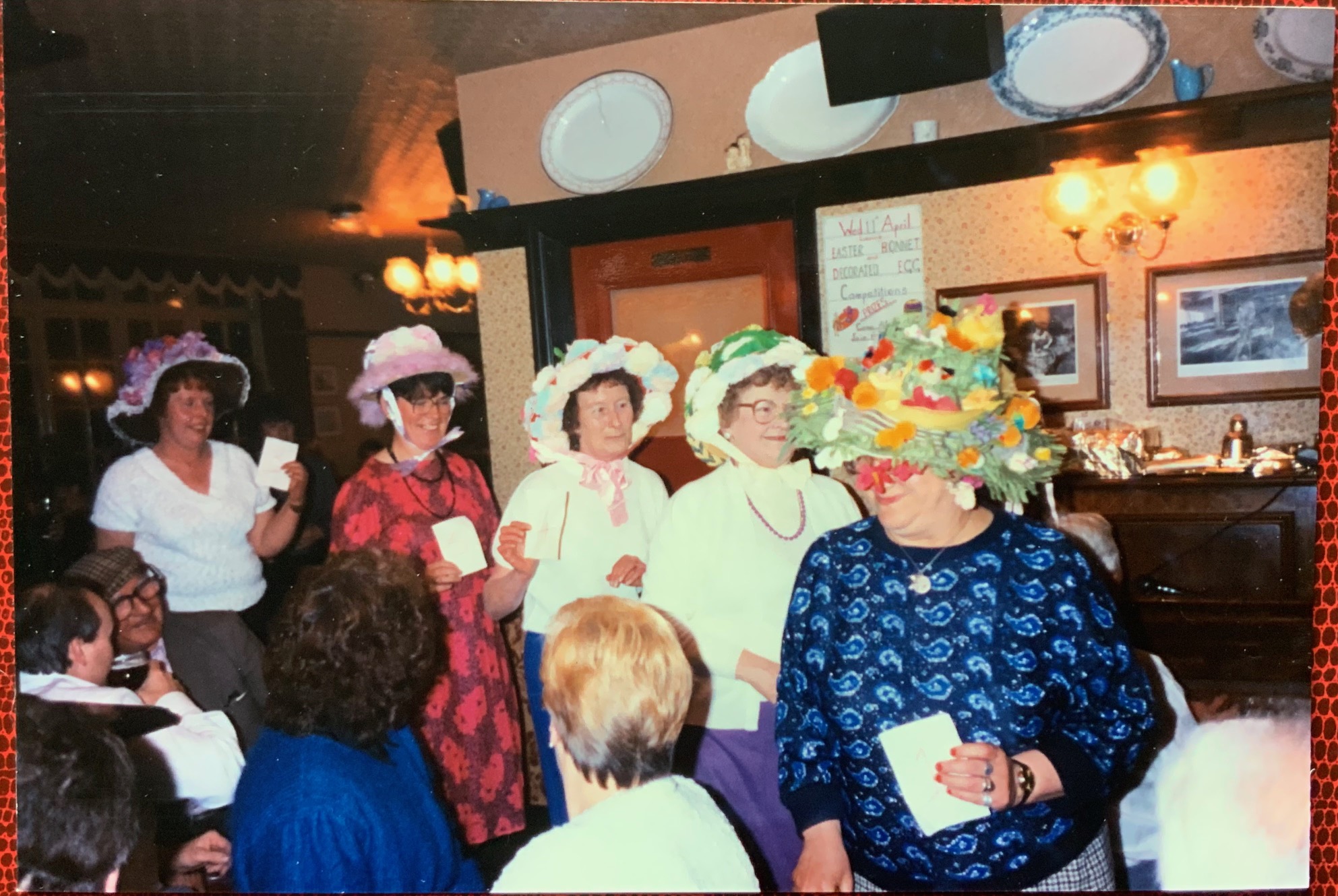
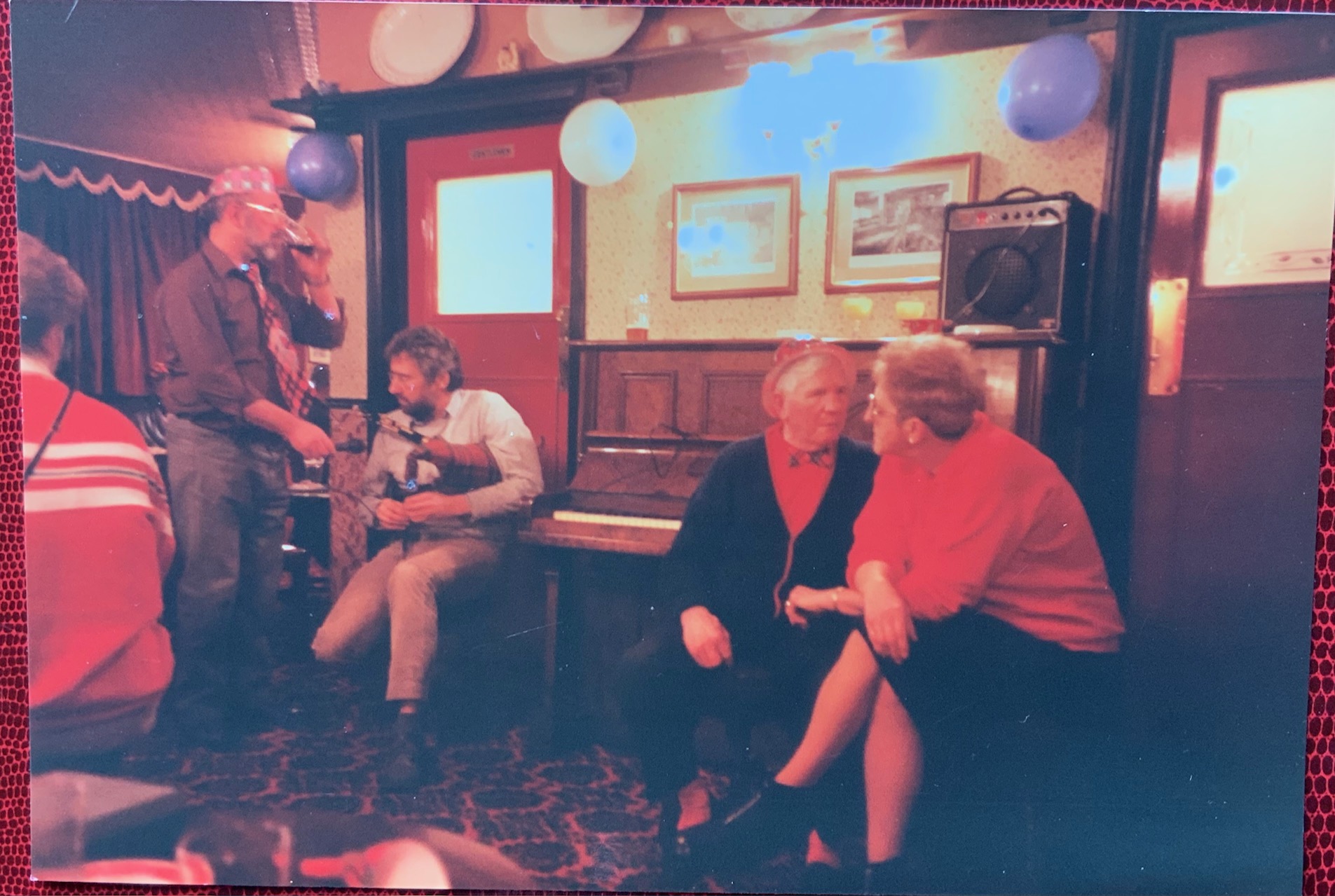
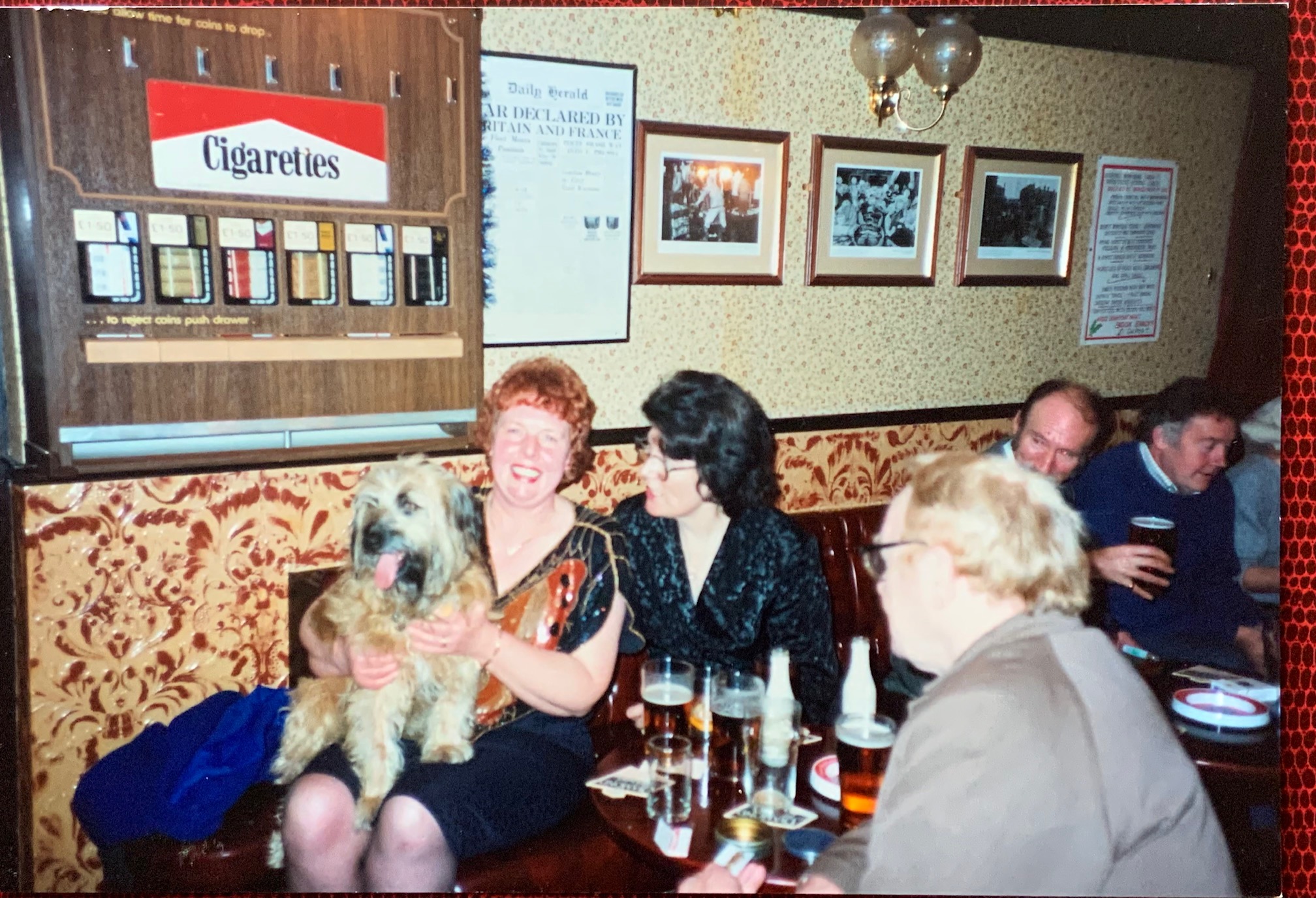
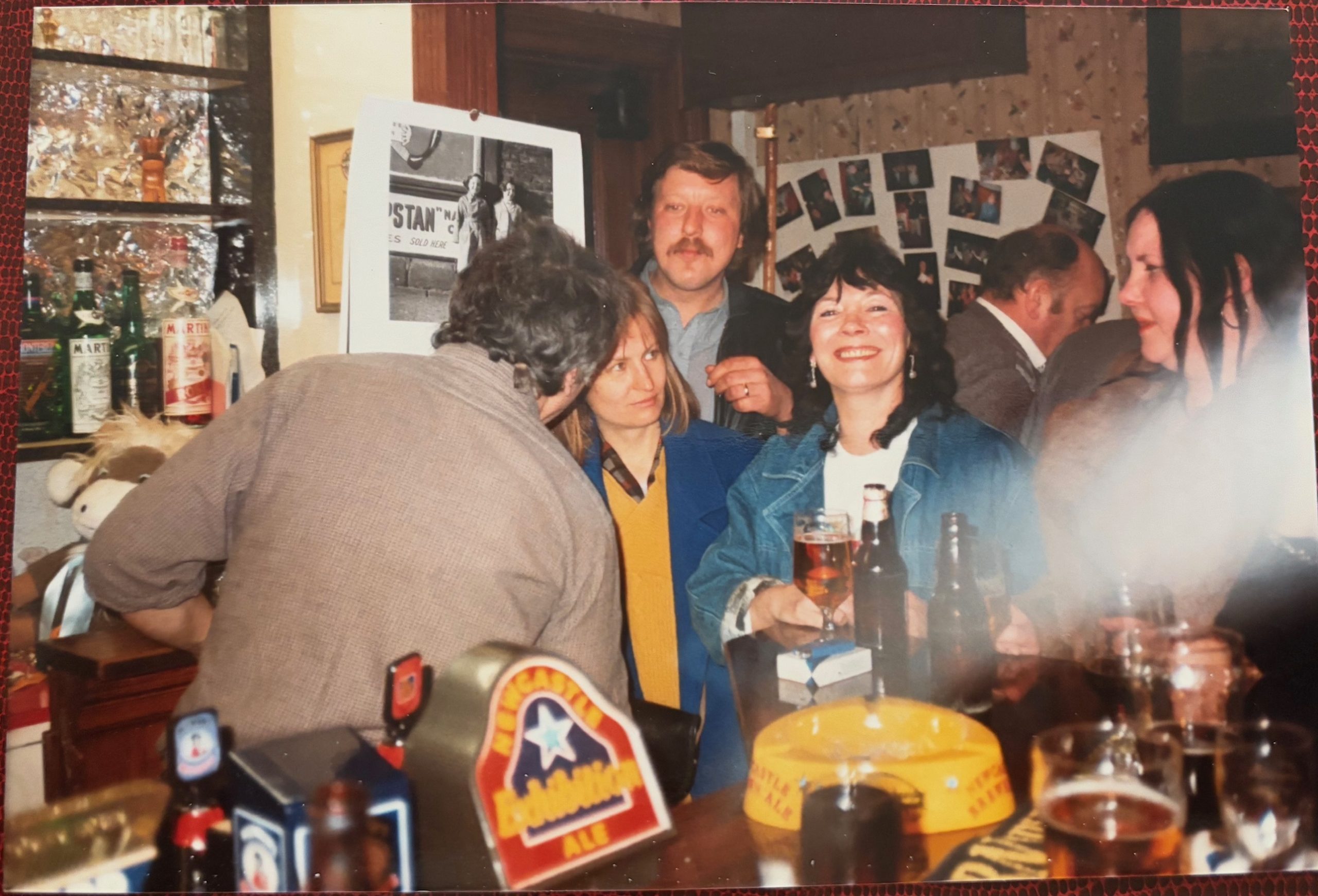
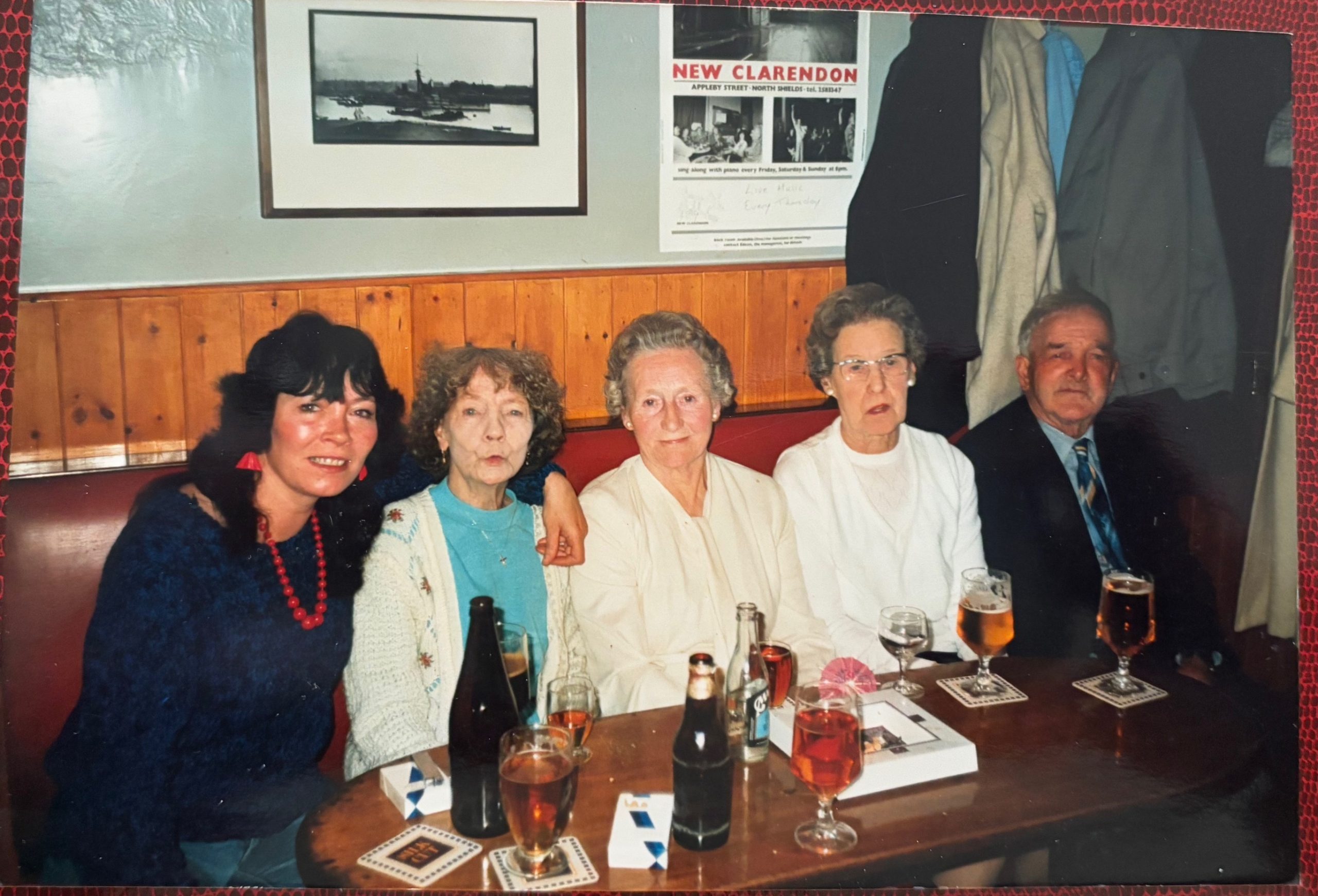
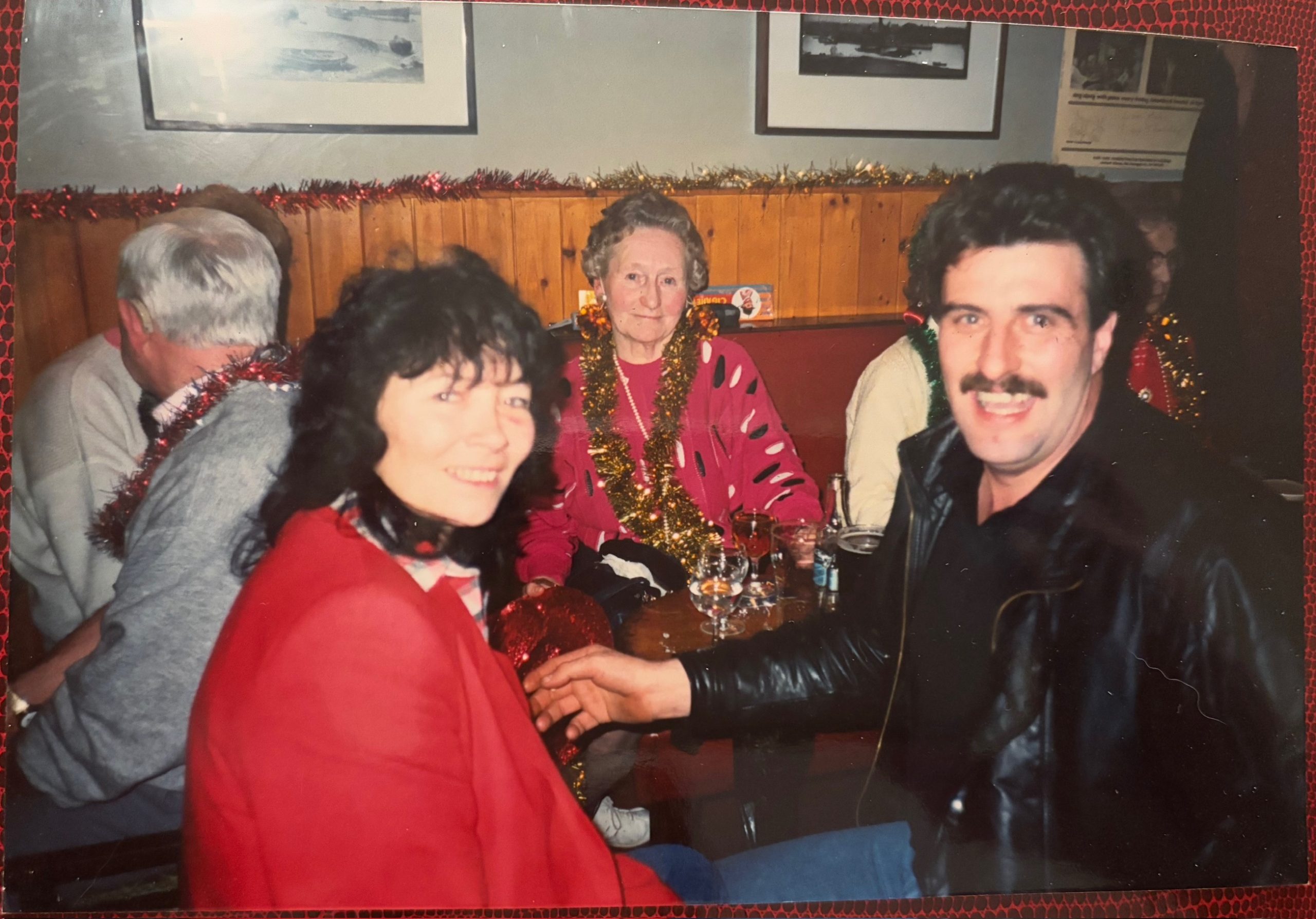
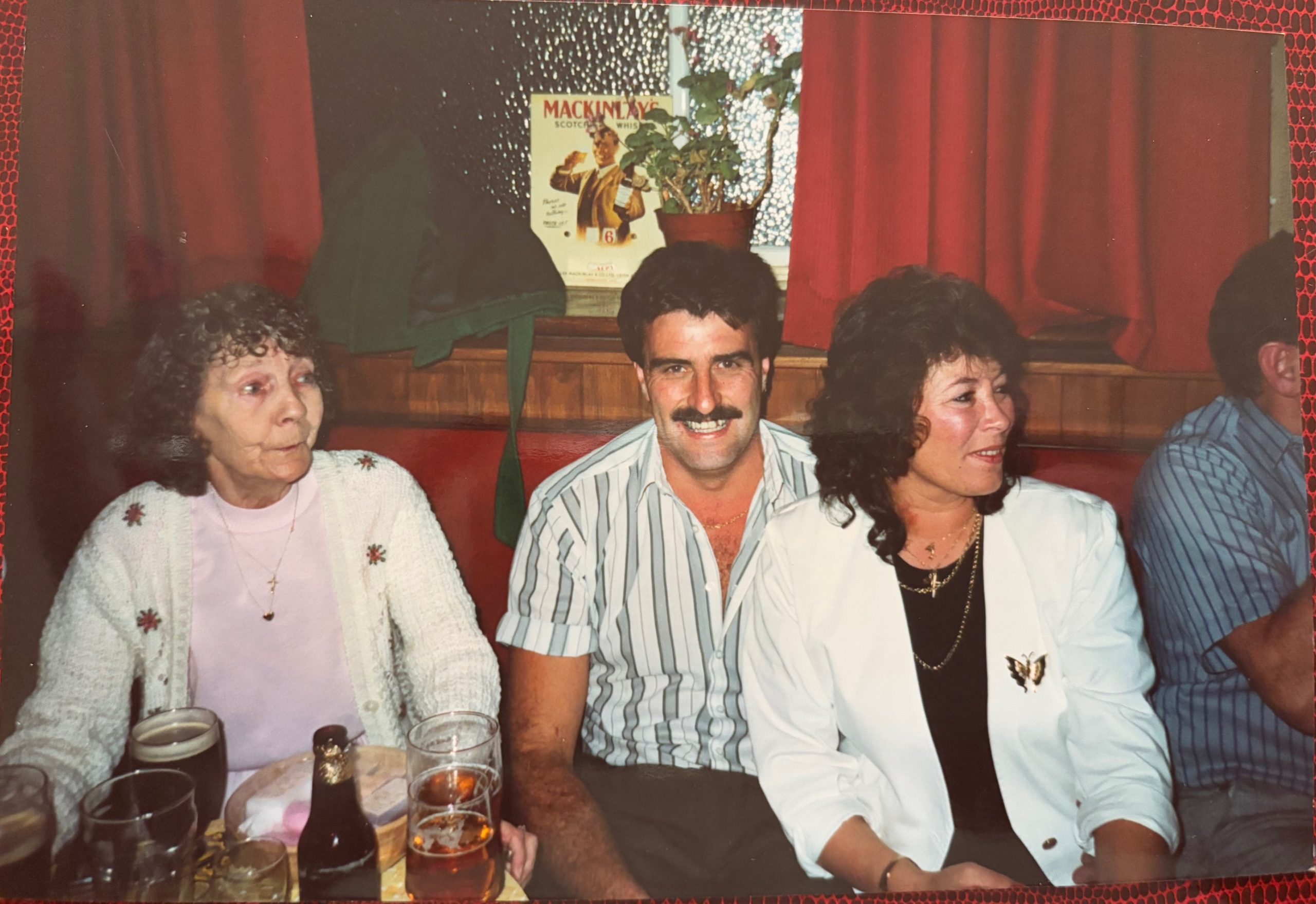
Amber Films bought the New Clarendon in 1986 to become immersed in the North Shields community and document everyday lives through photography and film. During their five-year residency, the pub was used as a base for the filming of several productions. Shields Stories (1988), featuring Robson Green in his debut role, is a ten-part drama series exploring local lives shaped by economic cuts, social change and resilience. The feature drama In Fading Light (1989), starring Joe Caffrey and Maureen Harold, examines interpersonal relationships in the town’s declining fishing industry. Dream On (1991) starred Amber Styles, one of the production company’s main actors, along with Maureen Harold and Anna Marie-Gasscoigne. The feature drama blends magic, fantasy, dreams and realism in its exploration of women’s lives. The New Clarendon provided the backdrop for several scenes in these productions, with genuine punters creating an authentic pub atmosphere. Amber’s actors and associated artists often hung out there, mingling with the locals, as evidenced by my mum’s old photos that accompany the cassettes, including some of acclaimed documentary photographer Sirkka-Liisa Konttinen.
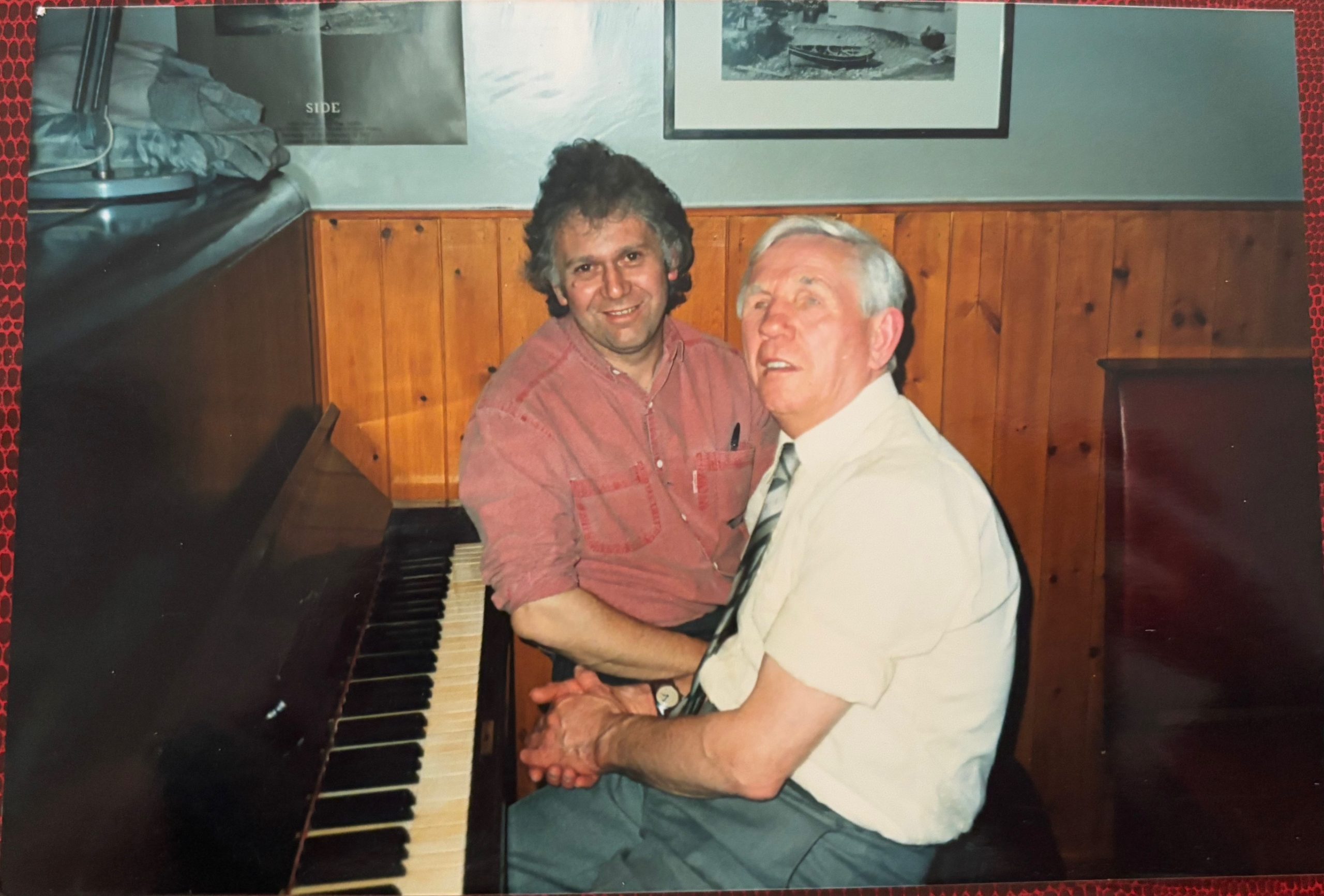
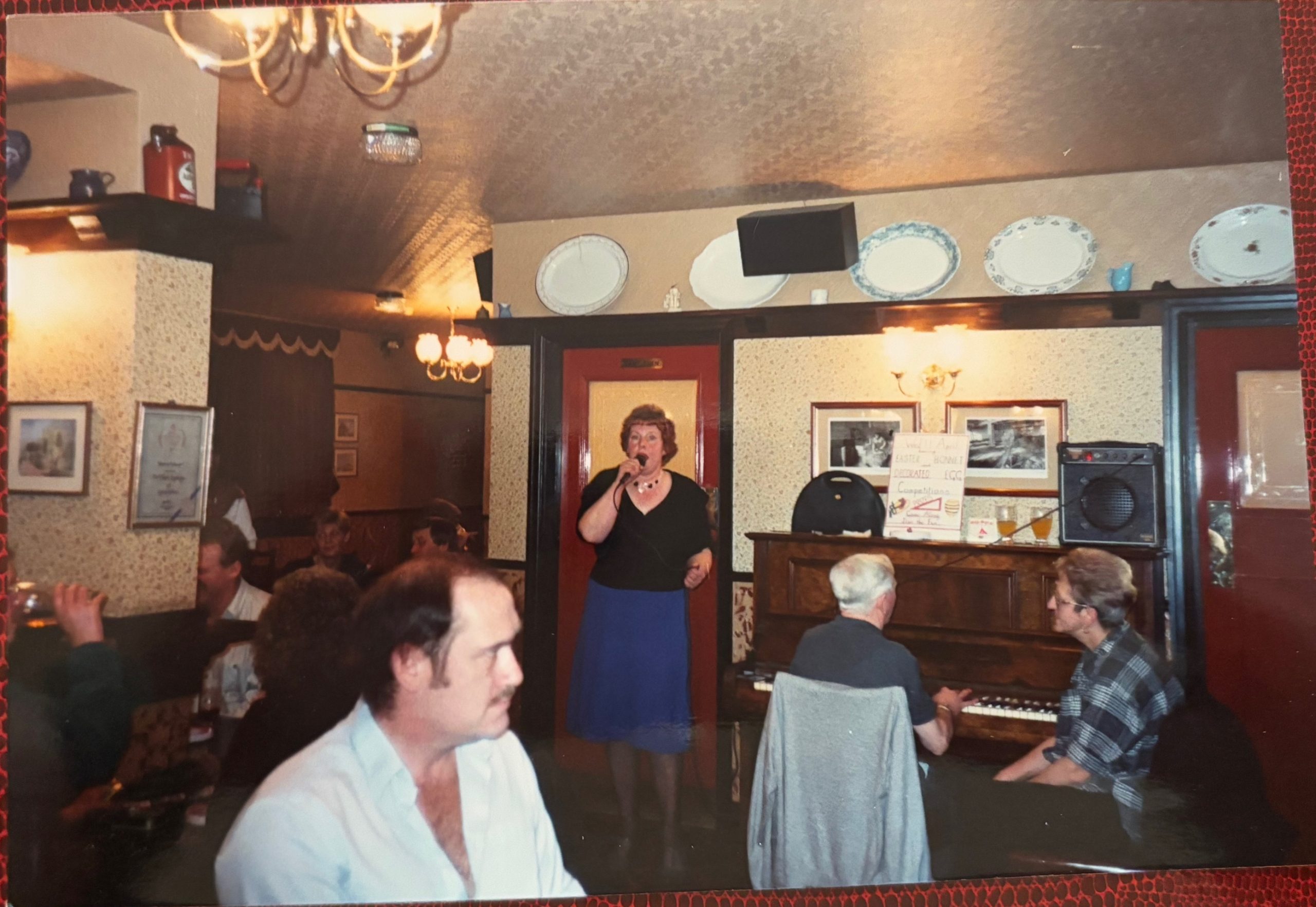
One of the first cassettes I listened to was marked ‘Clarendon ‘87’. It could just as easily have been 1957, with singers belting out old-time songs accompanied by ‘Blind Alan’ on the pub piano. In no way offended by this name, Alan Deeming was a formidable talent who could play an impressive repertoire of songs in any key the singers requested. The piano starts tinkling away and we are off. A woman called Mary begins the night by singing ‘When That Old Wedding Ring Was New’. A man named Albert sings a traditional Scottish song, after which the audience jokingly shout their feedback: “Five out of ten!” Then the female Geordie compère announces: “Right, can we ask Veronica to give wuh a song now?” As my mum’s renditions of ‘Can’t Help Lovin’ Dat Man’ and ‘On a Clear Day’ ring out of the cassette player, my childhood home is once again filled with the beautiful soprano tones that were so familiar to me growing up. What strikes me most is the quality of her singing and her apparent confidence. The Amber singalongs were the first time my mum ever began performing in public, and she happened to be exactly the same age that I am now.
The compère comes on again: “Put your hands together once again for Veronica, please!” After some applause, she continues: “Er, we had a little lady start the night off tonight for wuh, when nobody was really bl**dy interested, so I think we’ll ask her to sing again. Come on, Sarah. Are you getting up? Howay, Sarah!” Then an interjection on the tape by mum in her best Queen’s English: “Sarah is the mother of Amber Styles, local film star”. The crowd continues: “Howay, Sarah! Sing the Clarendon Song! ‘Just a little Street’. Howay, Bonny Lass!” Sarah sings the song adopted as the pub’s unofficial theme tune, with the aptly written lyrics: “It’s just a little street, where old friends meet, I’d like to wander back someday. To you, it may be old and sort of tumbled down, yet it means a lot to folk in my hometown.”
As the whole room begins to join in, I get a glimpse into the unique sense of community that was created inside the little old pub on Appleby Street.
The second side of the tape offers further surprises. Entitled ‘German Film’, I soon realise that this recording documents the filming of ‘From Marx & Spencer to Marx and Engels’, Amber’s 1988 collaboration with the East German film company, DEFA. Focusing on everyday life in the fishing and shipbuilding industries in the town of Rostock, the film aimed to portray the realities of socialism in the GDR. Again, my mum announces in her poshest voice: “A German film company is on an exchange visit. They are making a film which will be distributed throughout Germany in the cinemas and will also be shown on Channel 4 in the Spring. The date is Saturday 26th of September, 1987.” After a brief interruption by my ten-year-old self singing and giggling with my friend, Mam apologises and continues: “We now move on to the Clarendon. The heat is overpowering from the arch lights but the singers do their best.”
Various performers offer renditions of old classics including ‘The Loveliest Night of the Year’ and ‘(I Wonder Why) You’re Just in Love’. A man sings a capella. Mam explains: “That was Rodney trying out a new song.” Eileen sings followed by Taffy, who was heard having a telling-off earlier by the compère for his drunken heckling. After a couple more songs, the compère warns: “Just wait a minute till I check the watch.” A man’s voice comes from across the room: “Ha’past nine!” I presume this to be Taffy again, given her response: “Hey, don’t work yaself! When I shout mouse, you hop out! I’ve told ye!” She goes on: “Er, I think we’ll ask Veronica to give wuh another song.” Taffy talks over again: “When ye going on ya holidays again, Eileen?” “A week past Thursday.” “Hurray, back to peace and quiet, then!” And so the banter goes on.
After my mum sings ‘Over the Rainbow’, the compère announces: “I think we’ll have a funny song now, eh?” Taffy shouts: “No dirty songs in this bar!” She sings ‘The Hipso Calypso’ and then asks: “Right Rodney, are you gonna give wuh another song? You know, one you can get through?” Rodney sings and then I hear a name mentioned I had almost forgotten. My mum used to help a sweet elderly lady who had no family, taking her to the singalongs whenever possible. She enjoyed playing the bones and her Irish drum. “Howay, Victoria, give wuh ‘You are My Sunshine.’ Come on!” She launches into a modified version of the song: “You are my sunshine, my box of Woodbines, a box of matches, and a bottle of rum, and a bottle of whisky, to make you frisky…” She finishes to rapturous applause and encouraging comments: “You did very well, there.” “She did, like.”
Finally the evening draws to a close: “I think we’ll have the last song of the night now because time’s getting on. We’ll have ‘Aloha’. And who’s gonna get up on the floor with Eileen and do it? Veronica?” Everyone puts each other forward for whatever the task may be: “Go on!” “I’m not getting up!” “You’ve not got to sing or nowt. You’ve just got to stand up! There’s a stool behind you.” Then an exchange reminds us of the fact that all this is all still being captured by the German film crew: “Eee the bl**dy camera will get broke down, ye b**ger! Eee dear me! God help the cameras now! ‘You Are My Sunshine’ and all the dirty songs!” It becomes apparent that Alan the pianist will need some extra cues due to his visual impairment: “Just tell us when ya ready to roll…” German voices murmur: “Just tell us when you’re ready.” Someone offers: “I’ve got a bl**dy good mind to go and stand behind him.”
A proper old-fashioned sounding bell rings to signal last orders at the bar. “Hold on, Alan, we’re getting a bl**dy sorting out, here. It’s like Al Capone! Right, Alan…” The compère states: “Right, I think it’s time for the last song of the evening, ladies and gentlemen.” Alan starts playing to cries of: “No, not yet, Alan!” The Germans exclaim: “Stop! Stop! 309, take four!” More shouts of: “Right, Alan!” The host announces the last song of the evening again: “Very sorry to be a party pooper, but that’s it. We’ll have ’Aloha’. Right, Alan!” Everyone sings together. A final heckle: “I tell you what it is, that bl**dy film unit will all collapse tomorrow! That’s the finish for that film because it’ll all go black!” Ignoring this, the compère rounds things off: “Right, will you put your hands together for all the singers in the room tonight? A big hand for Alan on the piano! And Tilly behind the bar! Thank you and good night. Don’t forget the singalong’s on tomorrow night as well.” Some final commentary from my mum: “The filmmakers request a shot of Alan’s hands playing the piano.” Alan is heard playing an instrumental of ‘To You Sweetheart, Aloha’ along with general pub chatter: “Brian, can ye get me umbrella, please?” “Whey aye, man, it’s up there.” Then a German voice: “We’ve seen it in July and now we have it in this film. I hope we will see it in springtime on Channel 4.” Despite not knowing exactly what they’re referring to, I feel certain that some of ‘it’ was definitely captured on my mum’s little portable cassette player, too.
This tape is only one of many. The New Clarendon singalongs sparked a new era for my mum, who continued to sing in public nearly every night of the week for the rest of her life. I have recordings of happy times spent in venues including the Porthole, the Chain Locker, the Collingwood Arms, the Queen’s Head, The Percy Arms, the Station Hotel, the High Point Hotel, the Holystone and Jacksons in Byker. Some pianists mentioned by name are Gordon at the Porthole and the Chain Locker, Norman, Audrey, Frank, Brian and Doris at the Station and Jean at the High Point. Singers include Norman, Brian, Cath, Malcom, Gordon, Tony, Liz, Jean, Tracy, Ray, Barry, Brenda, Michelle, Jack and Eve. Some would just be regulars at specific venues, others would travel around as part of the whole scene. There was always a compère to manage the proceedings, like the unnamed lady in the New Clarendon or Pat at the Station Hotel. Usually each singer was only allowed two songs, three at the most, and it was taboo to sing someone else’s trademark song. My mum learned the lyrics to hundreds of songs off by heart, in the days before you could look them up on the internet. She had to adapt to the different style of each pianist, keeping up with their individual tempo. The advent of karaoke made things easier but this took away some of the authenticity, and sometimes it did not sound as good as it was not possible to change the key to suit the singer. I still have my mum’s notebooks containing lists of songs with her preferred key noted beside each one. On some of the earlier tapes you can hear the singers and pianists debating the key before eventually getting going.
Until recently, the Amber Collective were unaware that their documentary efforts in 1980s Shields had also been documented in this way. In the future I hope to digitise the whole collection in order to share it with the community. Maybe some of the people on the recordings are still around, or their relatives, who may like to have the same time-travelling experience. Equally, the recordings should be of interest to anyone keen on social history. The songs are all interspersed with intriguing dialogue and humorous incidents, such as the compère’s constant attempts to manage unruly participants: “Well, I’m sorry girls, but that’s it, cos the barman’s got a metro to catch!” Then there are the poignant moments which will catch you by surprise. At one point, my mum starts singing and then everyone joins in: “We all have a song as we go through our lives, that will go on and on, through the years of our lives. It’s a wonderful song that you brought to me, and I look on this song as my symphony.
This is the song of my life, this will go on through our lives…” Hopefully the songs and memories of all these people, who weren’t celebrities, just ordinarily Shields folk, will be preserved for many years to come.