
England’s “Most Drunken Town”

It’s no surprise that England’s “most drunken town” was a magnet for the Temperance Movement.
The “demon drink” was a big problem in North Shields during Edwardian times.
In 1878, the police made over 1,000 arrests for drunken and disorderly behaviour — a shocking figure for a town of its size.
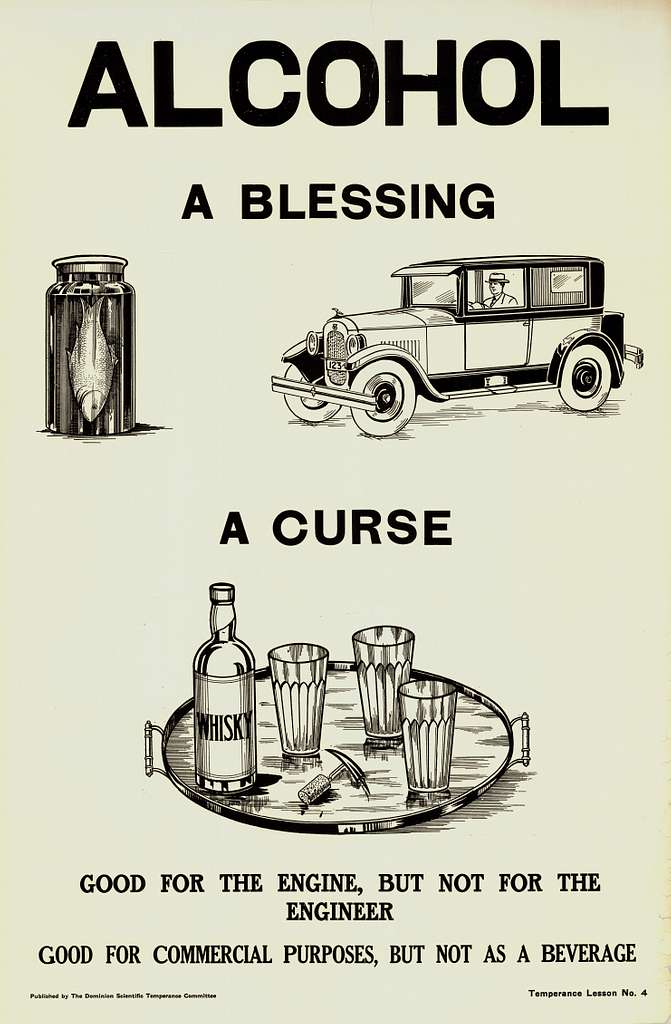
The Rise of the Temperance Movement
The Temperance Movement targeted North Shields with meetings, rallies and events.
Their mission? To curb alcohol consumption and reduce drunken behaviour. Religious faith was often at the root of their campaigns.
Teetotallers were reported as “holding forth strong in North Shields every night during the week against the crying sin of drink!”
A temperance meeting in 1900 at Howard Hall was packed to the rafters — and working-class communities were their main target.
Tea, Faith and “Innocent Amusement”
A newspaper story from 1842 reports on a public tea drinking party organised by the “Bristol Brethren.”
With abstinence booming, a Temperance Church opened at the north end of Stephenson Street in 1875.
Local reformers met at the Albion Assembly Rooms on Norfolk Street, as well as churches and coffee shops.
One standout venue was Mrs Hill’s Temperance Coffee Rooms on Tyne Street — lushly decorated and featuring music and dance events that were “properly conducted” with “innocent amusement” and no alcohol.
John Hunt’s Temperance Bar
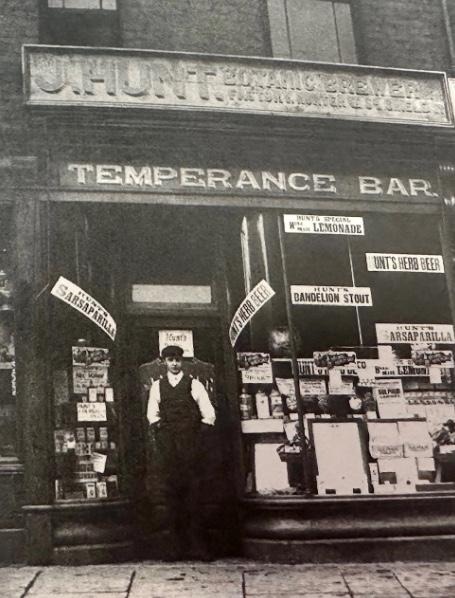
Saville Street West was a hotbed of heavy boozing, so it’s fitting that John Hunt opened his Temperance Bar there in the early 1900s.
A famous 1910 photograph shows his son, the store manager, standing proudly outside the shop.
The windows were plastered with signs advertising herbal beer, sarsaparilla, dandelion stout, and lemonade — and bottles filled with stringy strips of tapeworms were one of the star attractions!
The Herbal Pioneer
Hunt’s “Pharmaceutical Formulas” book contained recipes for everything from toothache remedies to “moustache invigorator” and “pistachio toilet powder.”
Locals were hooked on his herbal concoctions, especially his “Blood Mixture,” designed to cleanse the digestive system.
The drink included Epsom salts, made from magnesium sulfate manufactured at Joseph Ogilvie’s North Shields works.
Hunt’s operations extended across the river to South Shields, where he ran a chain of nine botanical drinks shops in the Market Place, Hebburn, and Jarrow.
His light-blue-fronted stores became a local trademark — a pioneer of herbal and alcohol-free drinks long before “sober living” was a trend.
A Legacy of Loss
Tragedy struck when his son, William David Carswell Hunt, was killed at Ypres during World War One.
Heartbroken, John Hunt withdrew from the business. He died in 1922, and the last of his herbal stores faded with him — but his alcohol-free revolution had already made its mark.
The Temperance Hotels of Tyneside
The movement’s momentum spread nationwide, opening temperance hotels across Britain — including one on Camden Street in North Shields.
The Rex Hotel in Tynemouth opened in 1906 as a temperance hotel and stayed alcohol-free until 1937. The Avenue Hotel in Whitley Bay followed suit in 1907.
Temperance campaigners also pushed for restricted drinking hours, leading to the Sunday Closing Act of 1881.
Of course, that didn’t stop locals from sneaking a pint or two — illicit Sunday drinking thrived!
Wilkinson’s “Botanical Beverages”
Local businessman W.A. Wilkinson developed his own range of botanical beverages, aerated waters and tonics.
His SMILA mineral water launched in 1898 as “the new temperance drink”, followed by PINEOLA in 1910.
But Wilkinson’s motives weren’t entirely moral — he also ran a successful wine, ale, and spirit business on King Street.
During WWII, his lemonade factory was destroyed in a German air raid.
Coffee Culture Comes to the Tyne
The Jerusalem Coffee House on the riverfront wasn’t alcohol-free — it blended the new coffee-house trend with bar culture.
Meanwhile, a Greek immigrant named George Kostalas opened a coffee kiosk on Clive Street in the early 1900s.
Bringing Mediterranean coffee culture to North Shields, Kostalas may have created the town’s first ever coffee takeaway!
His kiosk was destroyed when a runaway tram careened down Borough Road hill — but he reopened soon after, undeterred.
From Temperance to Trend
After World War Two, the Temperance Movement faded as society shifted.
But today, the fashion for coffee bars, tea rooms and alcohol-free living has returned — wrapped in wellness trends and creative branding.
Soft drinks and mocktails have replaced sermons and rallies, while botanical alchemy is thriving once again.
Sadly, John Hunt’s “Blood Mixture” and tapeworm tonics haven’t made the comeback list!
💬 “When North Shields took on ‘The Demon Drink’ with coffee, herbal tonics, and good old-fashioned willpower.”