
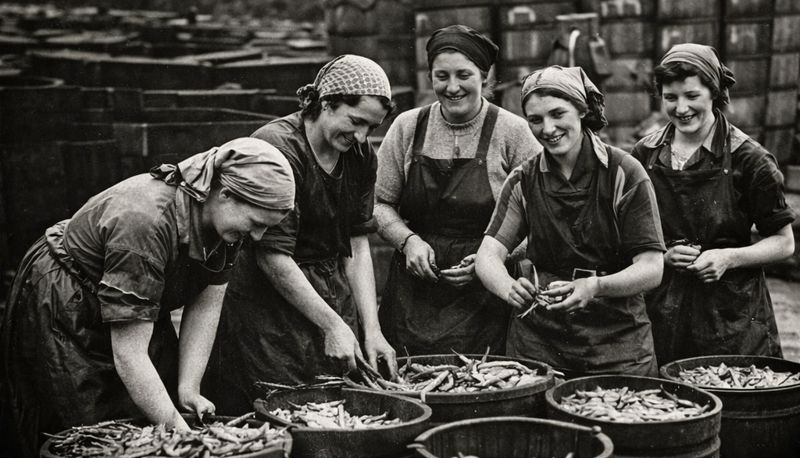
For much of the late nineteenth and early twentieth centuries, North Shields was one of the most important herring ports on the east coast of Britain. At the heart of that industry was a highly skilled, largely female workforce known at the time as fishing lasses, fishergirls or herring girls.
Their labour sustained the herring trade at its peak. Their presence shaped daily life on the Fish Quay. Yet for decades, their contribution was rarely centred in official histories of the town.
Using contemporary newspaper reports, photographs and community memory, this article tells the story of the fishing lasses of North Shields — from their rise and importance, to their gradual disappearance as the industry declined.
The Rise: Why Fishing Lasses Came to North Shields
As the herring industry expanded in the late 1800s, demand for fast, skilled labour grew rapidly. Herrings had to be gutted, salted and packed almost immediately after landing in order to be sold fresh or exported as part of the internationally respected “Scotch cure.”
Local labour could not meet demand alone. As a result, women travelled seasonally to North Shields, primarily from Scottish fishing communities such as Wick, Buckie, Fraserburgh, Peterhead and Aberdeen.
By the early 20th century this migration was well established. Newspapers from the late 1920s refer to organised journeys, later dubbed the “fisher girls’ express,” bringing hundreds of women at a time to east coast ports.
A report from September 1928 recorded the arrival of 250 Scottish fishing lasses, many of whom had travelled over 600 miles to reach North Shields and then continue south to Yarmouth and Lowestoft.
They arrived dressed smartly — coats buttoned, hair covered — with their working clothes packed away in large wooden boxes. This distinction between public appearance and working dress reflected the social expectations placed on young working women far from home.
The Work: Skill, Speed and Endurance
Herring gutting was not casual labour. It was industrial, repetitive and physically demanding work, carried out in all weather conditions on the Fish Quay.
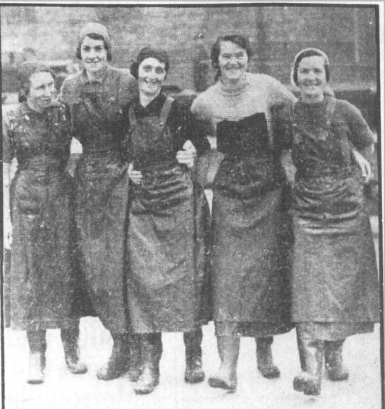
Women worked standing for long hours, gutting and packing fish at speed. Pay depended on output. Accuracy mattered, as damaged fish reduced value.
A 1937 newspaper article described the difficulty of entering the trade:
“The first 5,000 herrings are the worst when learning to gut fish.”
The early weeks brought swollen hands, repeated cuts and physical exhaustion. Cold water ran constantly over fingers. The smell of fish oil and brine soaked into skin, clothes and hair.
Experienced fishing lasses, however, developed remarkable speed and precision. Their skill was widely recognised. In the 1930s, one North Shields woman was publicly referred to in the press as a “fisher lassie Queen,” reputed to gut herrings faster than women working in other ports.
This was skilled labour, and it carried pride and reputation.
Daily Life: Clothing, Knitting and Waiting
Photographs from the period show fishing lasses wearing headscarves, heavy aprons, oilskins and high boots, dressed for wet stone surfaces and slippery fish.
Waiting was an unavoidable part of the job. Boats did not arrive to a schedule, and women often stood on the quay for hours between landings.
Newspapers repeatedly commented on the sight and sound of fishing lasses knitting while they waited:
“Knitting needles clicking as they walk about making stockings and jerseys for their fishermen relatives.”
Knitting served practical and social purposes. Stockings, scarves, cardigans and jerseys were made for family members, fishermen, and sometimes for men they met during the season. It filled time, created warmth, and offered routine in a working life shaped by uncertainty.
Housing, Welfare and Public Scrutiny
The seasonal arrival of hundreds of young women placed pressure on housing in North Shields. Newspapers regularly reported overcrowded lodging houses and difficulties finding suitable accommodation.
In August 1939, with between 220 and 240 fishing lasses working on the Fish Quay, a Rest Room was re-opened specifically for Scottish fishergirls. Run by women from local Presbyterian churches, it offered shelter, seating, magazines and inexpensive cups of tea.
This modest provision highlights both the scale of the workforce and the lack of formal welfare systems. Support came largely through voluntary efforts — often organised by women for women.
Fishing lasses were also subject to judgement. Letters to local newspapers show unease among some residents about young women living communally and working away from home.
One letter published in August 1939 defended them:
“Please be fair to these girls… I know three of these girls personally, and I have no hesitation in recommending them to even the best homes in North Shields.”
Such exchanges reveal both the scrutiny the fishing lasses faced and the defence offered by members of the local community.
The Peak: The Inter-War Years
The 1920s and 1930s marked the high point of the fishing-lass era in North Shields.
During these years:
- Hundreds of women arrived each season
- The Fish Quay operated almost continuously
- North Shields functioned as a key node in a national herring network
- Seasonal migration of women workers was expected and routine
The presence of fishing lasses was woven into the daily rhythm of the town.
The Decline: When the Fish Didn’t Come
The fragility of this system was increasingly visible by the late 1930s.
In 1938, newspapers reported an event described as unprecedented:
“For the first time in the port’s history, 20 Scots fishergirls were sent home after waiting three weeks for work.”
The fish failed to arrive in sufficient numbers. After weeks without wages, the women were sent home, bearing the financial loss themselves.
This moment foreshadowed wider change. The herring industry declined due to:
- Changing fish stocks
- Economic pressures
- Mechanisation and new processing methods
- Shifts in international markets
- The disruption of the Second World War
As the industry contracted, the seasonal migration of fishing lasses gradually came to an end.
Legacy
The fishing lasses of North Shields were:
- Skilled industrial workers
- Migrant women before the term was common
- Central to the town’s economic life at its peak
- Highly vulnerable to downturn and change
They appear in the historical record largely through newspaper reports, photographs and letters. Yet when these fragments are read together, a clear picture emerges of a workforce that was organised, professional and essential.
Their story is central to understanding North Shields’ maritime past.
10 Quirky Facts About the Fishing Lasses
- They regularly travelled over 600 miles for work
- They arrived on special trains called the “fisher girls’ express”
- The first 5,000 herrings were considered training
- They worked in organised gutting teams
- Speed competitions between ports were taken seriously
- They dressed smartly off the quay to avoid judgement
- They knitted while walking, waiting and working
- The smell of fish followed them everywhere
- They had Rest Rooms before they had workers’ rights
- When work failed, they were sent home unpaid
Help Us Build the Living Archive
Do you have a connection to the fishing lasses of North Shields?
We are keen to hear from anyone who has:
- Family stories or memories
- Photographs (named or unnamed)
- Letters or postcards
- Information about lodging houses or Rest Rooms
- Knitted garments, tools or patterns
- Names, dates or places connected to the Fish Quay
📩 Please get in touch editor@ilovenorthshields.com
Your contributions will help preserve an important part of North Shields’ history for future generations.