
Distance : 4 miles
Start & Finish: Tynemouth Castle
Uncover the unique history and character of Tynemouth Castle, Priory and village and its seafaring neighbour North Shields.
Start: Tynemouth Castle
At the seaward end of Front Street on the headland known as Pen Bal Crag stands Tynemouth Castle. Inside lie the ruins of the seventh century Priory. The Priory was built by monks from Holy Island, sacked by the Danes in 800 and is the burial place of three kings, Oswin King of Deira, Osred King of Northumbria and Malcolm III King of Scotland.
Front Street: Home of Harriet Martineau
Now, with your back towards the castle, head off along the left hand side of Front Street until you reach number 57. This was formerly the home of Harriet Martineau one of the most prominent and versatile women writers of the nineteenth century as well as one of the most controversial.
Not a local by birth, she arrived in Tynemouth in 1840, in ill health, to be with her brother-in-law doctor and fully expecting to die. Already a prolific writer on subjects such as religion, politics, economics and social reform she was far from idle whilst in Tynemouth. During her five year stay, when she made a surprising recovery, she published a novel, ‘The Hour and The Man’, a book of childrens stories, ‘The Playfellow’ and a collection of meditative essays, ‘Life in The Sick Room’.
She eventually moved to Ambleside in the Lake District. Sadly, there is no blue plaque attached to number 57, a restored Georgian town house built in about 1760, although there is a small black one over the archway leading to the Grove, the adjoining alleyway.
Queen Victoria’s Statue
Continue along Front Street, over the pelican crossing at the top and into Huntington Place, which faces a small park and a monument of Queen Victoria. Unveiled in October 1902, this bronze sculpting by Alfred Turner shows the Queen in the twilight of her reign and cost £1,000 to construct. The eagle-eyed will note that the work now lacks the Queen`s crown.
King’s Priory School
As you head forwards watch out for the blue plaque attached to the building with the large stone portico which is now occupied by King`s Priory School. It was here that Giuseppe Garibaldi stayed in 1854 whilst visiting Tynemouth to brief local political and industrial leaders on his plans for a unified Italy. Garibaldi and his famous band of men known as the Red Shirts were instrumental in having Victor Emmanuel proclaimed as King of Italy in 1861.
This building, which was formerly known as Tynemouth House, has been a school since the mid-1860`s and when it was built in 1760 as a large house it stood alone in its own grounds.
King Edward Road: Home of Norah Balls
Pass in front of the school and before the road bends to your left, cross over the road diagonally right and continue up Manor Road as far as the roundabout in front of Holy Saviour’s Church and the first zebra crossing. Here you are standing outside 36 King Edward Road, the former home (1902-1936) of suffragette Norah Balls who, alongside her friends Emmeline Pankhurst and Emily Davison, was at the heart of the early twentieth century struggle to win votes for women.
Tynemouth Station
Now turn back the way you came and, before you cross the railway bridge, turn right down the access road to Tynemouth Station. Step inside and you will discover a fine example of Victorian railway architecture with vast glazed canopies following the gentle curve of the track.
The large station, which opened in 1882 and accommodated the world`s first provincial railway, catered for commuter traffic to Newcastle, seaside day trippers and fish transport from North Shields Fish Quay.
Drill Hall
Cross over the fine footbridge and once outside the station turn right. Follow the road as it swings left towards Tynemouth Road and, immediately before the junction is reached, look out for the impressive door head to the Tyne Electrical Engineers Drill Hall and the neighbouring blue plaque. The Drill Hall, known as the new Clifford`s Fort Drill Hall, has been used by the Engineers since 1928.
Once you are on the move again, cross straight over Tynemouth Road and into Tynemouth Terrace where you will enter a magnificent enclave of Victorian architecture and one of utter tranquility. Head forward and at the first junction, turn right into Northumberland Terrace and, looking straight ahead, you are sure to spot the well-preserved Victorian post box set into the stone wall surrounding a number of allotments.
Collingwood Terrace: Home of Anne Maud Burnett
Continue to follow the road anti-clockwise along Collingwood Terrace with views to the River Tyne. When you reach Priors Terrace be sure to stop outside number 10, once the home of Anne Maud Burnett who in 1910 became the first woman member of Tynemouth Council and then the Council’s first woman Mayor in 1929. A blue plaque marks the spot.
After a quick glance over your shoulder at the fine view of the Castle and the Priory it is time to continue anti-clockwise into Northumberland Terrace and then right back into Tynemouth Terrace.
Mariners Point
At the junction turn left into Tynemouth Road and within 50 metres you reach the first Tynemouth Station, marked with a blue plaque on the road-facing stone wall. Opened in 1847 and designed for the Newcastle and Berwick Railway Company by architects John and Benjamin Green, who also designed the Theatre Royal in Grey Street, Newcastle, these well kept buildings now form part of the Mariners Point housing development. The four shields, which are set into the building, once formed the centre piece of the Borough of Tynemouth’s Coat of Arms.
Master Mariners homes
Cross over to the right hand side of Tynemouth Road, passing the relatively new nursery school before reaching Mariners Lane running off to your right. Ignoring this road, continue straight ahead for 50 metres to the front façade of the Tudor style Master Mariners Homes.
Built on land donated by the third Duke of Northumberland and completed in 1840, the homes were intended for retired or incapacitated seamen. The statue of the Duke at the front of the building acknowledges his donation and was created by sculptor Christopher Tate. However, Tate died before finishing the work and it fell to fellow sculptor Richard George Davies to complete it.
Governor’s Tree
Continue along Tynemouth Road, dropping almost immediately downhill, first to the Governor’s Tree and the adjoining blue plaque and then, in quick succession, to the Tynemouth Lodge. It was at the Governor’s Tree that important visitors to Tynemouth were met as they disembarked in nearby Pow Burn.
In 1539 King Henry VIII’s commissioners arrived here on their way to dispossess the Monks of Tynemouth Priory followed in 1633 by King Charles I.
Tynemouth Lodge
The Tynemouth Lodge has been trading as a public house since 1799. Next door stood the former Correction House and Justices Room which was a prison for minor offenders, such as prostitutes, whilst more serious offenders were sent to the County Goal at Morpeth, where hangings were also carried out. Circuit Judges regularly stayed in the Tynemouth Lodge whilst engaged in their duties in the Justices Room.
The Correction House was built in 1789 on land formerly known as Powebank near Lowlight Farm. For the majority of the twentieth century the building was used as a laundry whilst the Tynemouth Lodge is now a free house specialising in traditional ales.
Northumberland Park
Head forwards along Tynemouth Road, keeping to the right hand side, and very soon you will pass the pillared entrance to Northumberland Park, created on part of the Pow Burn Dene and officially opened by the sixth Duke of Northumberland 11 August 1885. If you have time to spare, the park is well worth a visit.
Grey Street: Home of Hilton Valentine
After crossing Washington Terrace and continuing to the next junction, turn right into Coburg Street and on across Grey Street. Keep walking forwards and before you know it you will have reached number 42, once home (1944-1960) to Hilton Valentine the original guitarist in the Animals rock group and who is credited with the iconic electric guitar introduction to the Animals 1964 number one hit song, ‘The House of the Rising Sun’. He was inducted into the Rock and Roll Hall of Fame in 1994 and into Hollywood’s Rock Walk of Fame in 2001 along with the other members of the Animals.
Now head back the way you came as far as Tynemouth Road and, once there, turn right as far as the zebra crossing immediately before North King Street. Cross over to the other side of Tynemouth Road and, after glancing to your left to admire the large black and white mural by PREFAB77 adorning part of the exterior wall of the King Street Social Club, continue past the Magistrates Court building on your left to the first set of traffic lights.
Northumberland Square
As you turn left into Stephenson Street you will spot the intriguing 2025-installed artwork, ‘Woven Voices’ created by Canadian visual artist and muralist Aaron Li-Hill and inspired by a multitude of local resident’s artworks and stories as well as by local dancers. Now, make your way down Stephenson Street and, after 100 metres, turn right into Suez Street to reach the corner of Northumberland Square.
Continue straight ahead towards the large 1960s Central Library building passing as you go St. Columba’s Presbyterian Church, designed by North Shields-born architect John Dobson in the Italian style, and one of a number of Dobson-designed buildings in the town.
Within the square itself there are some very elegant Georgian houses, a handful of which have been converted into offices. Described once as “a square almost too spacious for the two-storey houses that surround it” this jewel in the North Shields crown has recently undergone an impressive renovation.
Turn left into mainly traffic-free Howard Street, admiring on the right hand side, the 1846 Baptist Church and then the former Scotch Church now the Salvation Army Citadel, both designed by John Dobson.
Maritime Chambers
Cross over Saville Street and continue down Howard Street until you reach the small square in front of the beautiful Maritime Chambers which enjoy superb views over the River Tyne.
Completed in 1807, this building originally housed the Tynemouth Literary and Philosophical Society’s library before becoming the headquarters of the family run Stag Line shipping company. The company’s stag emblem adorns the gable wall of the building, overlooking the river, and when erected replaced the town’s official clock. Within the square there is a fine memorial, made from an old ship’s anchor, to all those lost at sea.
With your back to Maritime Chambers walk along the pavement adjacent to the top of the grass bank which falls away steeply to your right and where the new Riverside Embankment Walkway makes its cautious way downhill.
Dockwray Square: Home of Stan Laurel
Before long you will reach the modern buildings of Dockwray Square set around a laid out park area in the centre of which sits Robert Olley’s wonderful sculpting of Stan Laurel, one of North Shields` famous sons. Born Arthur Stanley Jefferson in Ulverston in 1890, Stan moved to North Shields in 1897 when his father came to manage the Theatre Royal in Prudhoe Street.
He continued to live in 8 Dockwray Square until 1901 when he moved to Bishop Auckland and later, in 1906, to Glasgow. The original house has long since been demolished and the blue plaque is affixed between the current numbers 6 and 7 Dockwray Square.

High Light and Low Light
Outside the square on the opposite side of the street stands the new High Light which was built in 1807. When aligned with the new Low Light, nestling at the bottom of the bank on the seaward side of the Fish Quay, this marked out a completely new channel for ships to take when navigating the mouth of the River Tyne.
The previous channel was marked out by the old High and Low Lights, both of which are still standing. The old High Light is situated 50 metres further along the street, at the beginning of the elegant Trinity Buildings, and was constructed in 1727 by Trinity House of Newcastle.
This light succeeded several other similar lights which had been maintained in North Shields since 1536. Both lights have blue plaques affixed to their exterior walls and are now used for housing purposes.
Wooden Dolly
Continue alongside Trinity Buildings until you reach the former Wooden Doll public house, now called ‘How Do You Do’ where you will see the head and shoulders `Wooden Dolly` which has been sitting outside the pub since the 1980s.

Dock Master’s House
Now descend the adjacent stairs and, on reaching the bottom, turn left. After approximately 50 metres, immediately before reaching the `Dolphin Mooring Post` artwork, turn right with Vita House on your left, and then quickly right again passing in front of the good-looking L-shaped two storey red brick building known as the former Dock Master’s House.
Once at the far end of the short terrace of offices is the Fishermen’s Mission and a blue plaque commemorating Henry Howard a retired fisherman who was a key figure behind the nearby ‘Fiddler’s Green Memorial’.
Clifford`s Fort
Now return to the former Dock Master’s House and turn right towards the gable end of the three-storey old Low Light building. On your right, in the wall next to the building, is a blue plaque noting the existence of Clifford`s Fort in this part of the Fish Quay.
Completed in 1672, the fort was commanded by the Governor of Tynemouth Castle until 1839 and was the headquarters of the Tyne Division of the Royal Engineers (Volunteers) from 1889 until 1928, when the engineers moved to the new Clifford`s Fort Drill Hall in Tynemouth, which you visited earlier in the walk.
Old Low Light Heritage Centre
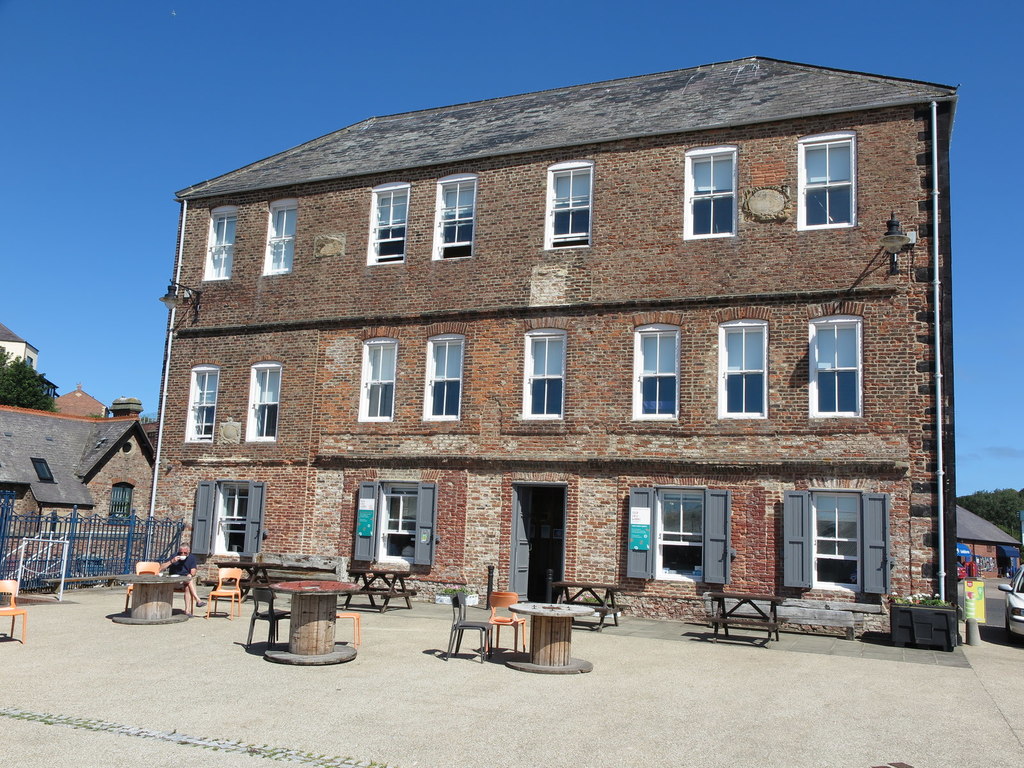
Continue around to the front of the old Low Light, now a heritage centre, and to the blue plaque affixed to the wall of this important building, saved from terminal decay in the late 1980`s by the Tyne & Wear Building Preservation Trust with assistance from North Tyneside Council.
Leave the front of the building and continue straight ahead, past the fish merchants on your left and the smokehouses on your right until you reach the blue-painted redundant marine buoys, known as ‘The Cycling Bouys’ that represent the three major cycle routes that converge close to this spot.
Fish Quay Sands
This area up close and personal with the river is commonly called the Fish Quay sands and, with the adjacent car park, it is a popular spot for people to sit, devouring huge portions of fish and chips, whilst watching the comings and goings of river life.
There is also a neatly-designed and extremely convenient takeaway ice cream & coffee kiosk should you feel the need of a quick caffeine kick.
Fiddler’s Green Memorial
Before proceeding along the curved promenade towards the river mouth take a look to your right and you will see, less than 50 metres along the walkway, the superb `Fiddler`s Green Memorial`, created by sculptor Ray Lonsdale and unveiled in September 2017, which honours the fishermen who died whilst doing their job after leaving the port of North Shields.
Black Middens
Continue along the riverside promenade and, towards the very end, keep your eyes peeled for the blue plaque attached to the promenade railings. This refers to the notorious Black Middens rocks which have long been a hazard to shipping entering and leaving the Tyne.
On the 24th November 1864 36 lives were lost when both the steamship ‘Stanley’ and the schooner ‘Friendship’ were swept onto these treacherous rocks by severe gales.
Collingwood’s monument
Behind you, at the top of the steep grassy bank, stands the enormous statue of Admiral Lord Collingwood, second in command to Nelson at the Battle of Trafalgar.
Born in Newcastle in 1748, Collingwood joined the navy at the age of thirteen. He was rewarded with a peerage for his “valour, judgement and skill” at Trafalgar and, when he died in 1810, he was given a state funeral and a monument in St. Paul’s Cathedral.
Volunteer Life Brigade House
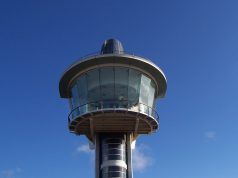
Follow the path as it climbs sharply to the left, away from the river, and on reaching the top turn sharp left twice and head towards the white, yellow and blue wooden building. This is the Volunteer Life Brigade House, built in 1887 to house the country`s first volunteer life brigade which had been formed some 23 years earlier following several tragic shipwrecks.
One of the principal tools of the brigade was the rocket line and breeches buoy which was used to great effect 20 October 1894 when the brigade rescued all six crew members from the stricken brigantine ‘Fame’.
It is possible to look inside the building at certain times of the week. Retrace your steps back to the top of the short climb up from the river and then continue downhill to the small bridge.
Finally it is all uphill, keeping adjacent to the castle and moat. On reaching the top you have come to the end of your walk and, hopefully, you have caught a whiff of what life might have been like in the dimming and far distant past.
Image credit: Geoff Holland